
Parents can help teenagers manage exam stress by fostering a calm home, encouraging open communication, and creating effective study routines , without adding pressure. Expert advice highlights easy ways to support teens through this challenging period.
Exam season can put a family under real strain, but parents do not need to solve the tests themselves to make a difference. The most useful role is often the quietest one: creating a steady home environment, keeping communication open and helping a teenager stay focused without feeling overwhelmed. The NHS says parents should look out for warning signs such as irritability, sleep problems, loss of appetite, headaches or stomach aches, and a growing reluctance to talk about school.
Spotting stress early matters because pressure can quickly spill into performance. Open, low-key conversations are usually more helpful than reminders about marks or deadlines. The NHS advises parents to encourage young people to talk to trusted adults at school as well as at home, while Radford College says teens often cope better when they feel listened to rather than managed.
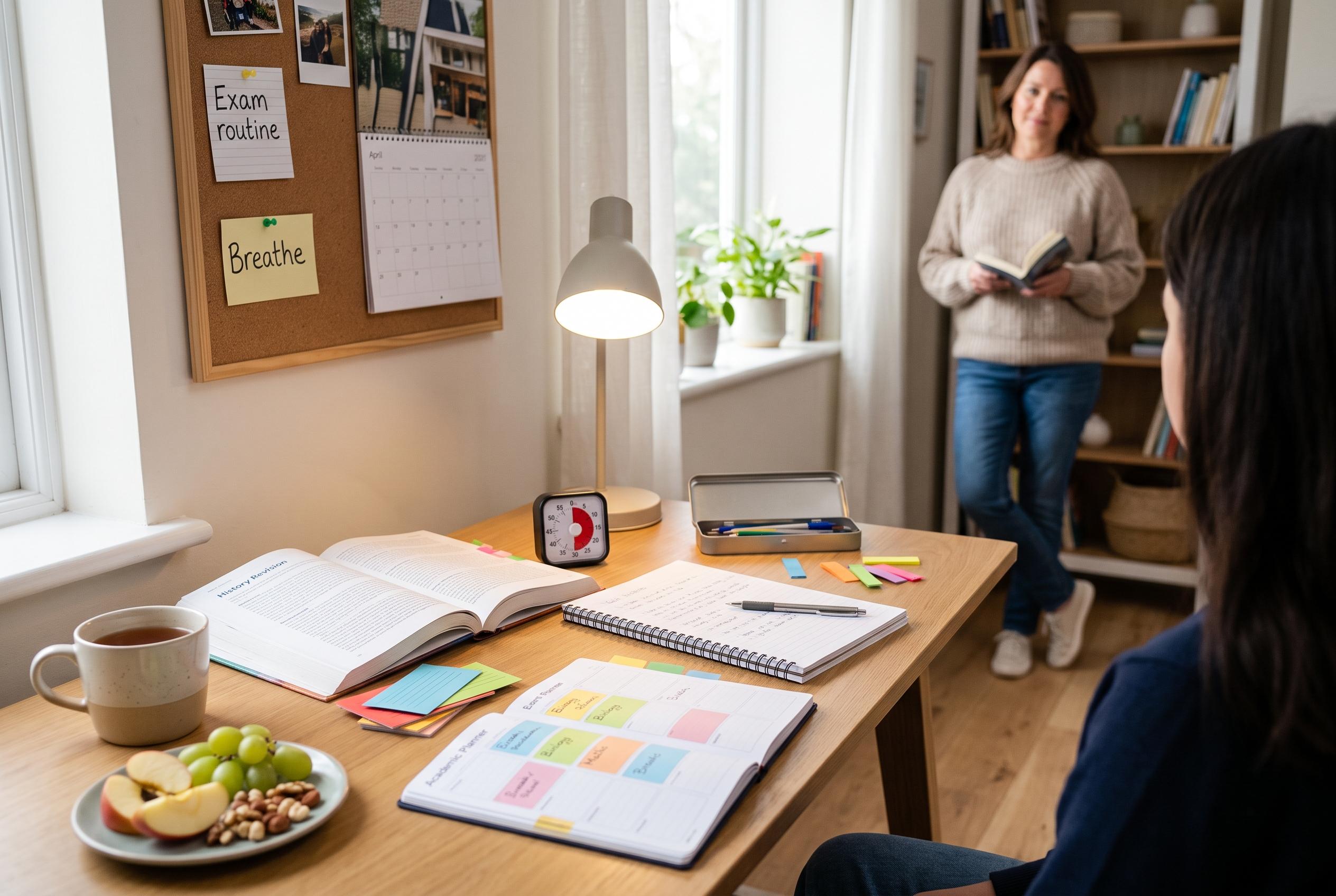
A practical study set-up can also reduce friction. Guidance from Pottery Barn Teen on study spaces stresses the value of a tidy desk, good lighting and as few distractions as possible, while the company also suggests making the space feel personal enough that a teenager actually wants to use it. In practice, that may mean a regular study spot, a clear place for notes and textbooks, and a simple agreement about phones and other interruptions.
When a subject is becoming a repeated source of frustration, outside help may be worth considering. The article’s advice on using a tutor fits with broader guidance from counselling and school-based support resources, which note that one-to-one help can rebuild confidence when classroom teaching alone is not enough. The key is to frame extra help as support, not failure.
How a teen revises can matter as much as how long they sit at a desk. The most effective methods usually involve active recall rather than endless rereading, including past papers, short timed study bursts, explaining a topic aloud, flashcards and mind maps. The NHS also points to the basics that are easy to overlook during exam season: sleep, regular meals and enough food and water, all of which help protect concentration and mood.
In the end, the most valuable thing parents can offer is reassurance. Teenagers need to know that their effort matters, their worth is not tied to a grade, and home is still a place of calm. That kind of support may not change the exam paper, but it can change how a young person gets through the season.
Disclaimer: This content is for informational purposes only and is not intended to be a substitute for professional medical judgment, advice, diagnosis, or treatment.