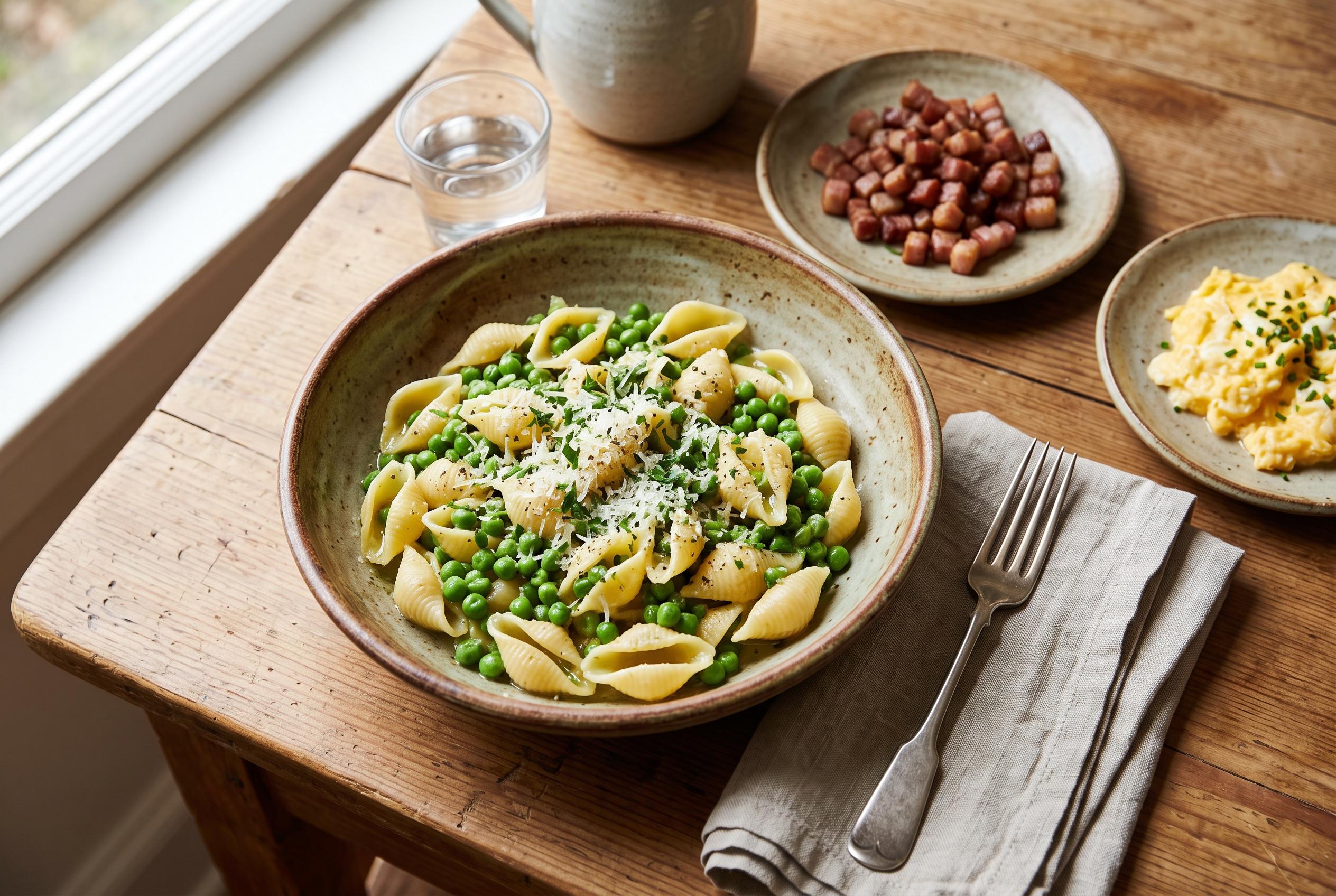

A classic Italian-style pea pasta, originally designed to get more peas onto children’s plates, has evolved into a flexible, easy-to-make dish perfect for speedy, adaptable meals at home, with variations from freshness to heartier versions with pancetta or eggs.
What began as a simple tactic to get more peas onto a child’s plate has become a dependable, no-fuss supper addition. This pasta dish relies on a short list of familiar ingredients: spaghetti, garlic, olive oil and peas. Cooked quickly and finished in the pan, it is the sort of recipe that works on busy evenings, when dinner needs to be ready fast and vegetables need to be easy to eat.
The appeal lies partly in its flexibility. The original version uses frozen peas, though fresh peas can be substituted when in season. Other recipes for pasta e piselli, a classic Italian-style pea pasta, often build in onion, Parmesan, basil or butter, while BBC Good Food’s summer pea pasta adds lemon zest and chilli for extra brightness. Even so, the basic idea stays the same: peas and pasta, lightly dressed, can be satisfying without much effort.
That simplicity also makes the dish easy to adapt for different tables. Parsley is a natural finishing herb, but basil or dill can be used instead. A little chilli can add warmth for adults, while leaving it out keeps the dish mild enough for children. Some versions turn it into a heartier main course with pancetta, bacon or a fried egg, while others keep it vegetarian and finish with Parmesan or lemon juice for a sharper edge.
For home cooks, the practical value is clear. The pasta and peas can be ready in the time it takes to boil the pasta, and leftovers keep for a few days in the fridge if reheated gently. That makes it useful not only as a side for roast chicken, steak or fish, but also as a quick lunch the next day. In other words, it is the kind of recipe that earns its place by being both uncomplicated and reliable.
Disclaimer: This content is for informational purposes only and is not intended to be a substitute for professional medical judgment, advice, diagnosis, or treatment.