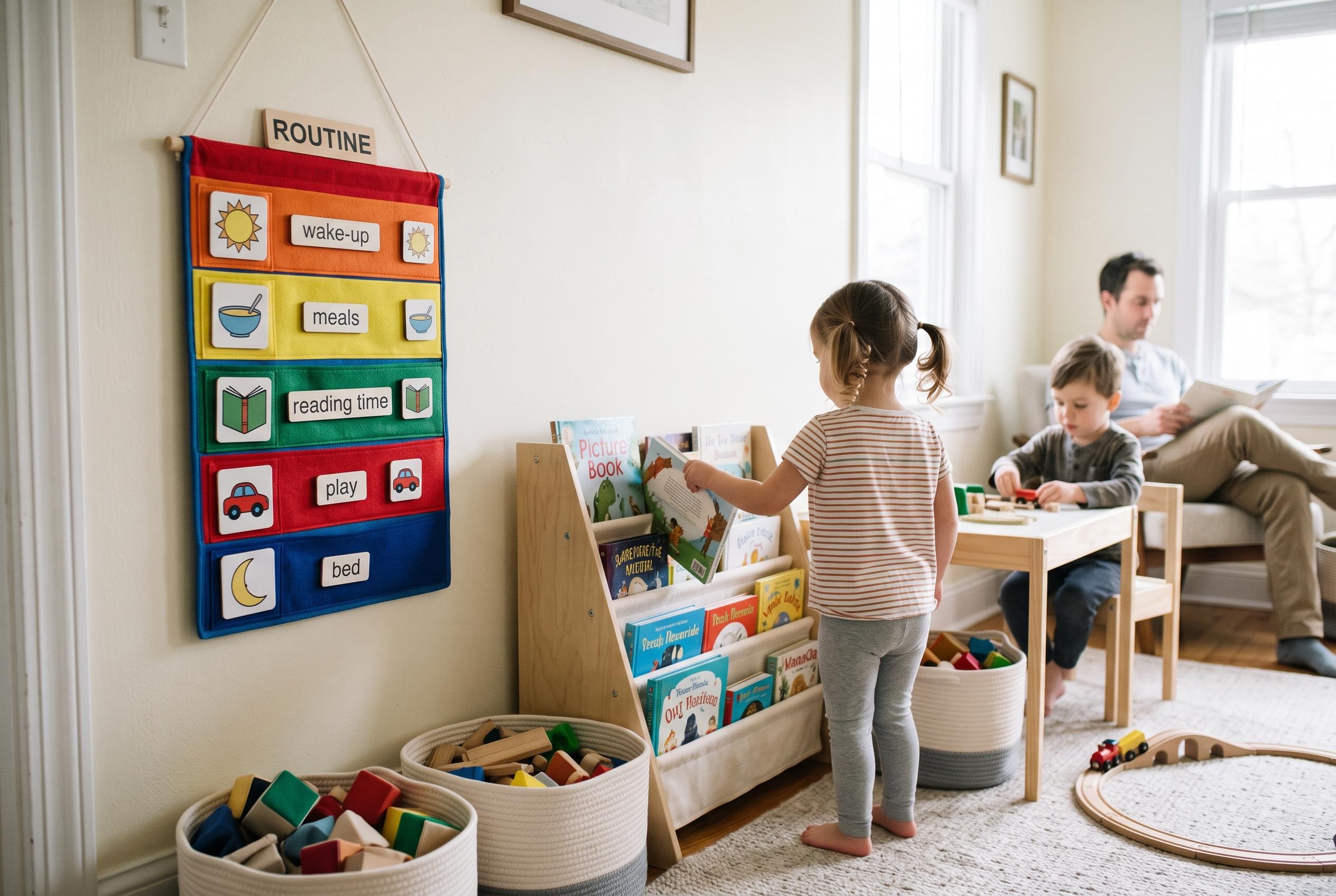

Research underscores the importance of adaptable routines in helping young children feel safe, confident, and better equipped to learn, with visual tools and family consistency making a significant difference.
For parents of babies and young children, daily life can feel like a constant juggling act: meals, clothing, school bags, snacks, teeth brushing and the recurring mystery of missing socks. In that chaos, routine is often presented as the answer, but the real value of routine is less about control than about helping children feel safe in a world they are still trying to understand.
Janet Beyroorti, who works as a preschool project manager at Curro, says routine in early childhood should be seen as a steady rhythm rather than a strict timetable. Young children are not miniature adults, and they do not experience time in the same way. Predictable patterns, she says, give them reassurance by making the day easier to anticipate and the next step less frightening.
That sense of predictability can have a powerful effect. The Centres for Disease Control and Prevention says structure helps children feel secure because they learn what to expect and what comes next. Head Start likewise notes that familiar schedules can help children feel more comfortable, more in control and better able to engage with learning. In practice, that can mean simpler mornings, fewer battles over transitions and less emotional strain for both children and adults.
Visual routine charts can make this even easier. Rather than relying only on repeated verbal instructions, parents can use photos, pictures or symbols to show the sequence of the day. Children can see what comes next, which supports independence, sequencing and early planning skills. Children’s Health says involving children in routines can also give them a stronger sense of ownership, while the WELS Foundation has pointed out that visual schedules can reduce stress and help transitions run more smoothly.
The best routines are simple and age-appropriate. Toddlers may respond well to real photographs of their toothbrush, shoes or lunchbox, while older children may manage with icons or drawings. A movable chart, with cards that can be shifted from one side to the other, can turn routine into something active rather than something imposed. For difficult moments, a basic “first then” approach can be especially useful: first shoes, then outside; first bath, then story.
Flexibility still matters. Routine should support family life, not harden it into something brittle. Sick days, late nights and unexpected disruptions are part of normal family life. The point is not perfection, but a dependable pattern that can bend when needed. Beyroorti says the aim is to help children feel secure enough to grow, while leaving space for play, rest and creativity.
According to Beyroorti, parents do not have to manage all of this alone. When home and preschool use similar rhythms and visual supports, children often settle more easily and gain confidence faster. That shared approach, she says, helps children feel held by the adults around them and makes daily life feel a little more manageable for everyone.
Disclaimer: This content is for informational purposes only and is not intended to be a substitute for professional medical judgment, advice, diagnosis, or treatment.