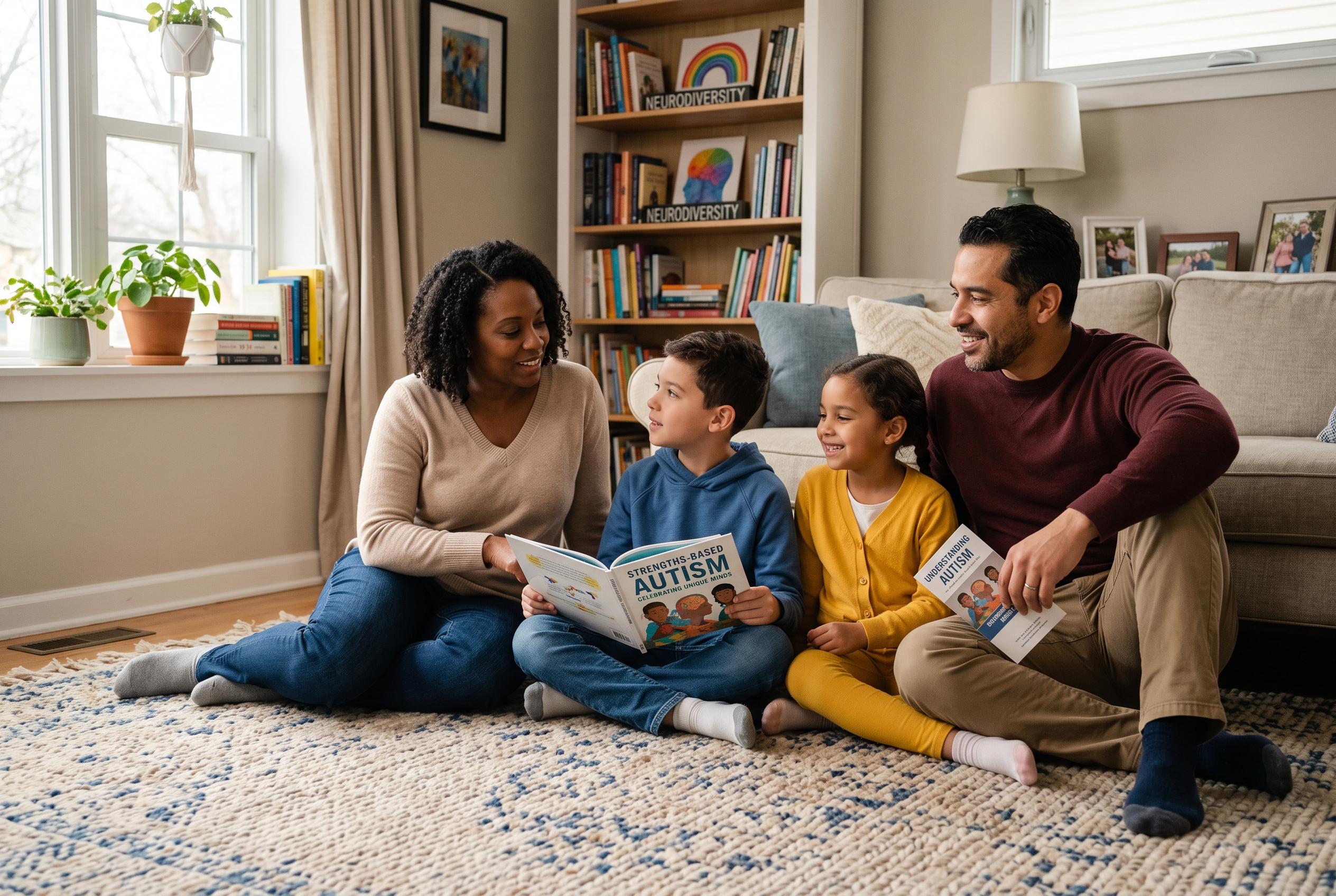

Dr Lucy Russell offers practical advice for parents on discussing autism with children and teens, emphasising brief, calm conversations and a strengths-based approach to foster understanding and acceptance.
Parents looking to explain autism to a child do not need one big, solemn conversation. Dr Lucy Russell, a clinical psychologist and the founder of They Are The Future, argues that children aged five to 17 often respond better to a series of brief, calm discussions that focus on how autistic people experience the world rather than on labels alone. In her guidance, she says the aim is understanding, not correction, and that simple language works best: some brains take in the world differently, which can make some things easier and some things harder.
Russell also encourages families to talk about autism in a strengths-based way. That means recognising communication differences, sensory sensitivities, routines and friendships, while also noticing qualities such as deep focus, honesty, creativity and strong memory. She advises parents to use everyday moments, such as car journeys or quiet time at bedtime, to ask what a child already understands and what feels easy or hard for them. The guidance also notes that children may find pictures, familiar examples or low-pressure settings more helpful than a formal sit-down talk.
The article places particular emphasis on language. Russell suggests following a child’s preference for phrases such as “autistic person” or “person with autism”, and she warns against vague descriptions such as “mild” or “severe”, which can hide the support a child actually needs. It also draws a clear distinction between autism awareness and autism acceptance, saying the latter should involve practical adjustments, inclusive classrooms and active efforts to reduce bullying and exclusion. The National Autistic Society and the NHS both offer material that families can adapt for children, while Russell recommends previewing any book or video before sharing it.
Among the resources highlighted is Kathy Hoopmann’s “All Cats Are on the Autism Spectrum”, a picture-led book that uses cat photographs to help younger children and siblings explore sensory and social differences. The guidance also points families towards short online videos, including the NHS video “We are autistic” and the National Autistic Society’s introductory material, as well as Russell’s own printable “Autism and Me” activity book for children who have recently been diagnosed. She says resources should help a child name their needs, not force them into a checklist.
For teenagers, the focus shifts towards identity, choice and practical self-knowledge. Russell says conversations at this age may need to cover masking, friendships, sensory needs, puberty, mental health and the move towards adulthood, including education, work and healthcare. She advises parents to ask what a teenager wants to know and how they would prefer to learn it, whether by reading, watching, writing or talking. The article closes by stressing that a child does not need perfect terminology or a perfect resource, only accurate, age-appropriate information and room to understand the support they deserve.
Disclaimer: This content is for informational purposes only and is not intended to be a substitute for professional medical judgment, advice, diagnosis, or treatment.