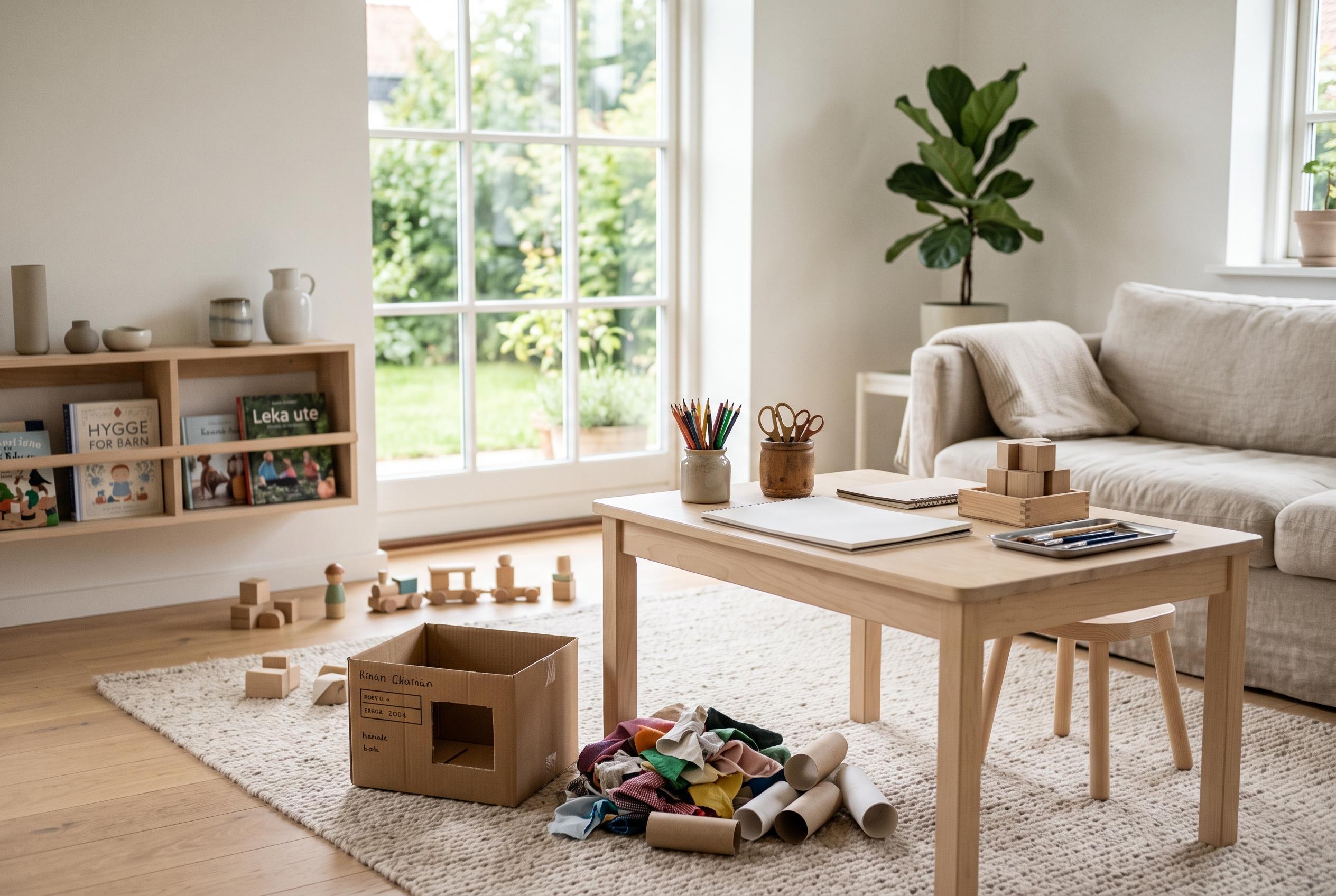

A Scandinavian-inspired parenting philosophy advocates for allowing children unstructured time, arguing that boredom can be a vital catalyst for imagination, problem-solving, and self-reliance in an overstimulated age.
Children who are allowed to run into boredom often do something useful with it: they move from complaining to creating. That small pivot is at the heart of a Scandinavian-flavoured parenting idea that is sometimes mistaken for indifference but is better understood as patience. The claim is not that children should be left to stew in frustration, but that a little unfilled time can give them room to discover what they will do without being directed.
The appeal of the idea is easy to see in an age of constant stimulation. Unstructured time asks a child to solve a modest problem on their own: what now? Education writers and child-development specialists have long argued that this moment can encourage imagination, independence and problem-solving, because a child who is not instantly rescued from boredom has to invent a response. The ParentMap and PBS Parenting explain the point in similarly practical terms: free time gives children space to choose, to experiment and to notice the world rather than be carried through it by someone else.
That does not mean boredom is the same thing as rest, or that every empty minute is automatically good. Researchers and commentators who support the idea usually draw a distinction between healthy, temporary boredom and the deeper dissatisfaction that comes with chronic under-stimulation. The latter can leave children irritable or disengaged; the former can become a prompt for play, daydreaming or small acts of invention. In that sense, boredom works less like a virtue in itself and more like a condition that sometimes makes creativity more likely.
The Scandinavian version of the argument sounds distinctive because it is tied to a wider culture of outdoor play, later formal instruction in some settings and a general reluctance to over-programme childhood. But the underlying case is not uniquely Nordic. Child-focused organisations such as Children & Nature and other parenting guides make a similar point: when children are not constantly entertained, they are more likely to make up games, explore their surroundings and develop a steadier sense of self-reliance. The value of that freedom is not that it produces geniuses on demand, but that it gives children practice in being the ones who decide what happens next.
There is also a broader, adult lesson in the same idea. As The Atlantic has recently observed in a separate reflection on parenthood, boredom is not always something to be avoided at all costs; sometimes it is part of the ordinary texture of care, routine and endurance. That does not make boredom pleasant, but it does make it familiar. For children, the small version of that truth is straightforward: if they are never allowed to be bored, they may never learn that they can turn boredom into something else.
Disclaimer: This content is for informational purposes only and is not intended to be a substitute for professional medical judgment, advice, diagnosis, or treatment.