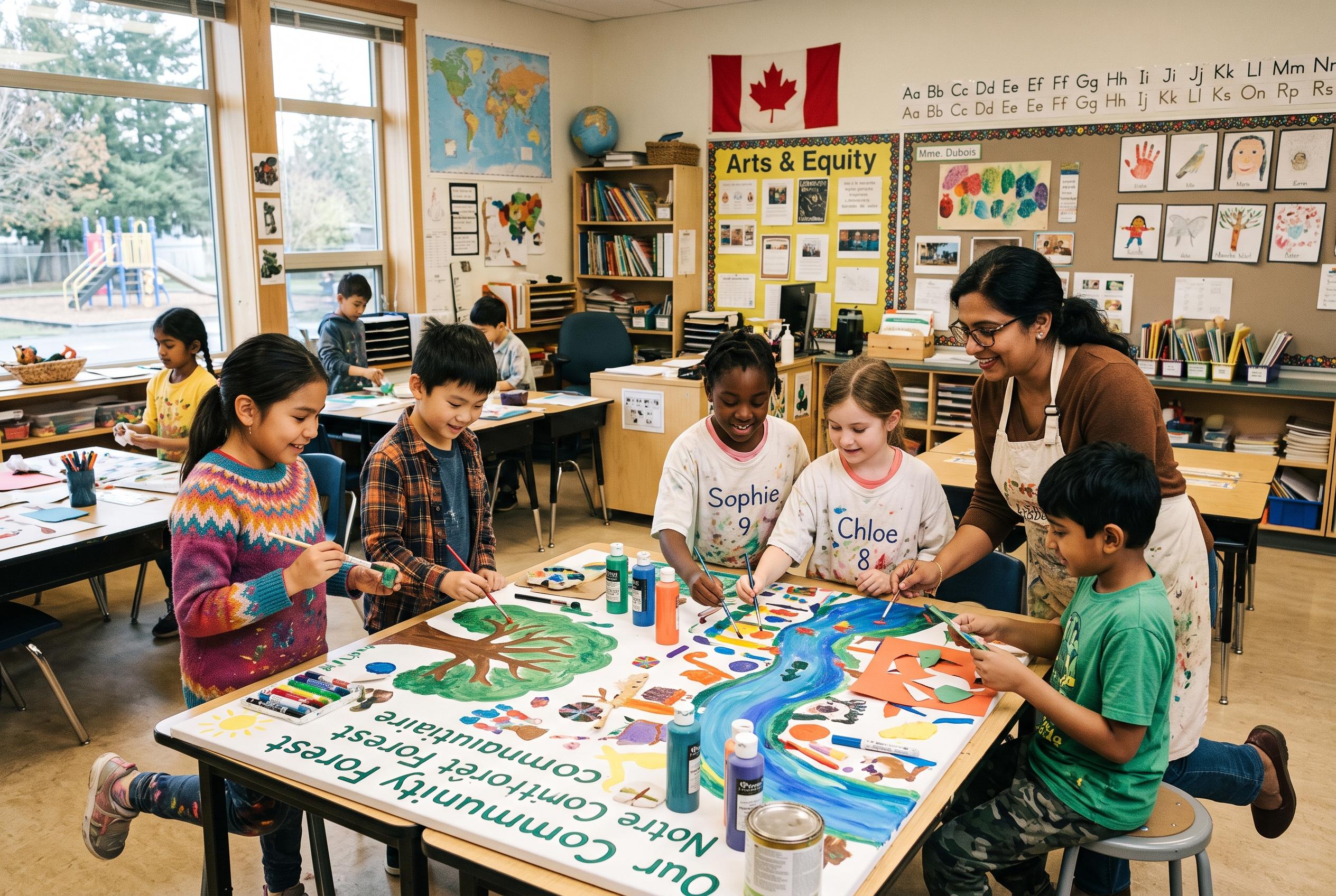

A decline in arts funding across Canadian classrooms threatens to diminish not only creative skills but also vital cognitive and emotional development, raising concerns over widening inequality in access to holistic learning.
For many children, the arts are not an optional extra but the way learning actually lands. That was true for the writer of this piece, who describes a school childhood marked by distraction and restlessness before creativity gave structure to lessons that had felt impossible. A home-made maths game, drama club and imaginative projects helped turn abstract work into something physical, vivid and memorable.
That experience matters well beyond one family. Research and education groups cited in the related material argue that arts integration can strengthen literacy, maths and critical thinking by helping children use story, movement, music and image to make sense of academic ideas. In other words, the arts do not sit outside “real” learning; they often make it more accessible.
The same tension is now visible in classrooms across Canada, where arts programmes are often among the first to be squeezed when budgets tighten. The Regina Public School Board cut nearly half a million dollars from band funding this summer, while schools in British Columbia are facing reductions to what is classed as non-core curriculum. ArtStarts in Schools, a long-standing support organisation for arts educators, paused its operations last year, removing another source of grants and programming.
In Ontario, the picture has become even starker. A 2024 survey by People for Education found that only 48 per cent of elementary schools had a dedicated music teacher, down from 62 per cent in 2020. The share with visual arts teachers fell to 8 per cent from 20 per cent since 2019, while drama dropped to 6 per cent from 14 per cent. One arts teacher in southern Ontario said their classes are the first to be cancelled whenever timetables change.
Advocates for arts education say that loss is about more than enrichment. Music, drama and visual art can build confidence, communication and empathy, while also helping children manage emotions and solve problems. A review of research on arts education found positive effects on creativity and some cognitive outcomes, particularly in younger children, though it also noted that the durability of those gains needs more study.
The broader concern is equity. Families with money can buy private lessons, theatre classes and instrument tuition, but when schools strip out the arts, access becomes tied to income rather than talent. The writer’s point is simple: if public education is meant to open doors, it should not close off one of the most powerful ways children learn to think, feel and express themselves.
Disclaimer: This content is for informational purposes only and is not intended to be a substitute for professional medical judgment, advice, diagnosis, or treatment.