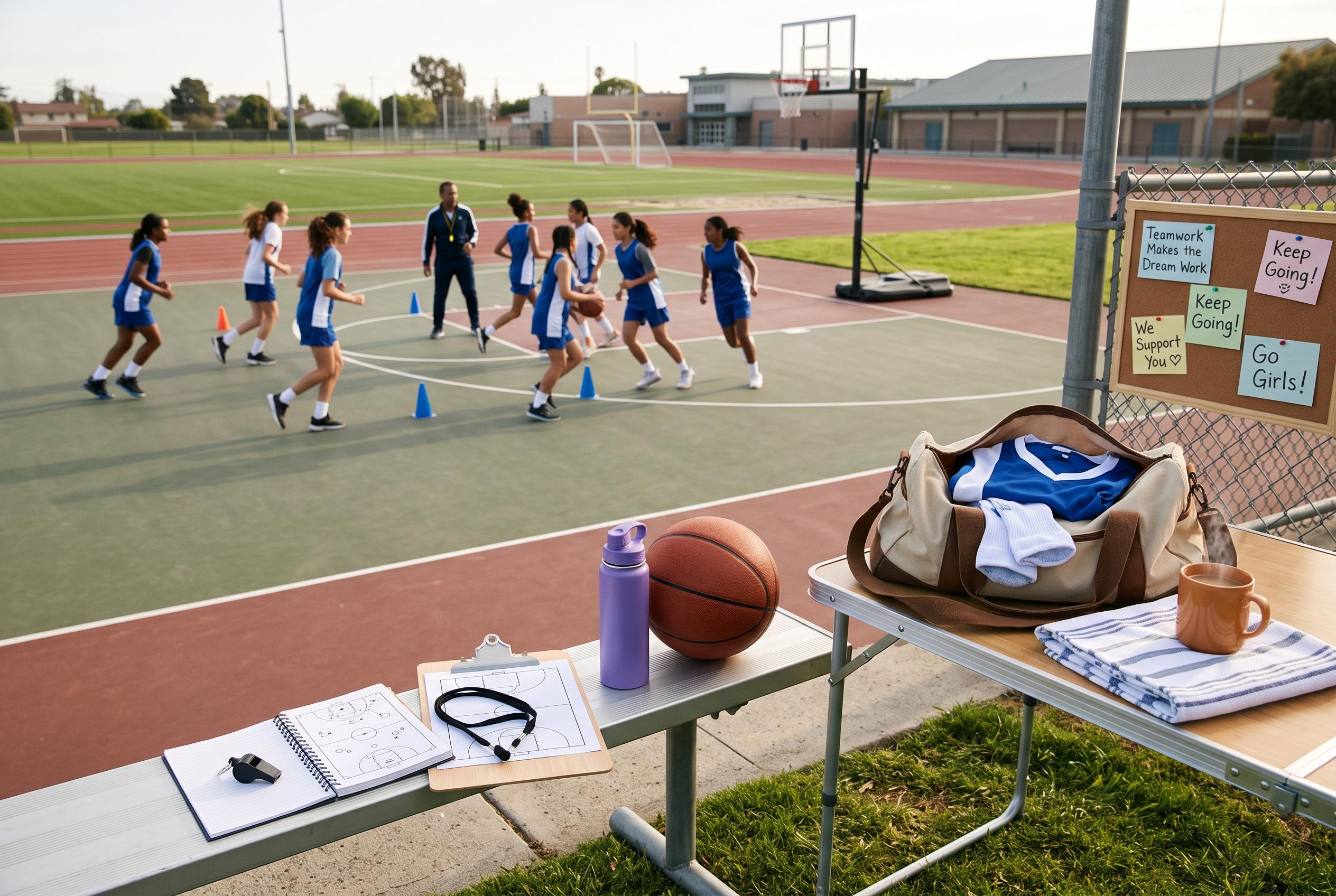

A shift towards cohesive coaching and parental support is emerging as the vital factor in keeping teenage girls engaged in sport, highlighting the importance of a unified development environment beyond technical drills.
The moment a teenager quietly walks away from a sport can tell coaches a lot more than a row over minutes ever will. In basketball, as in many other youth sports, the real issue is often not a single disagreement or a bad season, but a slow breakdown in the support system around the player. Research published by the U.S. National Library of Medicine and Frontiers in Sports and Active Living has found that sustained participation falls steadily as girls move through adolescence, with dropout increasing sharply from the mid-teens onwards. That wider pattern gives weight to the concern raised by one coach who realised too late that talent alone was never going to be enough.
His story began with an 18-year-old who had spent a decade in the gym and appeared to be on track for senior selection. Then she simply stopped. There was no confrontation, no dramatic falling-out, just a calm decision that left him questioning how much of player development really sat outside the court. The answer he came to was uncomfortable: he had treated coaching, parenting and personal growth as separate jobs, when in reality they were working on the same athlete every day.
That shift in thinking matters because the evidence suggests adolescence is precisely when many girls begin to drift away from sport. A study of more than 29,000 participants found that the share of athletes who stayed in a sport only one year rose from 20% among those who started young to 48% by the teenage years. Leeds Beckett University has also reported that female participation drops sharply in many sports between 14 and 16, even though some recovery is seen between 16 and 18. The problem is not always a lack of interest; more often, it is a lack of support that feels joined up.
The coach argues that parents are usually doing their best, not too much harm. The trouble is that most are never clearly shown what their role should be, so advice spills over into the car park, the home, and the hours after a match. When a player hears one message from a coach and a different one from home, confidence can begin to fracture. Research on the coach-athlete-parent relationship supports that view, suggesting that young athletes do better when those three roles are aligned rather than operating separately.
He also questions the idea that the most hands-off parent is automatically the best one. In his view, stepping back is not the same as being supportive. Children still need adults who understand the emotional weight of a poor performance, a bad shooting night or a sudden loss of motivation. What they do not need is a second coaching staff in the passenger seat. The more useful model, he says, is one in which parents provide stability and encouragement while leaving technical decisions to the coach.
That required him to confront his own habits as well. For years, he kept parents at a distance because he feared losing objectivity and seeing players through the lens of family expectations. In hindsight, he believes the mistake was not caution but silence. By never defining what he needed from parents, and where their role ended, he left everyone to improvise. The result was a fragmented system in which each adult was trying to help, but not necessarily in the same direction.
The first real attempt to fix that came this season, when his club brought parents, coaches and leadership together to talk not about fees or fixtures, but about development. The aim was to explain how the programme worked, what standards it expected, and where parents fit into the process. The most useful change was simple: a clear structure for who handles logistics, who handles long-term development, and who escalates bigger concerns. That kind of clarity may sound administrative, but in practice it removed confusion and gave families a common language.
The broader lesson is that retention is rarely solved by better drills alone. Girls are most likely to stay when the adults around them are pulling in the same direction, from the first training session to the final junior season. Coaches cannot do that work on their own, and parents cannot do it by accident. If young athletes are to keep choosing the game, they need an environment that is steady, coherent and worth staying in. That, more than any one tactical idea, may be the missing link.
Disclaimer: This content is for informational purposes only and is not intended to be a substitute for professional medical judgment, advice, diagnosis, or treatment.