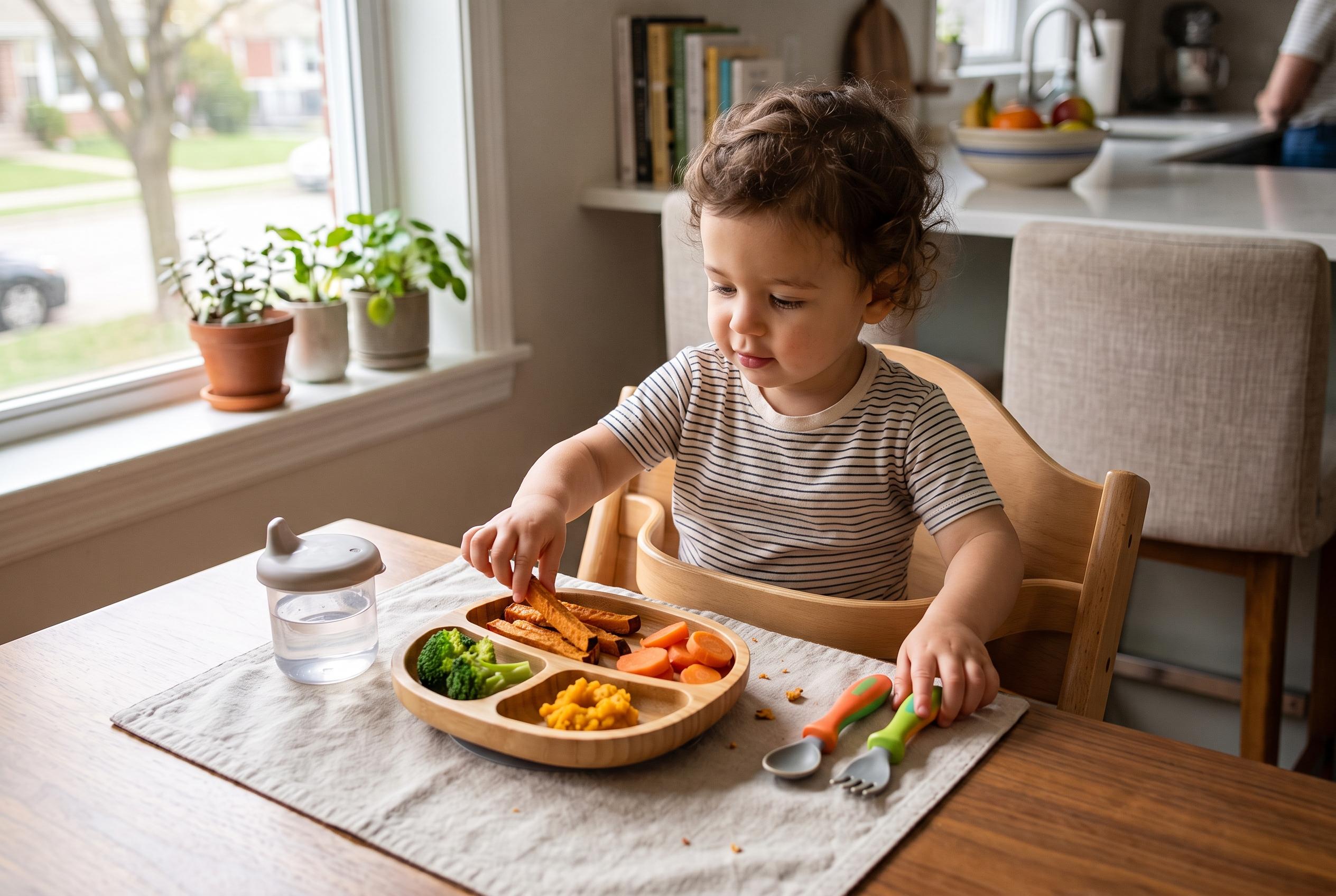

Research reveals that repeated, low-pressure exposure to foods within a familiar category can gradually increase acceptance among infants and toddlers, emphasising the need for patience and sensory exploration rather than forcing bites.
Repeated exposure to foods can play an important role in helping picky eaters feel more at ease with what is on their plate, but experts say it is not a simple numbers game. Research published in the American Journal of Clinical Nutrition found moderate evidence that offering fruits or vegetables once a day for 8 to 10 days, or longer, can increase acceptance in infants and toddlers aged four to 24 months. The review also found the effect is more likely to carry over within the same food group than across different categories, such as from one vegetable to another or from vegetables to fruit.
That matters because many parents assume a child must eat a food after a fixed number of tries. In practice, there is no universal countdown. Some children warm to a food quickly, while others need many more chances before they will even tolerate it being nearby. What matters more than tallying exposures is whether the child is becoming more comfortable, whether that means allowing the food on the plate, touching it, smelling it or eventually tasting it.
The idea of repeated exposure is broader than simply asking for bites. Children learn about food through sight, smell, touch, preparation and observation long before they are ready to eat it. That is why a child who refuses a new food is not always rejecting the taste itself; sometimes they are signalling that the food still feels unfamiliar or overwhelming.
Parents can use that to their advantage by lowering pressure. Small portions, involvement in shopping or cooking, and seeing adults enjoy a range of foods can all help make unfamiliar items feel normal. These approaches can be especially useful for children who are cautious by nature or who have sensory sensitivities around texture, smell or appearance.
The distinction between exposure and pressure is important. Repeatedly placing broccoli on a child’s plate while demanding a bite is not the same as giving that child repeated, low-pressure chances to explore broccoli at their own pace. Feeding specialists increasingly stress that children need to feel safe with food before they are ready to eat it.
Progress is often subtle. A child who once pushed a carrot away may later tolerate it beside their pasta, then pick it up, smell it, lick it or take a tiny bite. Those steps may look insignificant to adults, but they show learning is happening. Eating is a skill, and like swimming or reading, it can take time and repetition to develop.
The same principle helps explain why there is no single list of foods for picky eaters. What works for one child may fail completely for another. A better approach is to look at the foods a child already accepts and identify the shared features, such as being dry, crunchy, mild or predictable, then use those preferences as a bridge towards new foods.
That said, repeated exposure is not a cure-all. The research and related reviews focus mainly on infants and toddlers, and they suggest the strategy works best when the food being offered stays within a familiar category. If a child’s diet is becoming more limited, or eating causes distress, gagging, choking or concern about growth, parents should seek professional advice rather than relying on repeated exposure alone.
For many families, though, the message is reassuring: keep offering, keep the pressure low and measure success by comfort as well as consumption. The goal is not to force a child to eat every new food quickly. It is to help that food become familiar enough that eating it eventually feels possible.
Disclaimer: This content is for informational purposes only and is not intended to be a substitute for professional medical judgment, advice, diagnosis, or treatment.