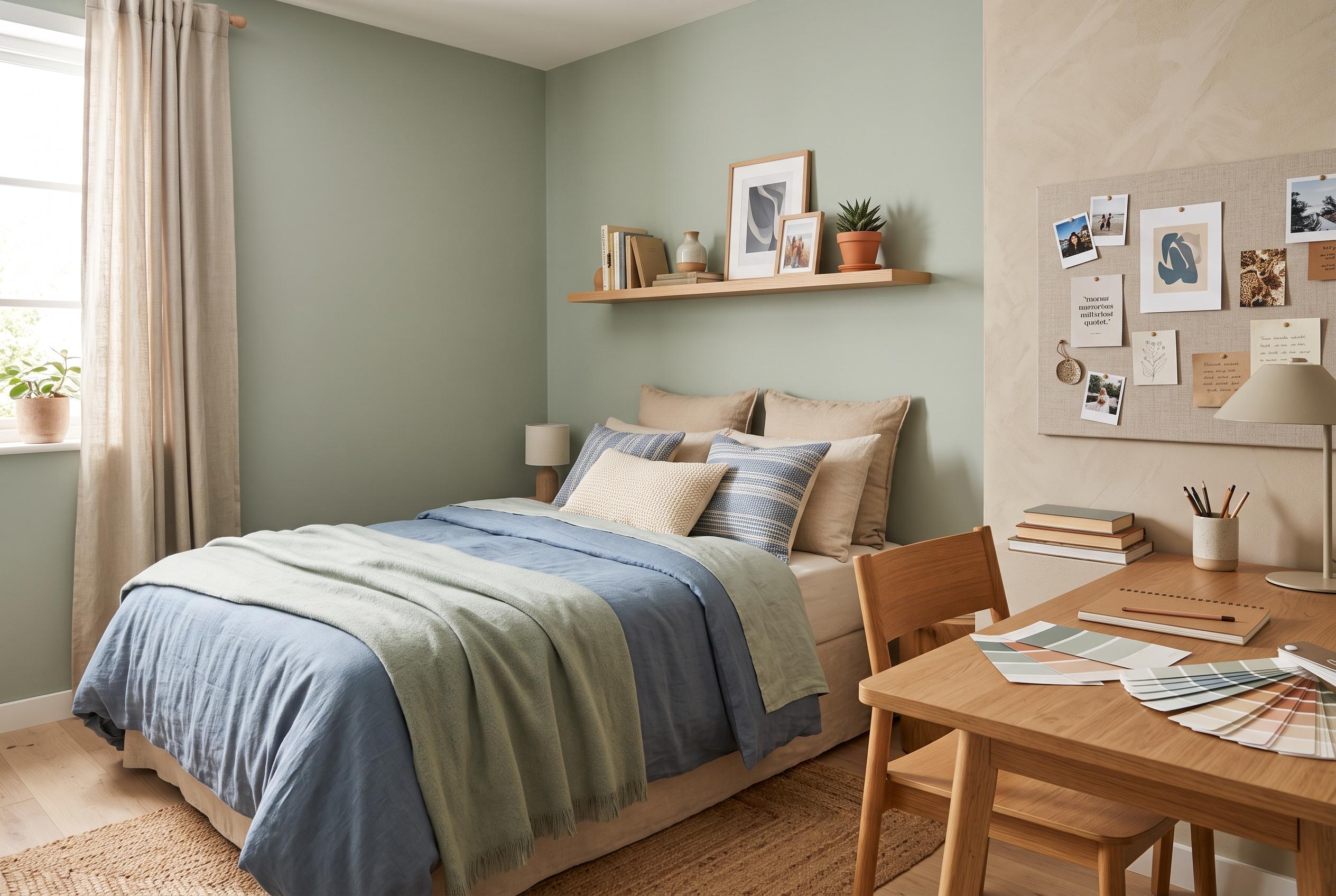

As bedroom trends shift towards more calming and personalised spaces, choosing the right colour palette can support teenagers’ emotional needs and reflect their personalities, with expert advice emphasising softer tones and collaborative decision-making.
Choosing a wall colour for a teenager’s room is about more than style. The German-language guide argues that the bedroom is often a retreat during the teenage years, and that the right palette can help support identity, calm and concentration. That view fits wider 2026 design thinking, with bedroom trends moving towards more nurturing, cocooning spaces that feel restful rather than stark.
For parents, the key is to avoid a scheme that feels heavy or cramped. Designers increasingly favour warmer, softer shades over cold greys and bright, clinical whites, which are being pushed aside in other rooms as well. Earthy neutrals, muted greens and gentle warm tones are being used to make interiors feel more inviting, while also leaving room for the teenager’s personality.
Colour psychology still matters. The article recommends calm greens for study zones and blue for sleep areas, while warning against very dark or harsh tones that may feel oppressive in a sensitive phase of life. That advice aligns with current bedroom trends, which favour soft minimalism, tactile lighting and colours that support emotional comfort rather than visual noise.
The best results usually come when teenagers are involved in the decision. Letting them help choose from a limited set of palettes can make the room feel personal without turning the renovation into a battleground. A practical compromise is to keep most walls neutral and add stronger colour through one feature wall, bedding, cushions or curtains, so the look can evolve as tastes change.
There is also a growing case for treating the whole room as a coordinated design project. Interior specialists are paying more attention to flooring as a visual anchor, and that “sixth wall” approach can help tie a teenager’s space together, especially in smaller rooms or multifunctional layouts. Used carefully, colour can mark out a study corner, a sleep area and a place to relax with friends, creating a room that works hard without feeling cluttered.
Disclaimer: This content is for informational purposes only and is not intended to be a substitute for professional medical judgment, advice, diagnosis, or treatment.