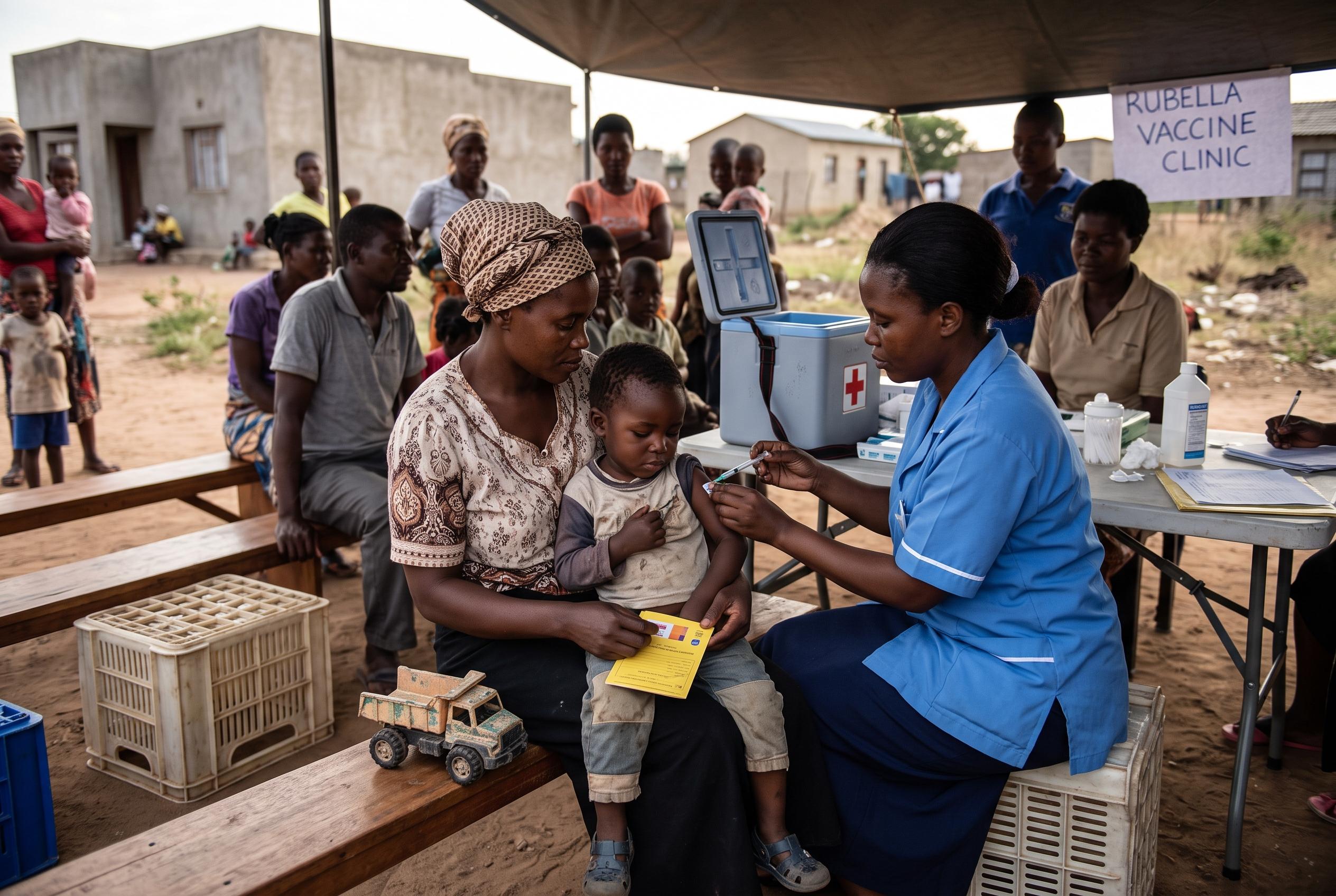

Despite a significant overall drop in congenital rubella syndrome cases over the past decade, the disease remains prevalent in regions with low vaccination coverage, highlighting ongoing global disparities and the risk of reintroduction in eliminated areas.
Global estimates suggest congenital rubella syndrome has fallen sharply over the past decade, but the disease remains unevenly concentrated in parts of the world where vaccination has not taken hold. A CDC analysis published in the Morbidity and Mortality Weekly Report estimates a decline of about 73% since 2012, from 101,381 cases a year to 26,859 in 2024. Yet the African Region accounted for 89% of estimated cases last year, underscoring that progress has been real but far from universal.
Rubella is usually a mild illness, often causing fever and a rash, and many infections produce no symptoms at all. The danger lies in pregnancy: infection early in gestation can lead to miscarriage, stillbirth or congenital rubella syndrome, which can cause deafness, cataracts, heart defects and developmental delay, according to the CDC. That makes the issue relevant not only to global health officials but also to anyone planning travel or pregnancy.
Vaccination has expanded steadily. By 2024, 179 of 194 countries had added rubella-containing vaccine to routine immunisation, up from 132 in 2012, and global first-dose coverage among infants aged 12 to 23 months rose from 39% to 73%. Even so, 15 countries still do not include the vaccine in their schedules, leaving about 21 million infants unprotected. The CDC says those countries are concentrated in low-income and conflict-affected settings, including Afghanistan, Chad, Nigeria and South Sudan.
The rebound in reported cases in 2024, after a long decline, was linked to transmission in countries without routine vaccination and during South Africa’s rollout. The CDC said Nigeria and the Democratic Republic of the Congo began introducing the vaccine in 2025 and 2026, a step researchers expect to reduce the pool of unprotected infants. The agency has also modelled that extending vaccination to the remaining countries could prevent more than 986,000 birth defect cases over three decades.
For the United States, the message is that elimination does not mean immunity from importation. The Americas were verified as free of endemic rubella in 2015 and, according to the CDC, no country that has eliminated the virus has later seen endemic transmission return. But the agency also documented a congenital rubella syndrome case in Florida in 2025, linked to a strain circulating in South Africa. That is why the CDC continues to advise checking immunity before pregnancy, and why travellers should confirm vaccination status before visiting places where rubella still circulates.
Disclaimer: This content is for informational purposes only and is not intended to be a substitute for professional medical judgment, advice, diagnosis, or treatment.