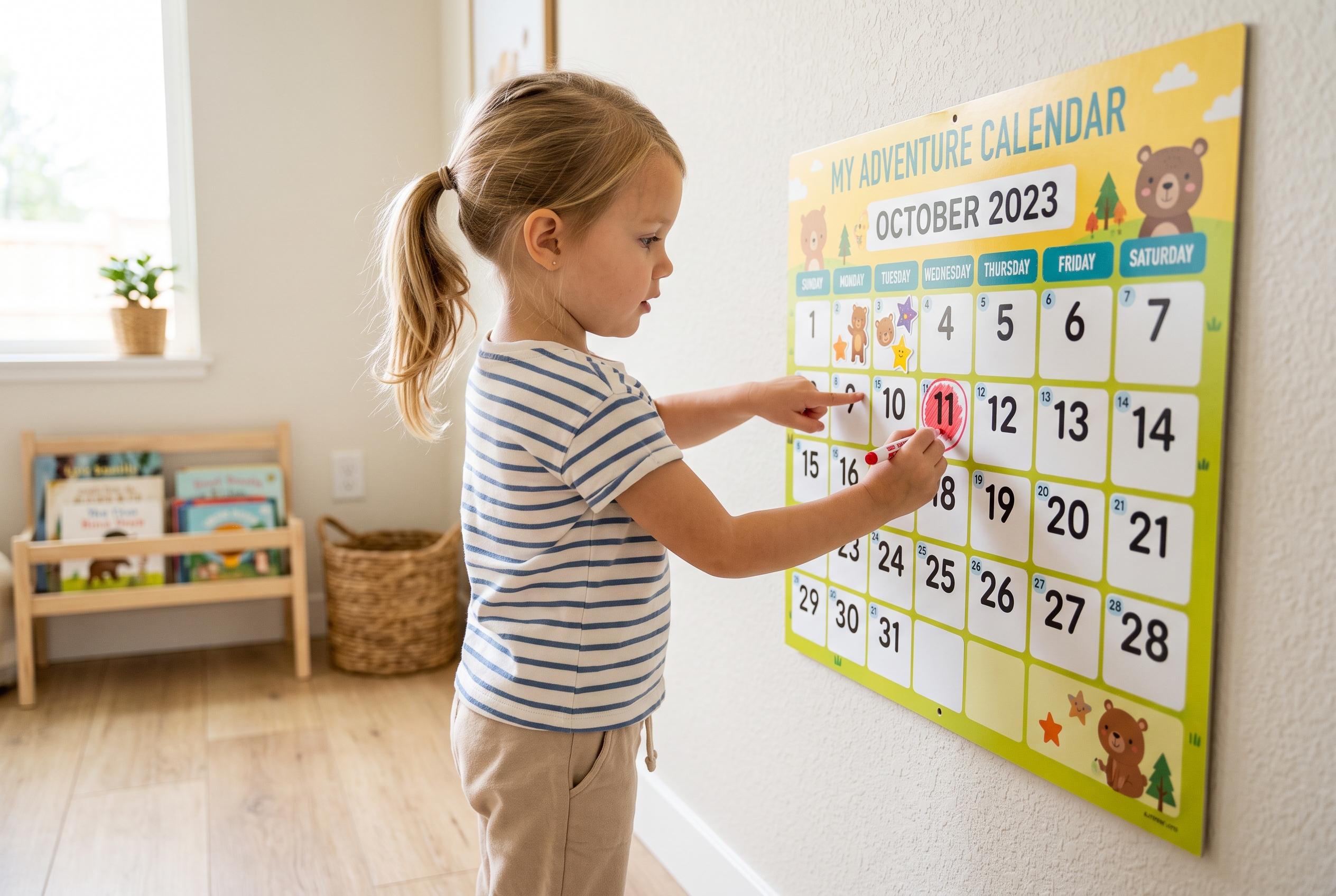

Simple, physical calendar activities help young children grasp the concept of time, supporting language, numeracy, and routine development through visual and tactile engagement.
Young children do not naturally think in neat stretches of days and weeks. For many, ideas such as “yesterday”, “next week” or “in three months” are too abstract to grasp at once. That is why simple calendar routines can be so useful: they turn time into something children can see, move, count and repeat.
Educational calendars are already used by public libraries to support family learning. The Indianapolis Public Library, St. Louis County Library, Great River Regional Library, OC Public Libraries and Sonoma County Library all offer monthly early learning or early literacy calendars that encourage daily reading, singing, talking, playing and counting. Those programmes reflect a common approach in early childhood education: repetition, visual cues and small everyday tasks help young children build language, numeracy and routine.
A basic wall calendar can become a powerful teaching tool. Parents can label “Yesterday”, “Today” and “Tomorrow” and ask children to move the markers each morning. They can add coloured stickers or paper links to count down to a birthday or holiday, giving children a concrete sense of elapsed time. Other useful activities include marking the weather each day, noting how many days are left in the month, or giving certain weekdays special colours for recurring events such as swimming lessons or library visits.
For slightly older children, calendars can do even more. Weekly routine maps help them connect days with familiar activities, which supports memory and planning. Monthly milestone stamps can mark goals, such as finishing a book or practising a new habit. Families can also chart daylight or temperature over time, turning a calendar into a simple data exercise that links timekeeping with science and observation.
The main advantage of these activities is that they make time visible. Young children often understand time through experience rather than numbers, so physical calendars work better than digital ones at this stage. A child can touch the page, see the whole month and watch days disappear one by one. Even two minutes a day can help build temporal awareness, counting skills and confidence with routines.
Disclaimer: This content is for informational purposes only and is not intended to be a substitute for professional medical judgment, advice, diagnosis, or treatment.