
A growing movement reframes the living room as a hub for natural, family-centred learning, blending everyday routines with educational activities across the homeschooling community.
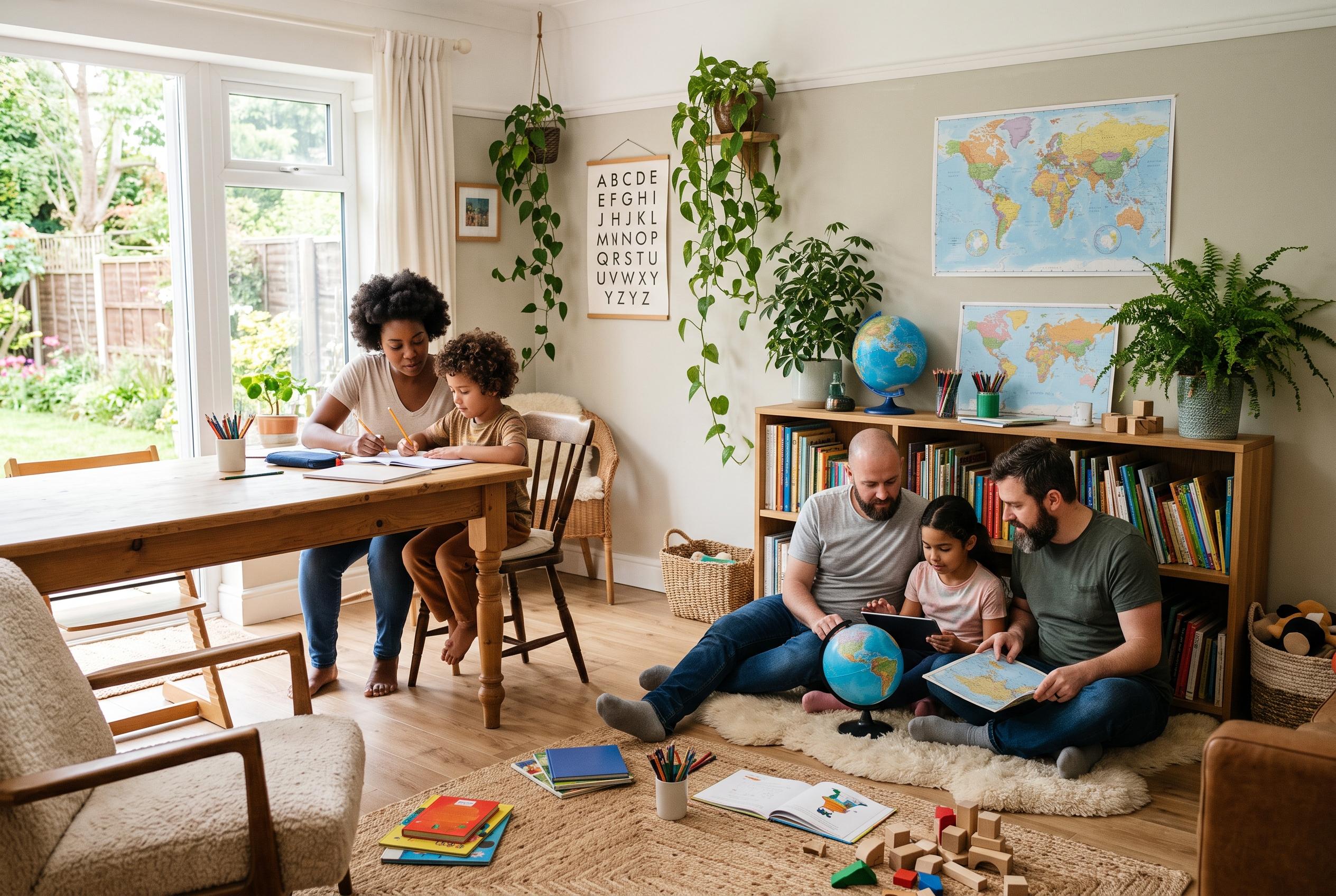
In the fourth instalment of HEAV’s “(Not) Back-to-School” series, the home’s living room is reframed as a place where learning can happen naturally, not just a space for rest. A shelf of library books can create a reading corner, while a board game can quietly build skills in logic, strategy and maths. Arrow Family Academy describes a similar family-centred approach in its homeschool community, where parents remain the main educators while children take part in in-person classes and enrichment activities.
The idea is simple: education does not have to be separated from everyday family life. A book read for pleasure can also strengthen comprehension and vocabulary, and a conversation over the coffee table can prompt children to ask questions and think more deeply. Kindred Families Homeschool Co-op says its work is built around connection, shared values and mutual support among homeschooling families, reflecting the same belief that learning is often strongest when it is part of normal relationships and routines.
That approach also extends beyond reading and conversation. Music can sharpen listening and spark creativity, while group activities can bring different ages together around the same subject. K12 Together says its curriculum is designed for family-style learning, with one-room schoolhouse methods that allow siblings to study a shared topic at different levels, and Creekview Family Learning similarly offers tutoring and guidance aimed at helping children grow in confidence through personalised support.
Other organisations in the homeschooling world are building on the same principle in different ways. Layers of Learning focuses on activity-based courses that can be used across age groups, and Anchored Family Learning Center says its two-day-a-week programme is shaped by parent volunteers and faith-based teaching. Taken together, these models show why the living room can be more than a place to unwind: it can also be a setting where curiosity, conversation and family learning meet.
Disclaimer: This content is for informational purposes only and is not intended to be a substitute for professional medical judgment, advice, diagnosis, or treatment.