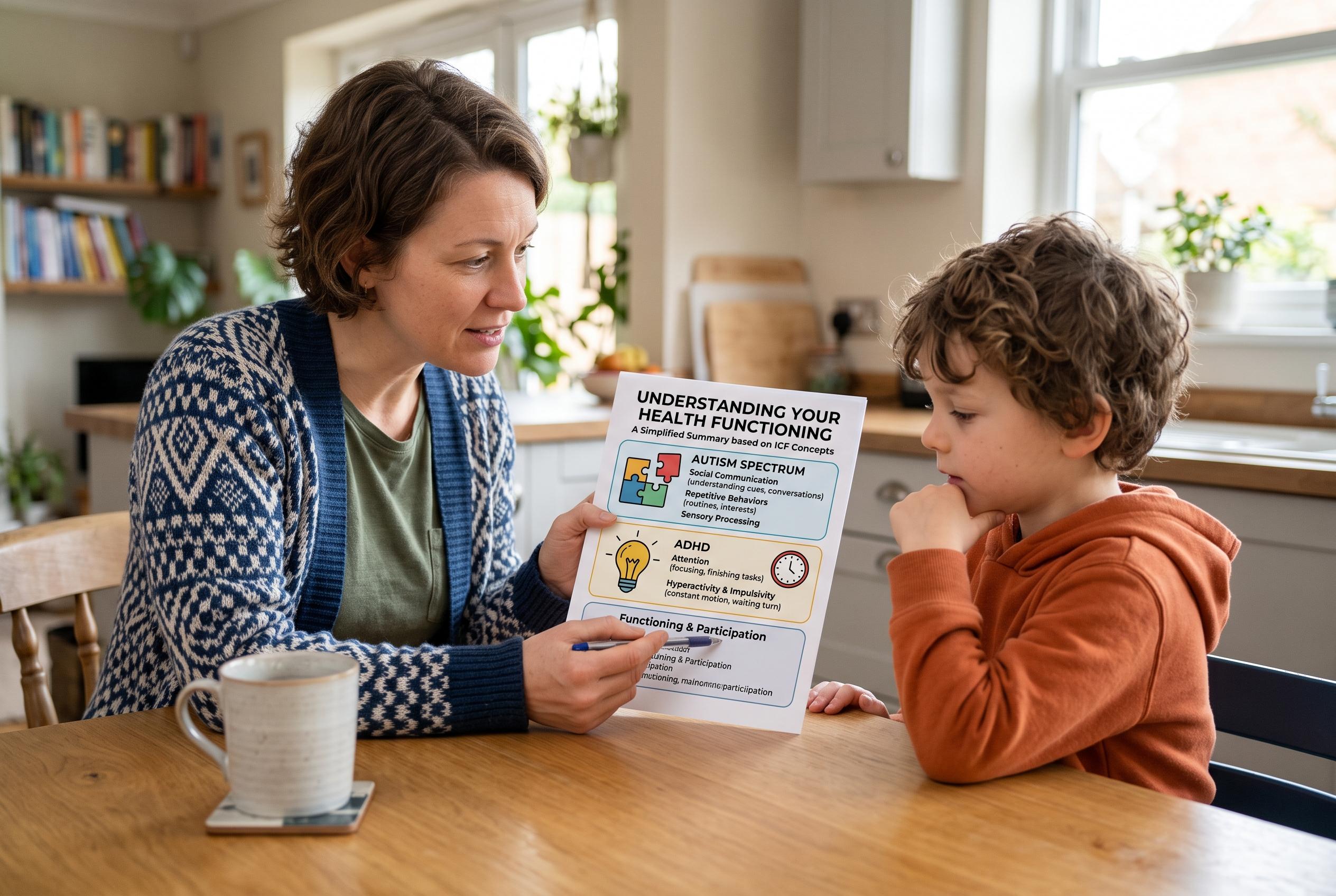

A recent study from Karolinska Institutet reveals that straightforward, structured summaries based on the International Classification of Functioning can improve parental understanding and communication, offering a new approach to supporting children with autism and ADHD.
A new study from Karolinska Institutet suggests that a simple, structured summary of a child’s everyday functioning may be as helpful to parents as the diagnosis itself. The research, published in the Journal of Autism and Developmental Disorders, looked at how families responded to a digital report based on the International Classification of Functioning, Disability and Health, or ICF, which focuses on strengths, difficulties and environmental influences rather than symptoms alone.
The study surveyed 357 parents of children with autism, ADHD or both after they had completed the assessment and received a summary of the results. According to the researchers, more than nine in ten parents said the descriptions of their child’s strengths and challenges were accurate. About half said the report helped them better understand their child’s abilities and the outside factors that could make daily life easier or harder.
Sven Bölte, a professor at Karolinska Institutet and senior author of the study, said the summary gave parents a clearer overall picture and could support conversations with schools and health professionals. John Hasslinger, a researcher at KIND, said many parents reported discovering new aspects of their child and finding it easier to build on strengths while managing difficulties. The researchers said the approach draws on ICF Core Sets for autism and ADHD, a framework developed through years of work at KIND to describe functioning in practical terms.
The findings add to earlier work showing that ICF-based assessments can be used online and applied in real-world settings. The authors argue that turning assessment data into a plain-language summary may improve communication between families and professionals and help decisions in health care and education. For parents and carers, the value may lie not in a new diagnosis, but in a clearer, more usable account of how a child manages everyday life.
Disclaimer: This content is for informational purposes only and is not intended to be a substitute for professional medical judgment, advice, diagnosis, or treatment.