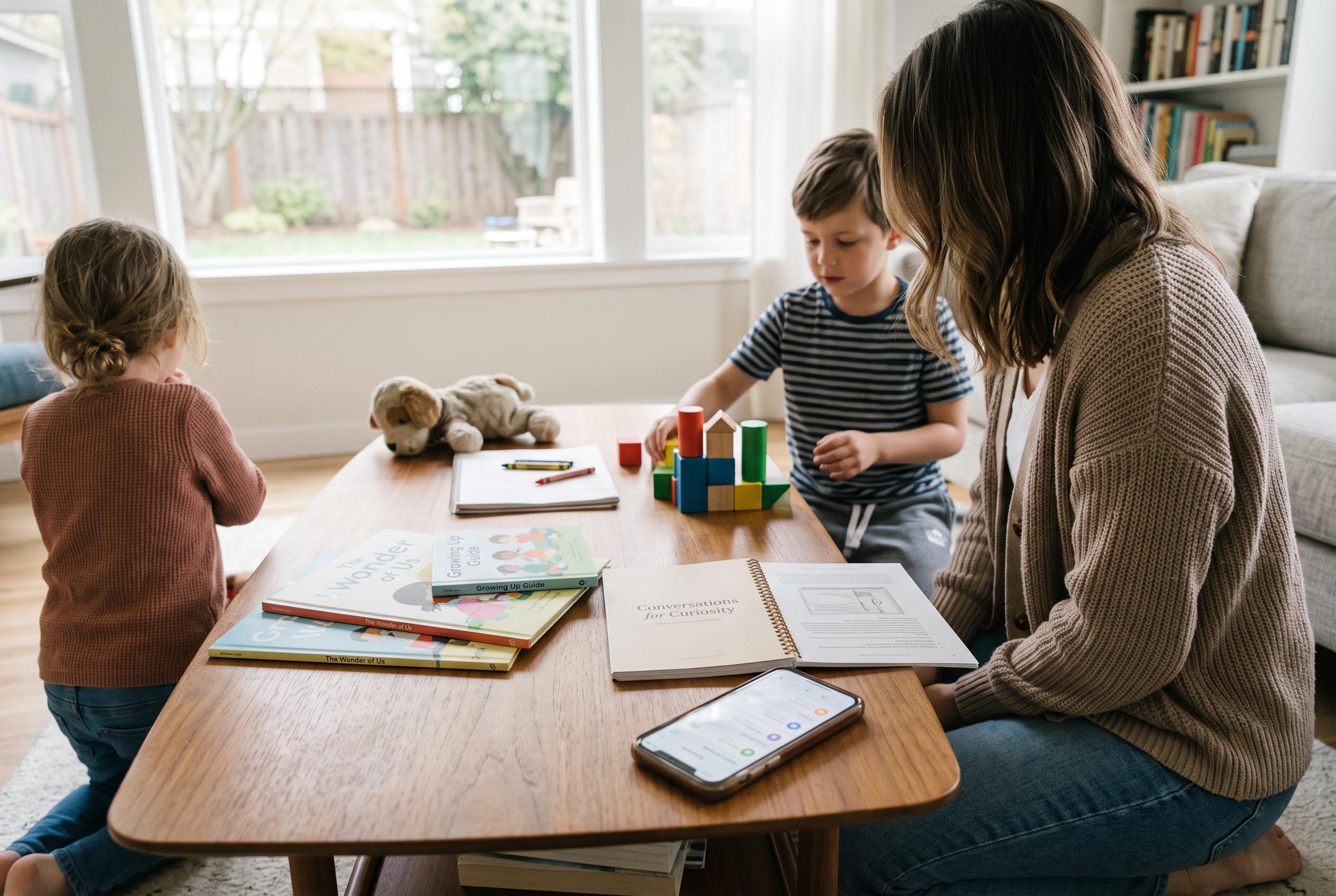

Bark, a parental-monitoring company, has published practical advice for parents on having ongoing, age-appropriate conversations with children about pornography, emphasising calm, honest communication from an early age.
Bark, the parental-monitoring company used by millions of families to screen children’s phones and messages, has set out a practical guide for one of the most difficult conversations parents may face: pornography. In a recent post, writer Allison Scovell argued that the issue should not be treated as a one-off warning, but as an ongoing, age-appropriate conversation that begins early and develops as children grow.
Scovell pointed to research suggesting that the average age of first exposure is 12, with a notable minority seeing porn by age 10 or younger, often by accident. Bark’s advice is to start simply with younger children, using plain language about private body parts and the fact that some online material is only for adults. For children aged seven to nine, the message becomes more direct: accidental exposure can happen, and children should know they will not be punished for stumbling across explicit content.
By the time children reach the tween years, the focus shifts to realism. Bark recommends explaining that pornography does not reflect ordinary relationships and that sending nude images can carry legal and emotional consequences. For teenagers, the conversation should become more explicit still, with parents addressing consent, boundaries and the way porn can distort expectations about intimacy. Scovell’s advice is that parents should speak calmly and without shame, giving young people language they can use if they encounter sexual content online.
That approach is consistent with wider research. Common Sense Media has reported that 73% of teens aged 13 to 17 have watched pornography online, and that more than half first encountered it by age 13. The National Sexual Violence Resource Centre says exposure to sexually explicit material can distort children’s understanding of sexuality and raise the risk of harm, while other parent-focused guides urge adults to begin the discussion before children are likely to encounter porn on their own. The broader message is the same: silence leaves children to interpret what they see alone, while direct, calm discussion gives them a framework for asking questions and recognising unhealthy material.
Disclaimer: This content is for informational purposes only and is not intended to be a substitute for professional medical judgment, advice, diagnosis, or treatment.