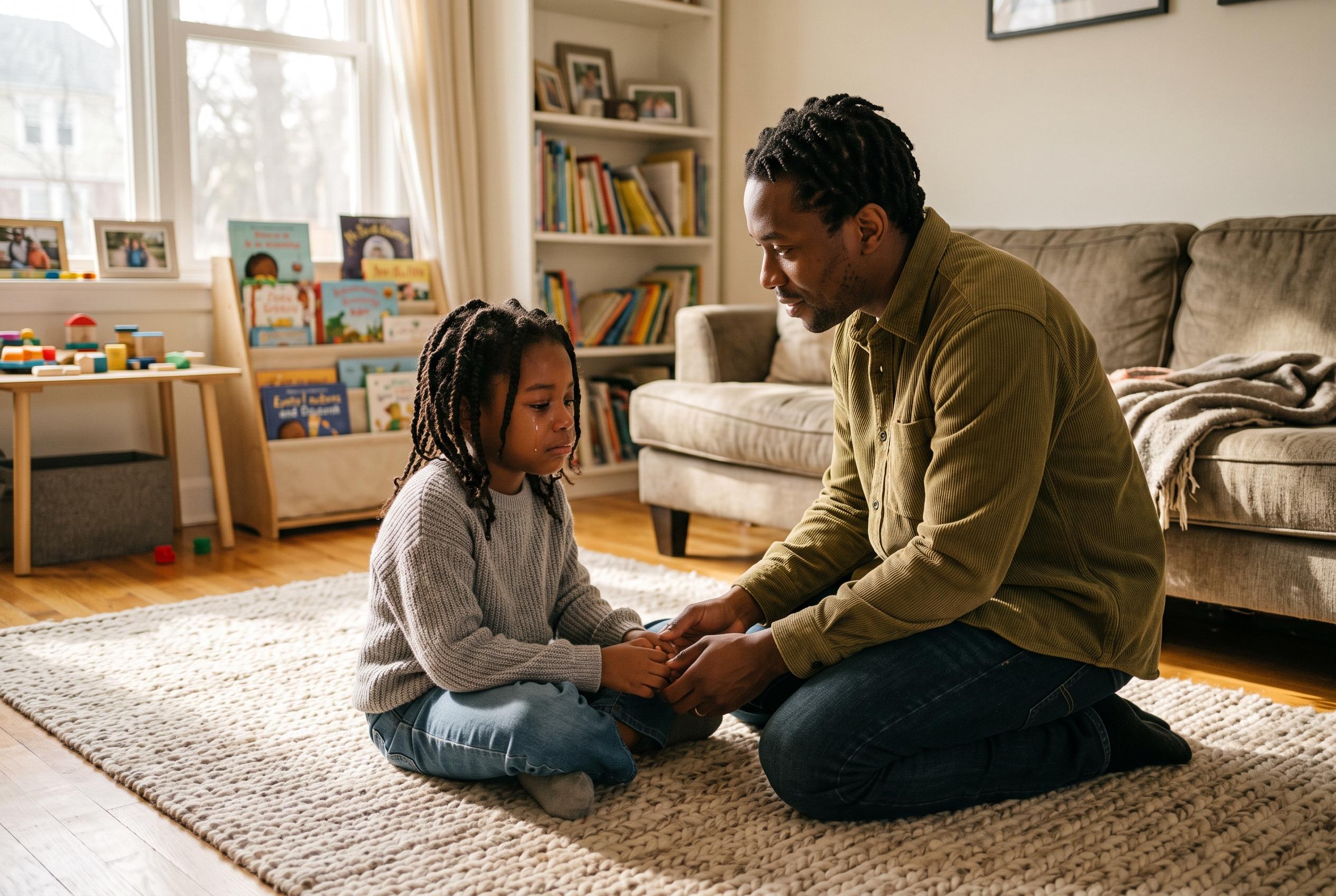

Experts warn that celebrating strength in Black children risks masking emotional struggles; fostering true resilience requires balancing protective socialisation with space for vulnerability and honesty in confronting bias.
Black children are often praised for being “strong” when what adults are really seeing is restraint. In a piece for Successful Black Parenting, Bernadette Anderson argues that this habit of rewarding quiet endurance can teach children to hide disappointment, anger and fear rather than work through them. Her warning is echoed by research suggesting that emotional suppression in Black families is best understood not as a simple parenting flaw, but as part of a wider effort to prepare children for bias and unequal treatment.
That tension matters because suppression can have mixed effects. A study indexed in PubMed found that when parents discussed racism with their children, encouraging emotional control could reduce outward behavioural problems, but it was also linked to more inward distress, especially among children with higher resting vagal tone, a measure tied to how the body regulates stress. A related paper on PMC reached a similar conclusion, describing suppression as a strategy that may help children manage immediate situations while increasing the risk of anxiety or other internalising symptoms if it is not paired with open conversation and support.
Research on young Black children also shows why the issue cannot be separated from racism itself. A paper on attachment and emotion regulation published on PMC argues that Black families often adapt caregiving in response to anti-Black racism, using racial-ethnic socialisation to teach children how to interpret the world and protect themselves emotionally. That approach can build resilience, but only if children also receive warmth, reassurance and space to express difficult feelings.
Anderson’s central point is that resilience should not be confused with emotional silence. Children who learn to mask pain may become highly capable and dependable, yet still carry anxiety, exhaustion or a deep sense that their feelings are unsafe to share. That can make them look mature before they are ready, while quietly limiting their ability to ask for help, name what they need or trust that they deserve care.
The broader lesson, supported by findings on Black youth and discrimination, is that emotional health cannot be built through toughness alone. Parents and caregivers are being asked to do two things at once: prepare children for a world that may treat them unfairly, and still protect their right to childhood. That means making room for tears, disappointment and vulnerability, while teaching children that strength can include honesty, rest and the freedom to be heard.
Disclaimer: This content is for informational purposes only and is not intended to be a substitute for professional medical judgment, advice, diagnosis, or treatment.