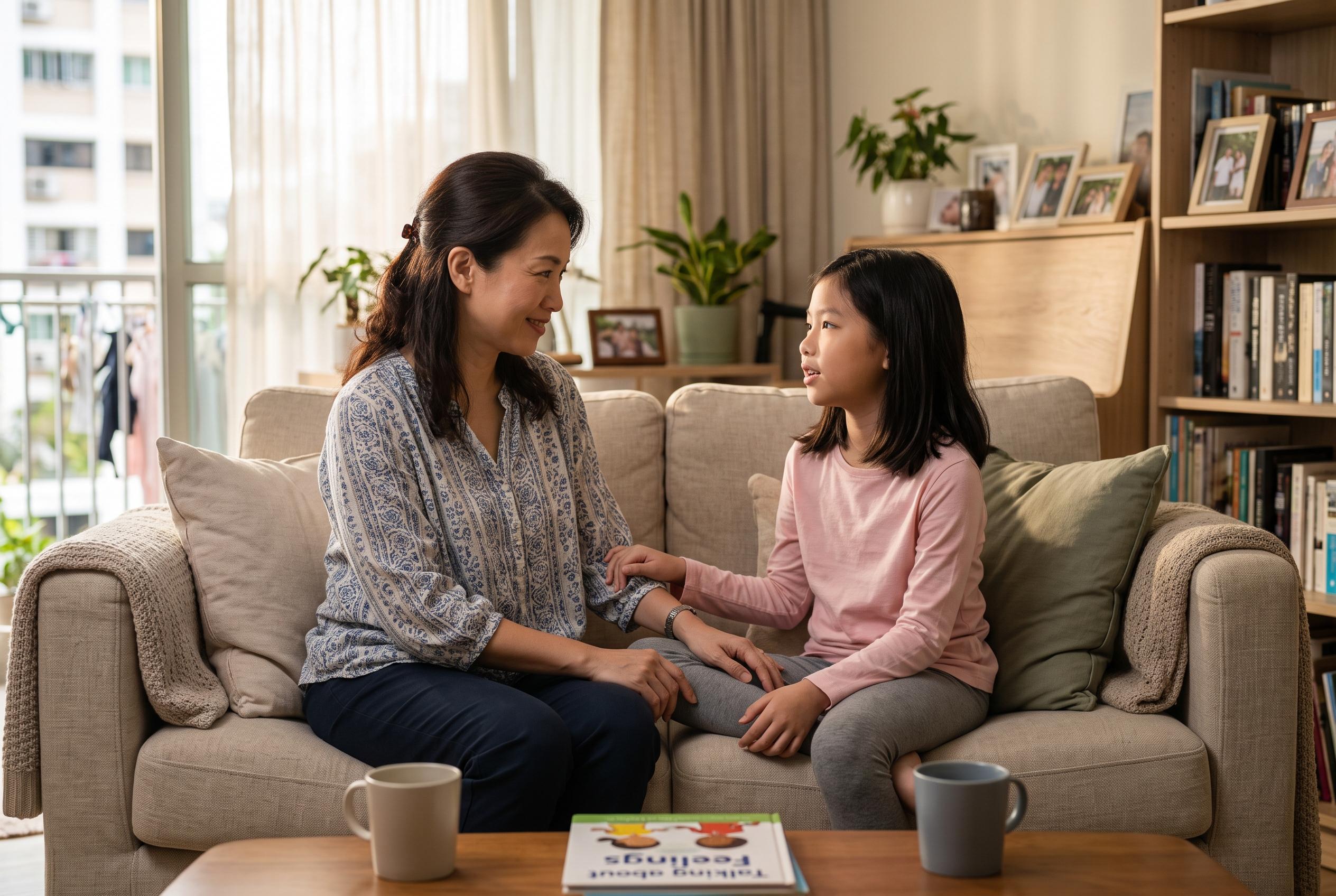

A Singapore doctor highlights how parental stress influences children’s emotional well-being, urging families to foster calmer home environments during exam periods.
A Singapore doctor and mother of three is urging parents to think less about perfect schedules and more about the emotional climate at home, after a viral social media post about exam pressure reignited debate over how stress is passed from adults to children.
The story, which spread widely on TikTok before being reposted on Reddit, described a young Singaporean woman whose childhood was filled with tuition and activities from early morning until night, and who recalled hyperventilating when she opened her PSLE results at age 11. Dr Katrina Gisbert-Tay wrote that the reaction to the post reflected a deeper truth many parents ignore: children often absorb stress before anyone speaks about it.
Her argument is not just anecdotal. A 2014 study published in Psychological Science found that infants can pick up on their mothers’ stress through cues such as voice, touch and smell, while researchers at UC San Francisco reported that babies’ physiological responses can mirror those of a stressed parent. The broader point, psychologists say, is that stress can move through a household through tone, body language and other signals long before it becomes a conversation.
That dynamic may be especially relevant in high-pressure education systems such as Singapore’s, where the PSLE can shape family routines for months. A 2023 National Youth Mental Health Study found that about one in three young people aged 15 to 35 reported severe or extremely severe symptoms of depression, anxiety or stress. Gisbert-Tay argues that much of the pressure around exams comes not only from children’s needs, but from adults’ fear of falling short.
She is also careful not to frame tutoring or structured learning as the problem. Instead, she says parents should focus on regulating themselves first: pausing before walking through the door, relaxing the shoulders, unclenching the jaw and taking a slow exhale. Her message is simple enough for families to use immediately: children may not need a flawless parent, but they do need a calmer one.
Disclaimer: This content is for informational purposes only and is not intended to be a substitute for professional medical judgment, advice, diagnosis, or treatment.