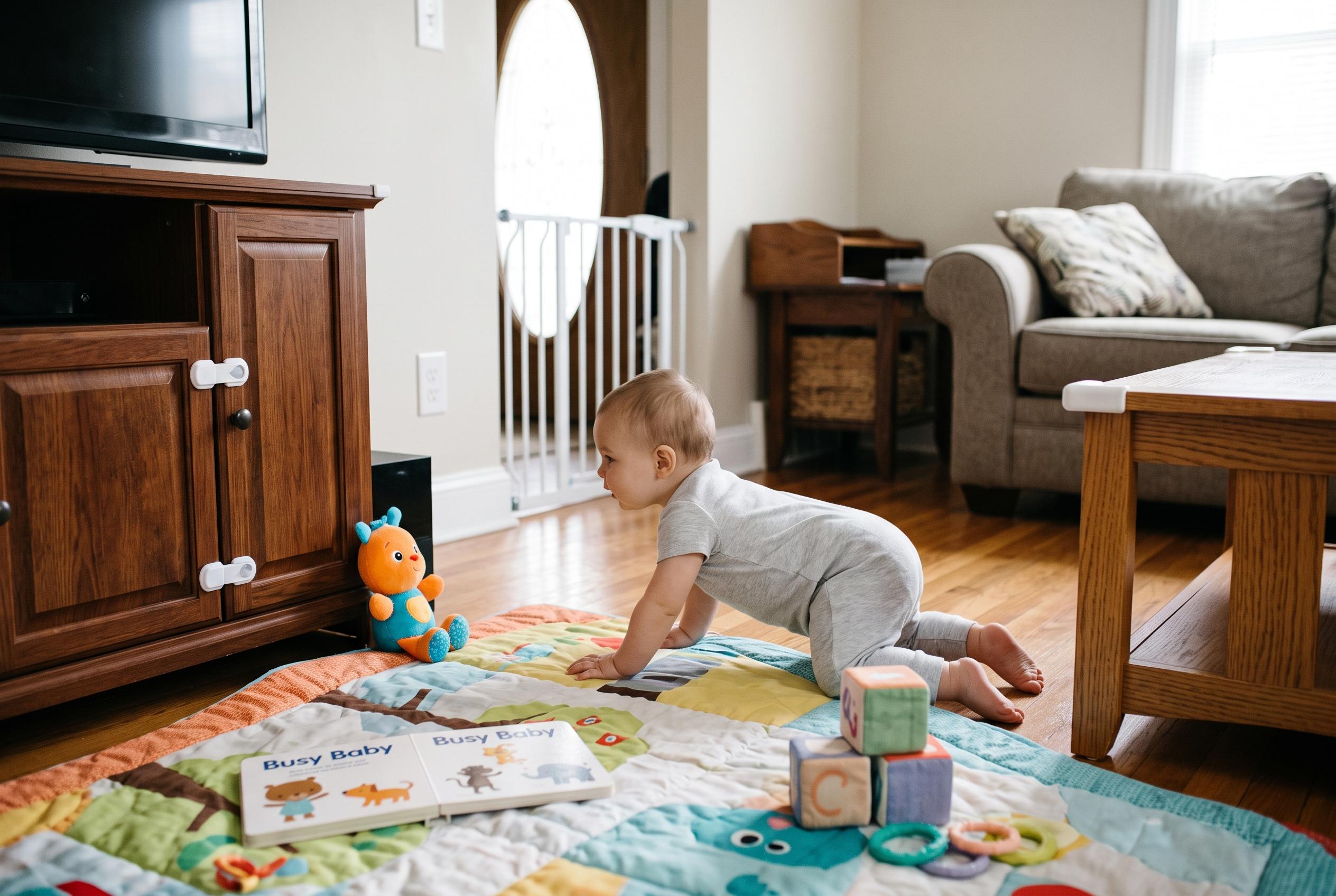

Sonny’s move from immobility to crawling turns household chaos into a vigilant game of baby-proofing, marking a pivotal point in both his growth and family life.
Sonny has reached a new and slightly alarming milestone: he can now crawl forward. For his parent, that means the household has moved into the phase of constant interception, as the baby can finally head towards whatever has caught his eye, including an old Elizabeth Warren sweatshirt draped over an office chair sleeve. It is the sort of moment that feels triumphant and chaotic at once, with dogs suddenly on the losing side of the chase and every room turning into an obstacle course.
That shift comes at a familiar age. Cleveland Clinic says many babies begin crawling between seven and 10 months, while Healthline and Medical News Today put the usual window at roughly seven to 11 months. Experts note that crawling helps build strength, balance and coordination, although some babies move through this stage differently or skip it altogether and go straight to standing or walking. For parents, the change is as much about safety as development: once a baby is mobile, small objects, low furniture and anything within grabbing distance all become potential hazards.
The practical lessons arrive quickly. A child who can travel under his own power also tends to find lint, paper scraps and dust bunnies with unnerving speed, and feeding time becomes a game of signs, guesses and dropped food for the dogs. Like many parents, Sonny’s caregiver has discovered that baby gear, sensory toys and grocery carts are only useful up to a point before instinct takes over. What begins as a proud developmental leap soon becomes an exercise in speed, vigilance and home rearrangement, as the next round of baby-proofing begins.
Disclaimer: This content is for informational purposes only and is not intended to be a substitute for professional medical judgment, advice, diagnosis, or treatment.