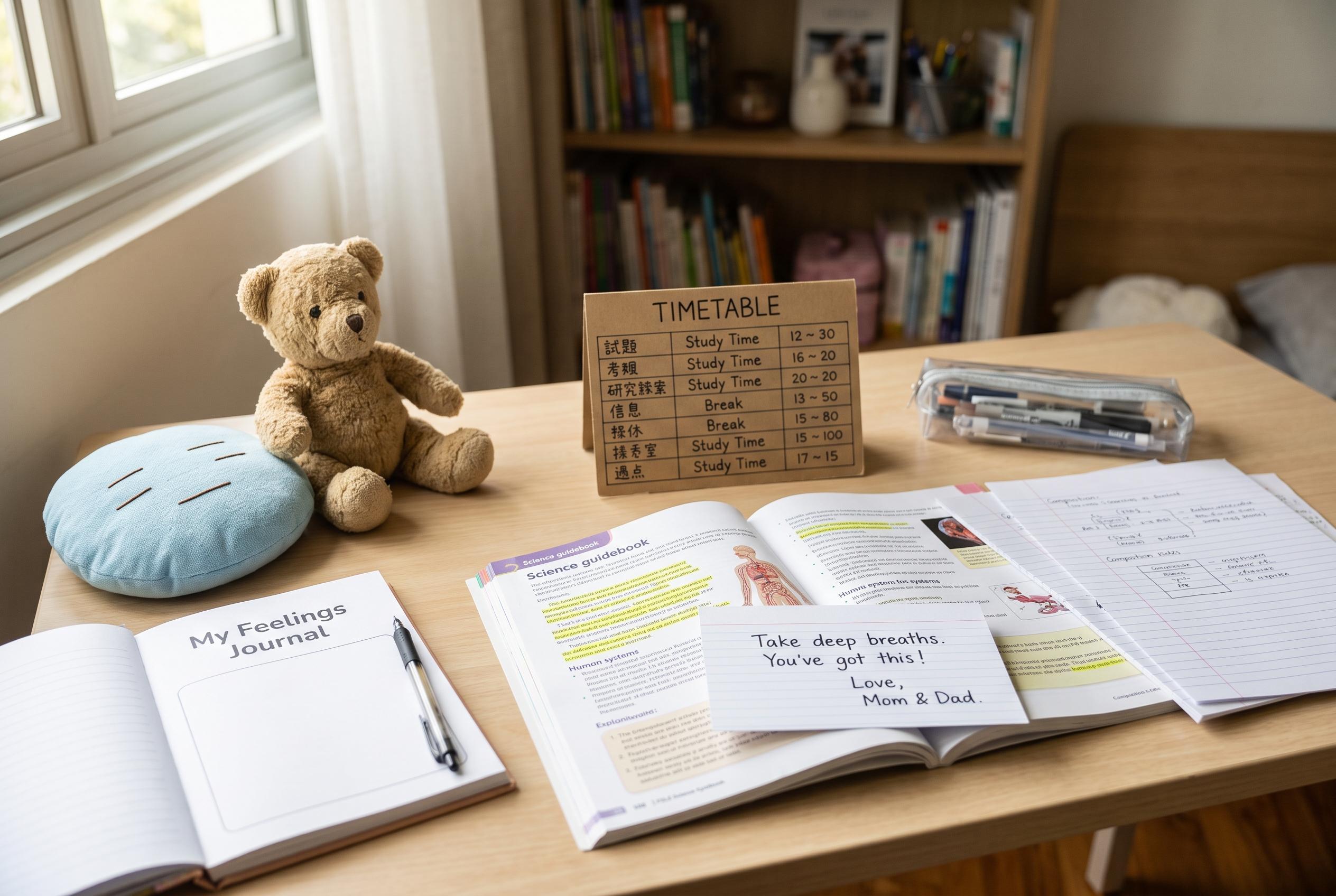

As PSLE approaches, experts stress the importance of understanding and managing children’s stress beyond academic preparation, urging parents to listen, observe, and provide emotional support to safeguard their child’s well-being amid exam pressures.
As Primary School Leaving Examination season approaches, parents are being urged to look beyond the marks and pay attention to what is driving a child’s anxiety. Guidance from child welfare and education groups suggests that stress often shows up less as worry in words and more as changes in mood, sleep, behaviour or school performance, making careful observation and calm conversation essential.
One of the most useful first steps is simply to listen. Children may not be able to explain why they are upset, but a parent who stays available, asks open questions and avoids rushing to fix the problem can often uncover the real source of pressure. That could be fear of disappointing adults, uncertainty about revision, tiredness, friendship issues or a sense that the exam has come to define everything.
Experts also say parents should watch for warning signs that stress is becoming harder to manage. The National Education Association says irritability, withdrawal, changing routines, missed responsibilities and a loss of interest in usual activities can all be clues. Harvard’s Centre on the Developing Child has warned that prolonged, intense stress can affect a child’s development, which is why support at home matters so much during high-pressure periods.
Practical coping strategies can also help. The NEA recommends exercise, journalling and mindfulness as simple ways for children to release tension, while PBS KIDS for Parents and other child-focused resources encourage activities that help children name feelings and talk about them. Schools and parent groups have also pointed to structured approaches such as communicate, get active, look and listen, and monitor, which can help families respond consistently rather than react in the moment.
The broader message is that exam support should not begin and end with study schedules. Children preparing for PSLE need reassurance that their worth is not tied to a single test, and that adults are willing to hear what they are struggling with. For many families, the best stress management starts with a conversation that is patient, specific and honest.
Disclaimer: This content is for informational purposes only and is not intended to be a substitute for professional medical judgment, advice, diagnosis, or treatment.