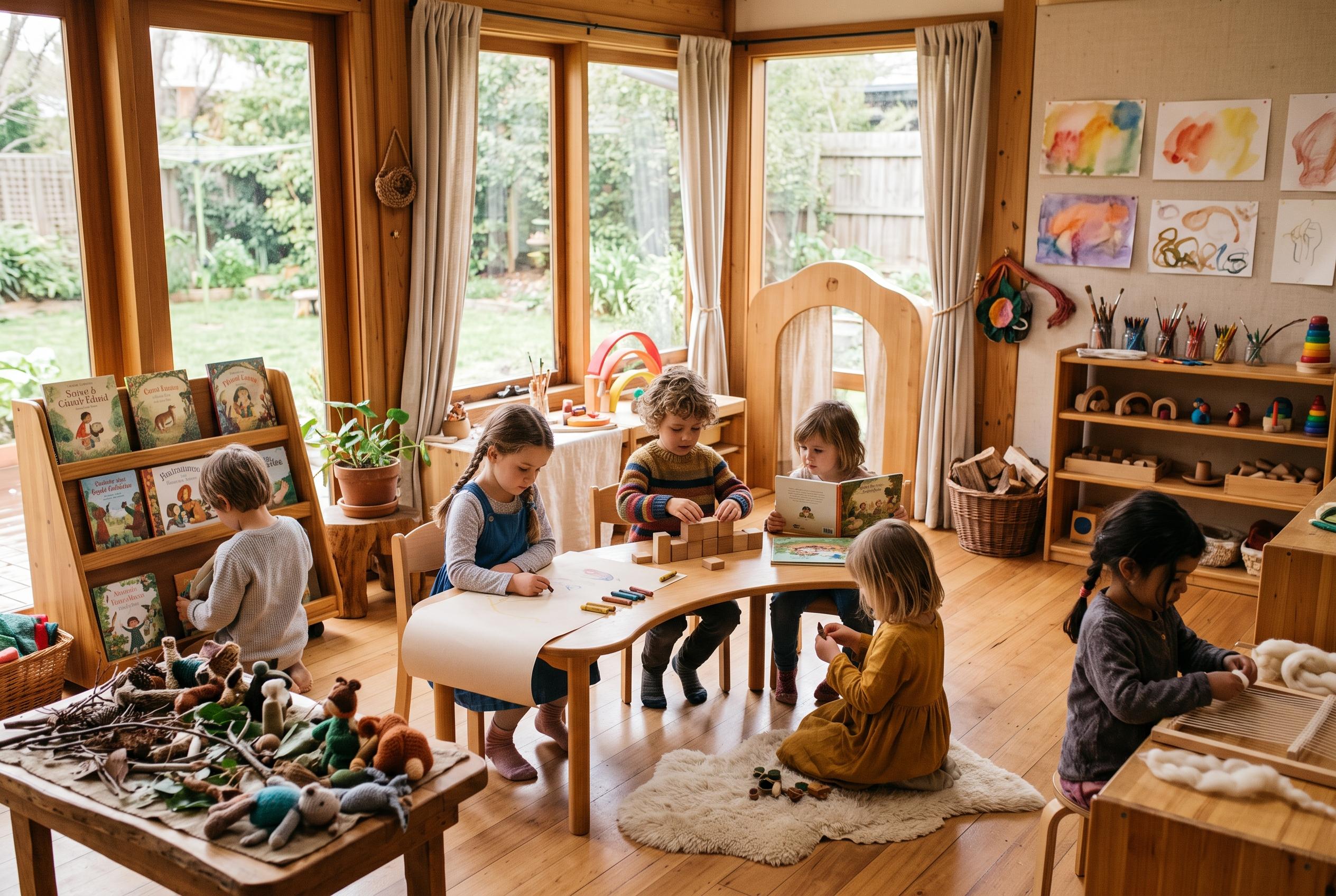

While some Australian schools embrace AI tools, alternative systems like Steiner Education Australia are wary, citing risks to children’s cognitive development and the importance of maintaining independent thought in the classroom.
A major alternative school system in Australia says it will not build its own generative AI tool for teachers and students, underscoring the caution many educators still feel as artificial intelligence spreads through classrooms. Steiner Education Australia chief executive Andrew Hill said the network would not follow public systems in New South Wales, South Australia and Queensland, which have already developed AI tools for schools.
Hill said the group would take a wary approach to any technology that could affect children’s development. The ABC reported that he framed the issue around the health of the developing brain, even as supporters of classroom AI argue it can ease teacher workloads and help older students work more efficiently.
The debate is being sharpened by growing concern that heavy use of AI may weaken independent thought. Reuters-style reporting from the OECD has shown that many Australian teachers have already tried AI in their work, while research cited in the ABC report points to a possible link between reliance on AI and weaker critical thinking. A 2025 UK study, also cited by the broadcaster, found that younger people with higher dependence on AI performed less well on critical-thinking tests than older respondents who used it less.
That concern is shaping policy as well as practice. The ABC reported that the New South Wales government this week said it would consider banning take-home assessments as part of a wider review into AI’s effect on learning. At the same time, Queensland’s education department is already using a tool called Corella for teachers and students in years 7 to 10, with parental consent required for pupils, and says it is designed to prompt students rather than hand them full answers.
Experts are divided over whether AI is a learning aid or a shortcut. University of Queensland education psychology professor Jason Lodge told the ABC that the main danger is cognitive “offloading”, where students let the machine do work they should be doing themselves. But he also said there are situations where AI can be useful, such as helping students organise writing or check spelling when those are not the main learning goals. Research and commentary from RMIT Online, UTS and other education specialists make a similar point: AI can improve efficiency, but only if schools set clear limits and teach students how to use it without losing the habit of thinking for themselves.
That tension is playing out differently across Queensland schools. At Samford Valley Steiner School, north-west of Brisbane, director Andrew Curry said lesson design should avoid intellectual shortcuts, even if that means slower progress. By contrast, Ali Kadri, chief executive of the Islamic College of Brisbane, is developing an in-house assistant called Aladin and says it could flag students at risk of falling behind and give teachers what he called “superpowers”. His colleague Vincent Parry, once sceptical, said he now sees value in using AI to simplify difficult explanations for students whose first language is not English. The split reflects a broader question now confronting schools: whether AI should replace part of the work of teaching, or remain a tightly controlled aid to it.
Disclaimer: This content is for informational purposes only and is not intended to be a substitute for professional medical judgment, advice, diagnosis, or treatment.