
Experts highlight the benefits of unstructured creative activities, emphasising how freeform art and loose parts play foster imagination, resilience, and emotional expression in children, with potential long-term benefits for their cognitive and social development.
Letting children glue, paint and assemble whatever they like may look untidy, but child development experts say the value lies in exactly that openness. Freeform art gives children room to experiment without worrying about rules or right answers, and that freedom can strengthen imagination, confidence and persistence, according to the World Economic Forum and other early years specialists.
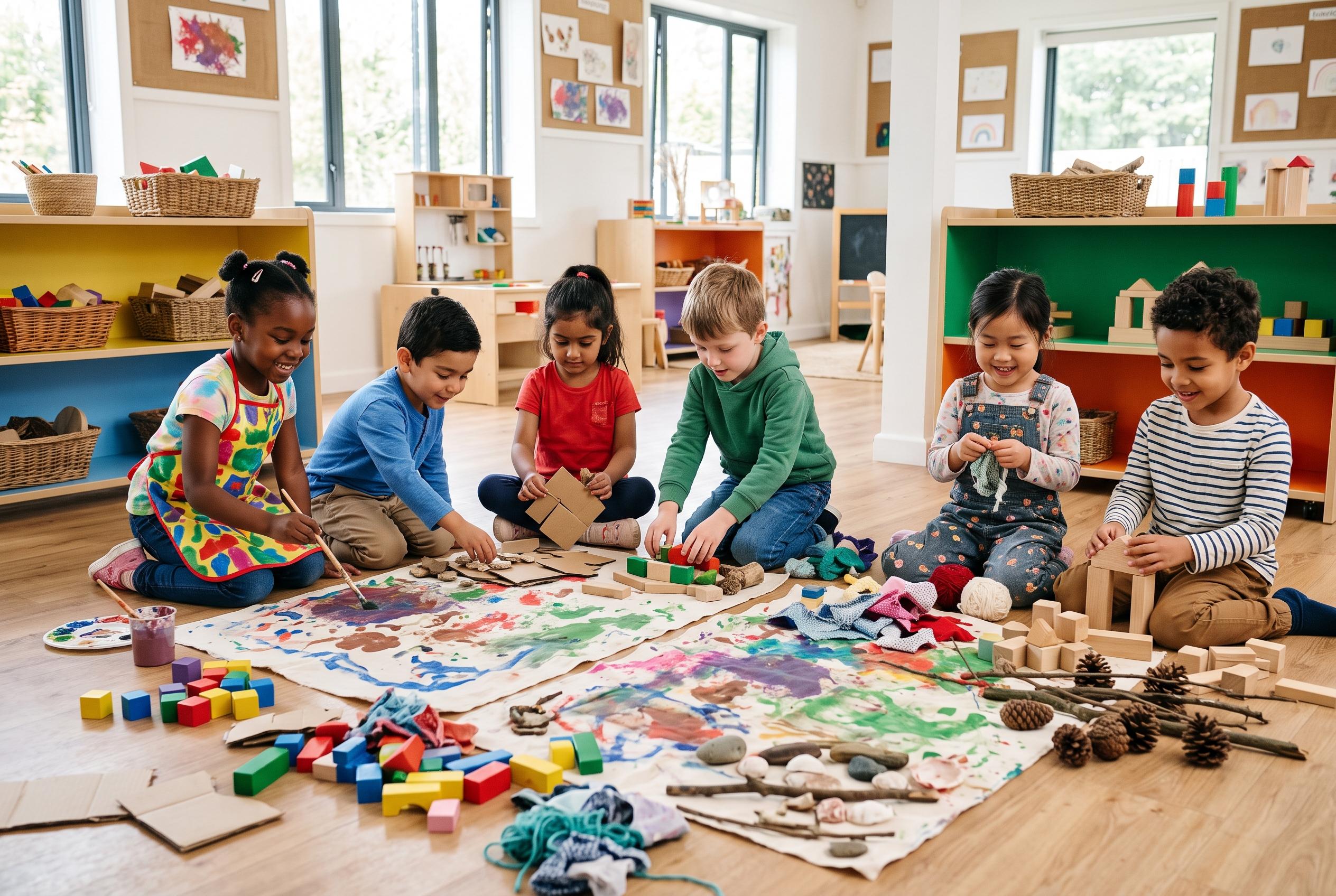
The appeal of so-called loose parts play is that ordinary objects become anything a child wants them to be. Cardboard boxes, bottle tops, fabric scraps and natural materials can be rearranged, stacked, torn apart and rebuilt in endless combinations. Community Playthings says this kind of play encourages curiosity and creativity because the materials do not dictate a single use.
It also helps children learn how to cope when things do not work first time. If glue will not stick or a shape falls apart, they have to try again, adjust their idea or find a different way to make it work. Guardian Childcare says that sort of open-ended play supports problem-solving, critical thinking and cognitive development, while also building fine motor skills.
There is also a strong emotional benefit. The World Economic Forum notes that art can act as a form of non-verbal communication, giving children a way to express feelings they may not yet be able to name. Bright colours, repeated patterns or wild, mixed-up collages can all become outlets for mood, energy and imagination.
Other everyday behaviours point in the same direction. AOL reported that child psychologist Leslie Taylor said collecting random objects can reflect healthy development, as children begin to organise, compare and categorise what they find. Lillbud, meanwhile, says lining objects up can help build focus, observation, early maths awareness and a sense of control. Taken together, these small habits show how much children learn when they are allowed to handle objects in their own way.
For parents, the most useful response may be to step back rather than step in. A child who paints a plastic bottle or covers a rock with feathers is not just making a mess; they are practising decision-making, coordination and self-expression. The finished piece may never be gallery-worthy, but the process can still be deeply valuable.
Disclaimer: This content is for informational purposes only and is not intended to be a substitute for professional medical judgment, advice, diagnosis, or treatment.