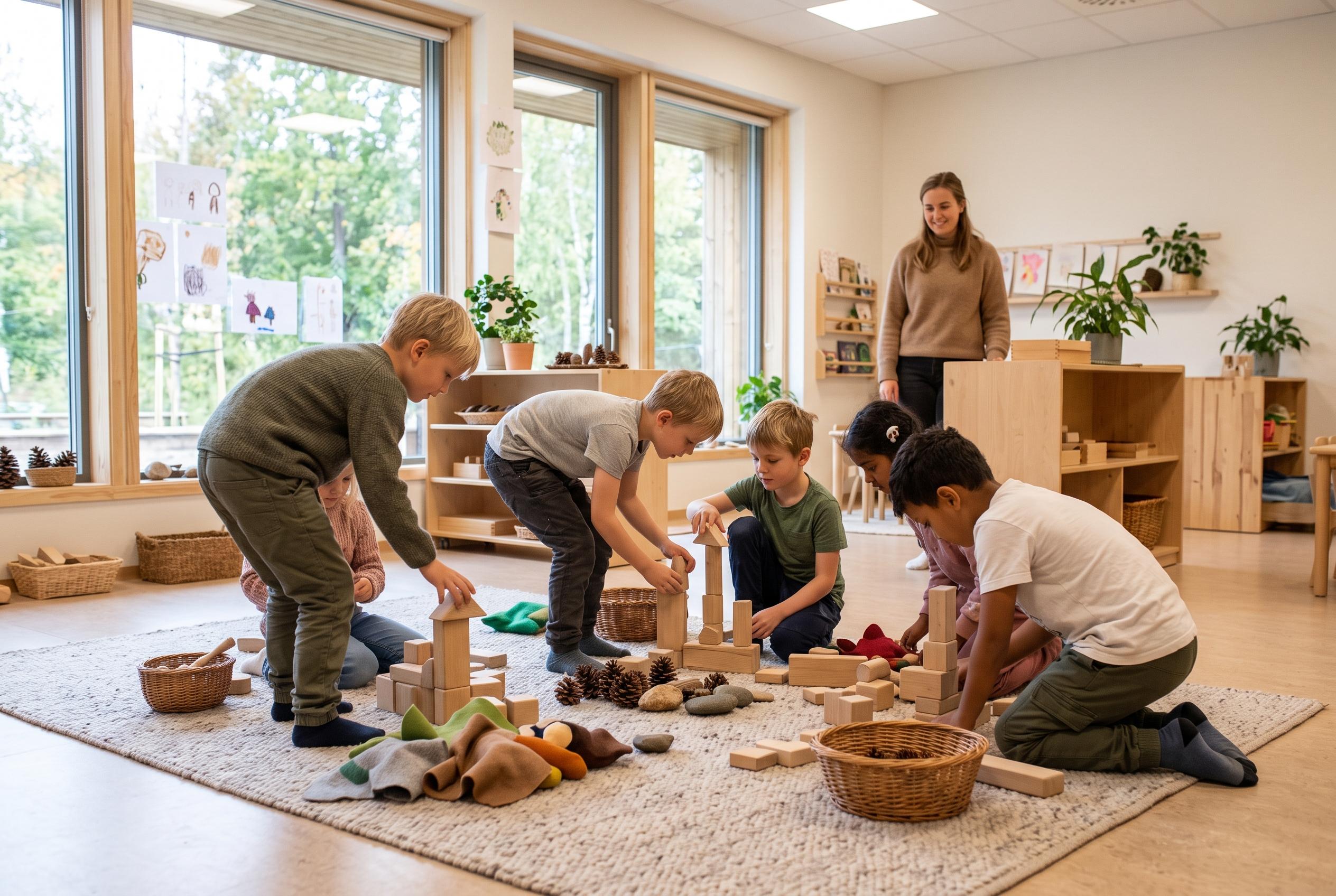

After decades of increased formalisation in Norwegian primary education, recent calls and research suggest a renewed focus on play, movement, and student well-being, challenging the dominance of digital tools and structured curricula.
Jorunn Flaatten has spent almost four decades in primary classrooms, but she says the atmosphere around the start of school has changed noticeably in recent years. The veteran teacher, who is now an intervention teacher for third and fourth grade, says the earliest years of schooling are once again giving more room to play, after a long stretch in which formal learning seemed to dominate.
Flaatten’s career began in 1987, when she graduated from Stord teacher training college and started out with a firm belief that play is central to learning. After five years in nursery education, she moved into primary school in Bærum in 1992, just as the municipality was experimenting with a new first year for six-year-olds. That pilot became part of Reform 97, the major overhaul that lowered the school starting age from seven to six and extended compulsory education from nine to ten years, according to Store norske leksikon.
The reform was meant to soften the transition from nursery to school. Its first year was supposed to be shaped by nursery pedagogy, with learning taking place through activity, movement and play. The same reform also introduced a more detailed national curriculum and helped drive the expansion of school leisure provision for younger children, creating a more comprehensive day for the youngest pupils.
At the time, Flaatten embraced that model. She remembers classrooms filled with low furniture, Duplo, blocks, letters and numbers, alongside a school and nursery teacher working together in the same room. She says children flourished in that environment because it allowed them to experience success on their own terms.
That balance changed after Norway entered the Programme for International Student Assessment, or PISA, at the start of the 2000s. When the first results showed Norwegian teenagers performing below expectations, the response was sharp. Then education minister Kristin Clemet publicly described Norway as a country of school losers, and the political focus shifted quickly towards raising basic skills.
According to Elise Farstad Djupedal of NTNU, who studies the history of schooling for young children, the pressure to improve results landed heavily on the youngest pupils. Reading, writing and arithmetic became the priority, and schools were pushed into a more measured, test-driven culture. Flaatten says that is when teaching at primary level began to feel much more formal, with more time at desks and less room for the flexible, play-based approach she had championed.
That shift was later reinforced through Kunnskapsløftet, the curriculum reform introduced in 2006. The emphasis moved from what teachers should cover to what pupils should be able to do, and local authorities were given greater responsibility for shaping delivery. Flaatten says she found the new framework less reassuring than the older, more detailed curriculum, which had left less room for confusion about expectations from one part of the country to another.
The drive towards more structured learning also brought digital tools into classrooms. By the time Flaatten returned from summer break in 2017, a large screen had replaced the wall maps she had used for years. She says tablets and screens can be useful, but they can also swallow time and make a classroom feel quieter and less collaborative than before.
Now, the pendulum appears to be swinging back. Researchers at OsloMet have argued that the original promise of Reform 97 did not last long enough, and have called for a return to a gentler first year with more play and variety. Education minister Kari Nessa Nordtun has also said first graders should have more play than they have had in recent years, while pushing back against rising digitalisation in schools. At Arendalsuka this year, the Fellesskoleutvalget said the situation in Norwegian schools is serious and that younger pupils need more movement between play and learning.
For Flaatten, that renewed emphasis feels overdue. She says play gives children confidence and helps them learn in the way they are naturally built to learn. After nearly 40 years in the job, she says what has kept her there is simple: good colleagues, supportive leadership and the chance to see children thrive. Next year, she plans to retire, with the memory of her pupils’ affection likely to stay with her as long as the lessons do.
Disclaimer: This content is for informational purposes only and is not intended to be a substitute for professional medical judgment, advice, diagnosis, or treatment.