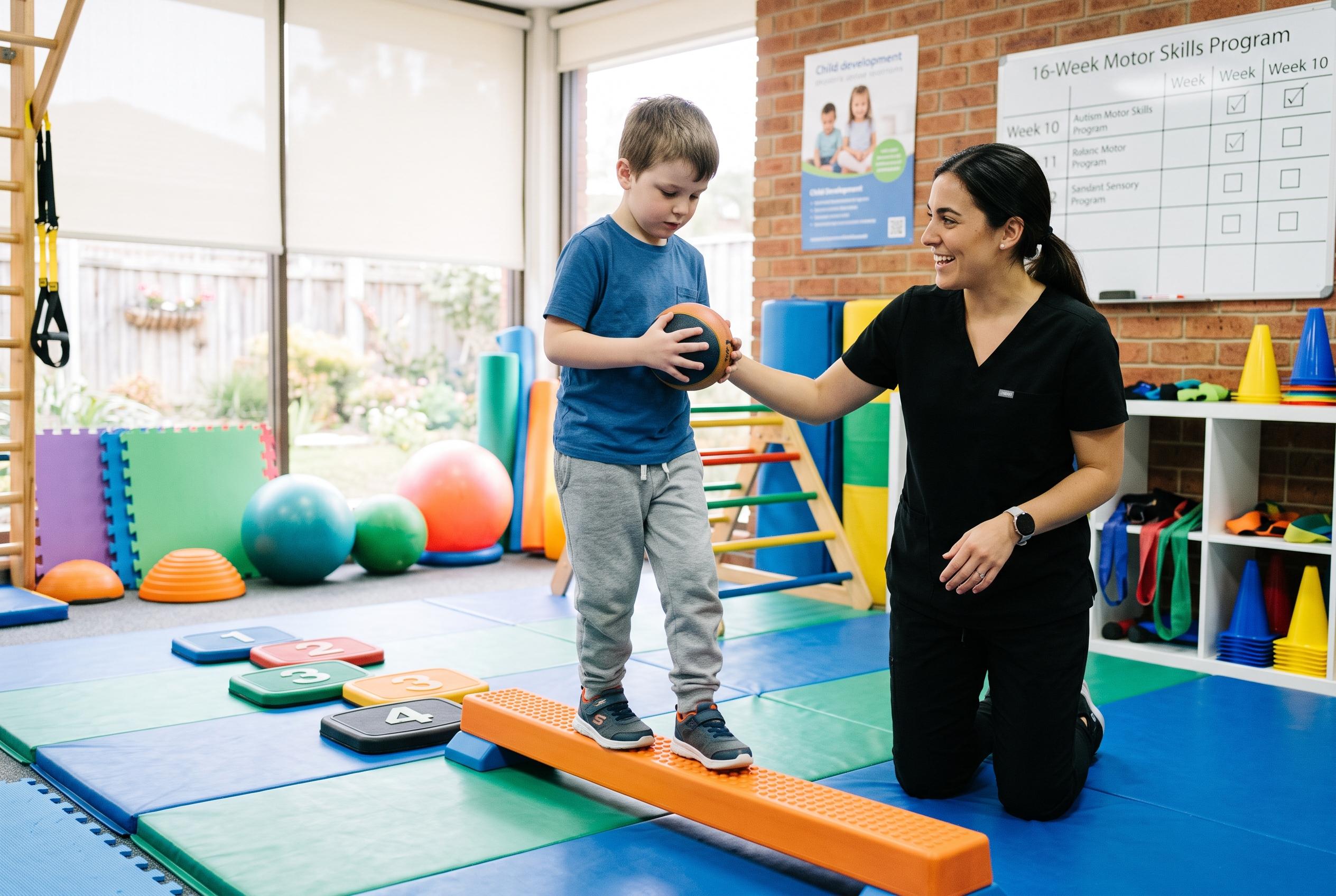

A small study suggests that personalised 16-week exercise programmes may enhance movement, fitness and behaviour in children with ASD, supporting the potential role of physical activity in educational rehabilitation.
A small Frontiers in Psychiatry case report has found that a 16-week, individually tailored exercise programme was linked with better movement, fitness and behaviour in two children with autism spectrum disorder. The authors say the work is exploratory rather than definitive, but they argue it adds to growing evidence that structured physical activity can support rehabilitation in special education settings.
The children, identified as Case B and Case D, attended sessions three times a week under the supervision of an adapted physical education teacher and a rehabilitation specialist. The programme moved in stages from basic familiarisation and locomotor work to object-control practice and, finally, more independent participation. According to the report, the researchers used visual prompts, gradual progression and session-by-session adjustment rather than fixed exercise targets. The children had each been diagnosed with ASD before enrolment and had not taken medication in the previous three months.
By the end of the programme, both children spent less time being sedentary and more time in lower- and higher-intensity activity. The report says Case B’s sedentary time fell by 290.07 minutes a day, while Case D’s dropped by 218.16 minutes. Moderate-to-vigorous activity also rose in both cases. Measures of health-related fitness improved as well, including body mass index, grip strength and flexibility, although the authors caution that these changes were descriptive and not tested for statistical significance.
Motor skills followed a similar pattern. Using the Test of Gross Motor Development, the report found gains in total scores for both children, with the biggest improvements in object-control skills such as catching, throwing and dribbling. That finding is consistent with a 2023 systematic review and meta-analysis indexed in PubMed, which reported that exercise interventions can improve fundamental motor skills in children with ASD, especially locomotor and object-control abilities. More recent reviews have also suggested that the size of the response may depend on exercise dose and the child’s age.
The behavioural observations were more cautious, but still notable. The authors reported fewer repetitive actions, including hand flapping, head shaking and spitting, along with more positive communication during the intervention period. They note, however, that the children were also receiving ordinary special education and other adult support, so the changes cannot be attributed to exercise alone. That caution matches the broader literature: earlier trials and reviews have linked exercise with improvements in emotional regulation, social communication and stereotyped behaviour, but the evidence base remains mixed and heterogeneous.
The study’s main value lies in its design, not its size. With just two participants, it cannot establish causation or generalise to other children with autism. Even so, the authors say the results support further testing of personalised exercise as part of educational rehabilitation, particularly where programmes can be adapted to a child’s tolerance, interests and skill level. For parents and schools, the practical message is modest but clear: well-structured movement may do more than build fitness; it may also help children participate more fully in learning and daily routines.
Disclaimer: This content is for informational purposes only and is not intended to be a substitute for professional medical judgment, advice, diagnosis, or treatment.