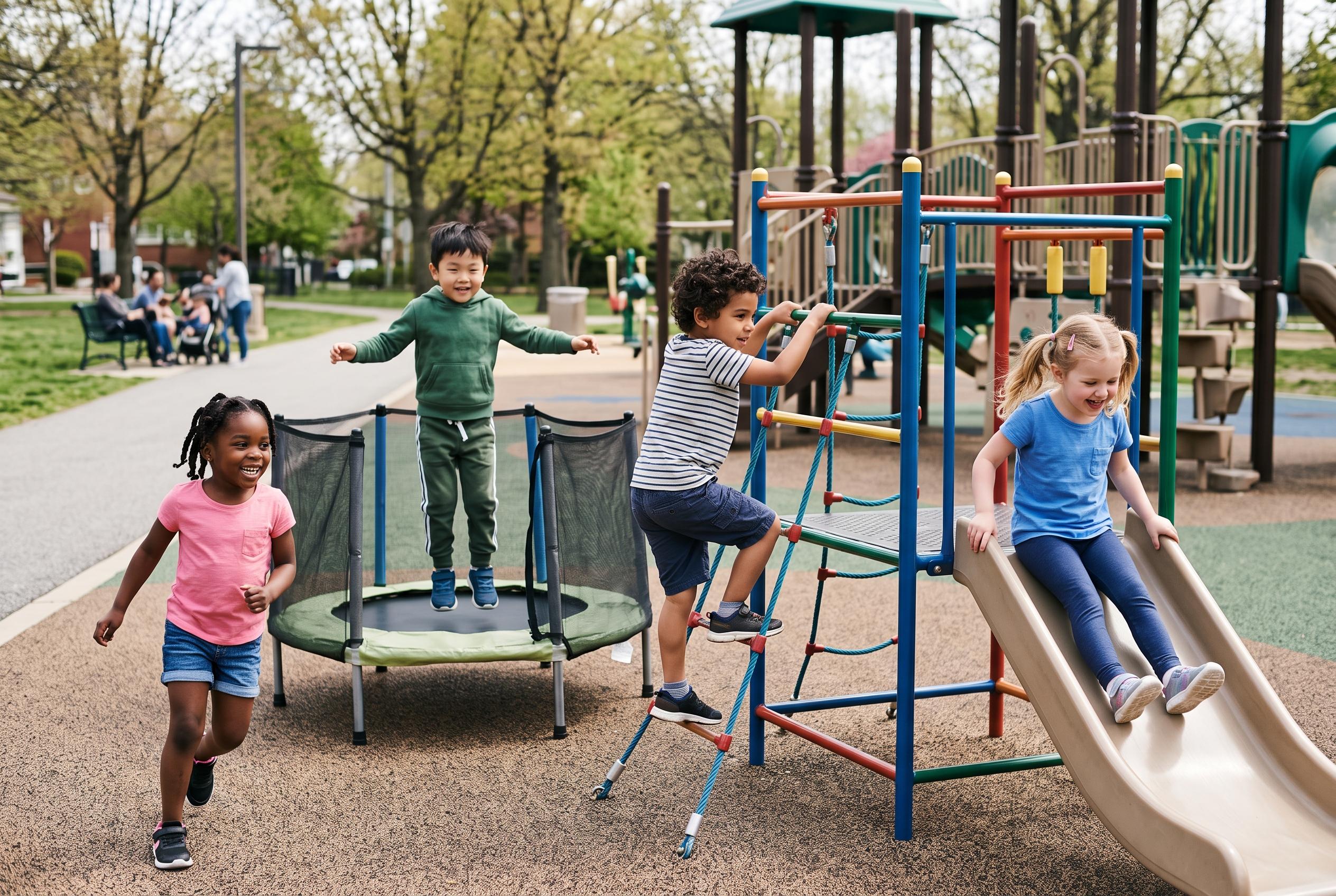

A systematic review reveals a consistent link between children’s gross motor ability and social development, highlighting the importance of movement skills for social inclusion and confidence in childhood.
A new systematic review suggests that children who move more skilfully may also fare better socially, with the clearest links seen in gross motor ability, the large movements used for running, jumping and throwing.
The review, published in Frontiers in Psychology, examined 22 observational studies involving typically developing children aged six to 12 years. It found that motor skill and social development were linked in every study that met the authors’ criteria, though the strength of the relationship varied. Gross motor skills showed stronger associations than fine motor skills, which involve hand-eye coordination and other precise movements.
According to the authors, the largest body of research has focused on self-perception, or how children see their own abilities. That area made up 59.1% of the social-development studies included in the review. Far fewer studies looked at peer relationships, problem behaviours, negative emotions, adaptive behaviour or emotion recognition.
The authors say the pattern matters for schools and physical education lessons, where children practise movement alongside cooperation, turn-taking and communication. They argue that children with weaker movement skills may be more at risk of social exclusion, less confidence and avoidance of group activity, although the review cannot prove cause and effect.
The review also highlights a measurement problem. Studies used nine different motor-skill tools and 11 different social-development measures, making comparisons difficult. Most of the evidence was cross-sectional rather than long-term, which means the field still does not know whether stronger movement skills lead to better social outcomes, or whether the relationship runs the other way as well.
Even so, the authors conclude that the evidence is consistent enough to support a practical message: movement development and social development should not be treated as separate issues. For teachers, clinicians and parents, that may mean viewing play, sport and physical education not only as ways to build fitness, but also as settings that can support confidence, peer relationships and social learning.
Disclaimer: This content is for informational purposes only and is not intended to be a substitute for professional medical judgment, advice, diagnosis, or treatment.