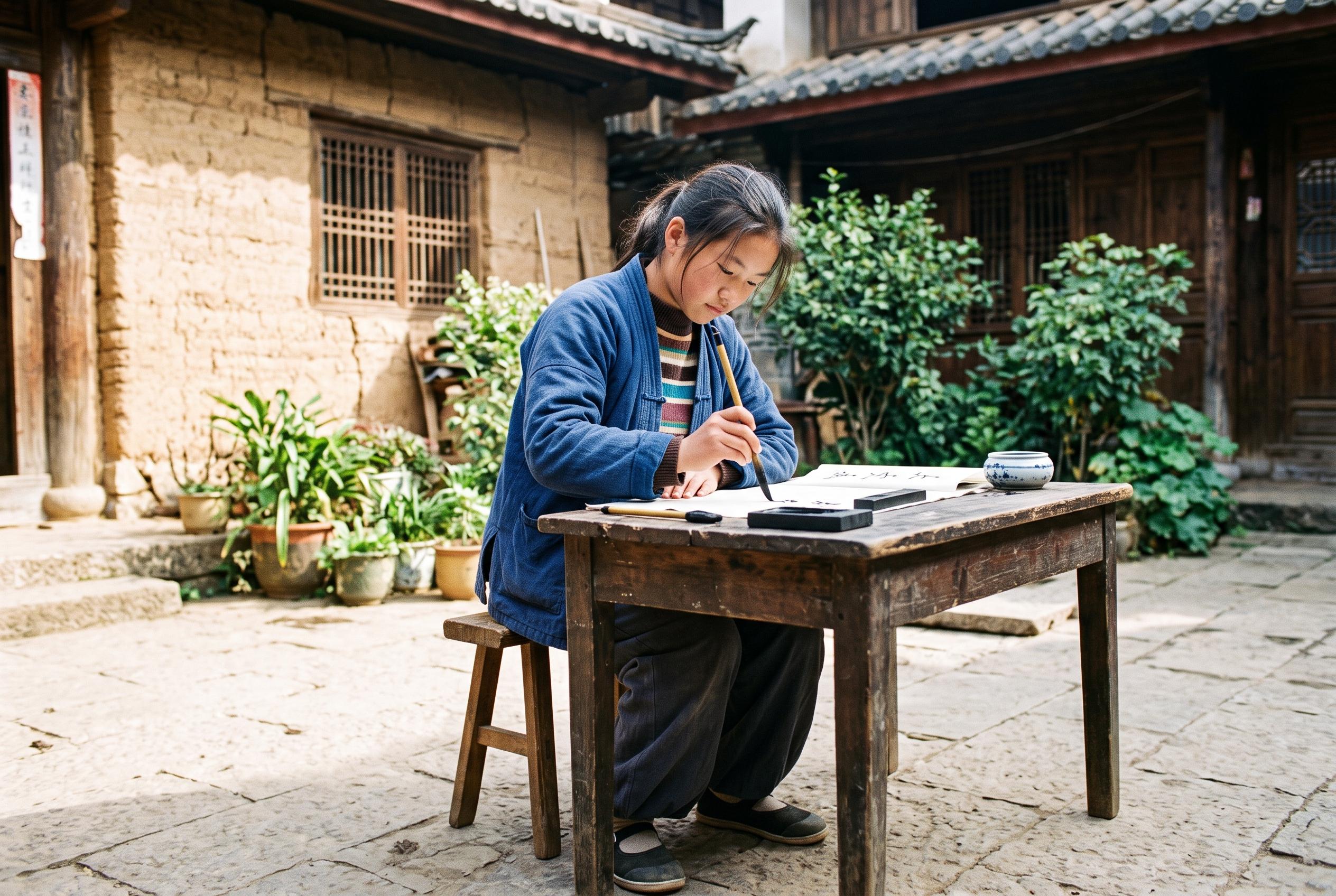

A study highlights how locally anchored art and tradition may better reach rural adolescents suffering from loneliness and emotional distress, surpassing conventional counselling methods.
Rural left-behind adolescents in China often live with a quiet but serious mental health burden: loneliness, weaker school attachment and fewer acceptable ways to ask for help. A study published in Frontiers in Psychiatry argues that conventional counselling can miss many of these students because it depends on self-referral and direct verbal disclosure, which may not fit rural norms around stoicism and privacy.
The researchers tested a six-week school programme built around locally rooted intangible cultural heritage, including paper cutting, embroidery and local song. In a rural lower-secondary school in south-western China, 28 students took part in the programme and 24 similar students were placed on a waitlist. The study was not randomised, so it cannot prove cause and effect, but it found that the heritage group improved more than the comparison group on loneliness, negative affect, cultural identity and school belonging.
The project was designed as more than a craft class, but it was also careful not to present itself as formal art therapy. It was led by a school mental health teacher and a local paper-cutting bearer, with activities framed as cultural participation with wellbeing benefits. The authors argue that this matters because many rural students may be willing to join a familiar cultural activity even when they would never walk into a counselling room.
Their proposed Motivation–Emotion–Language framework links three stages of change. First, the activity must feel manageable and worth joining. Second, making, stitching or singing may help students regulate feelings without forcing them to talk immediately. Third, local motifs, dialect and songs may reconnect young people with family memory and community identity. In the sessions, the researchers observed that some students began by making quietly and only later spoke about what the work meant to them.
Even so, the findings are preliminary. The sample was small, the study used a waitlist rather than an active control, and the final sessions included an added singing component that made the programme less standardised. The authors say the next step is a randomised trial comparing local heritage activities with other structured group activities of similar length and appeal. For now, the study offers an early sign that culturally familiar school activities may help reach adolescents whom conventional support does not.
Disclaimer: This content is for informational purposes only and is not intended to be a substitute for professional medical judgment, advice, diagnosis, or treatment.