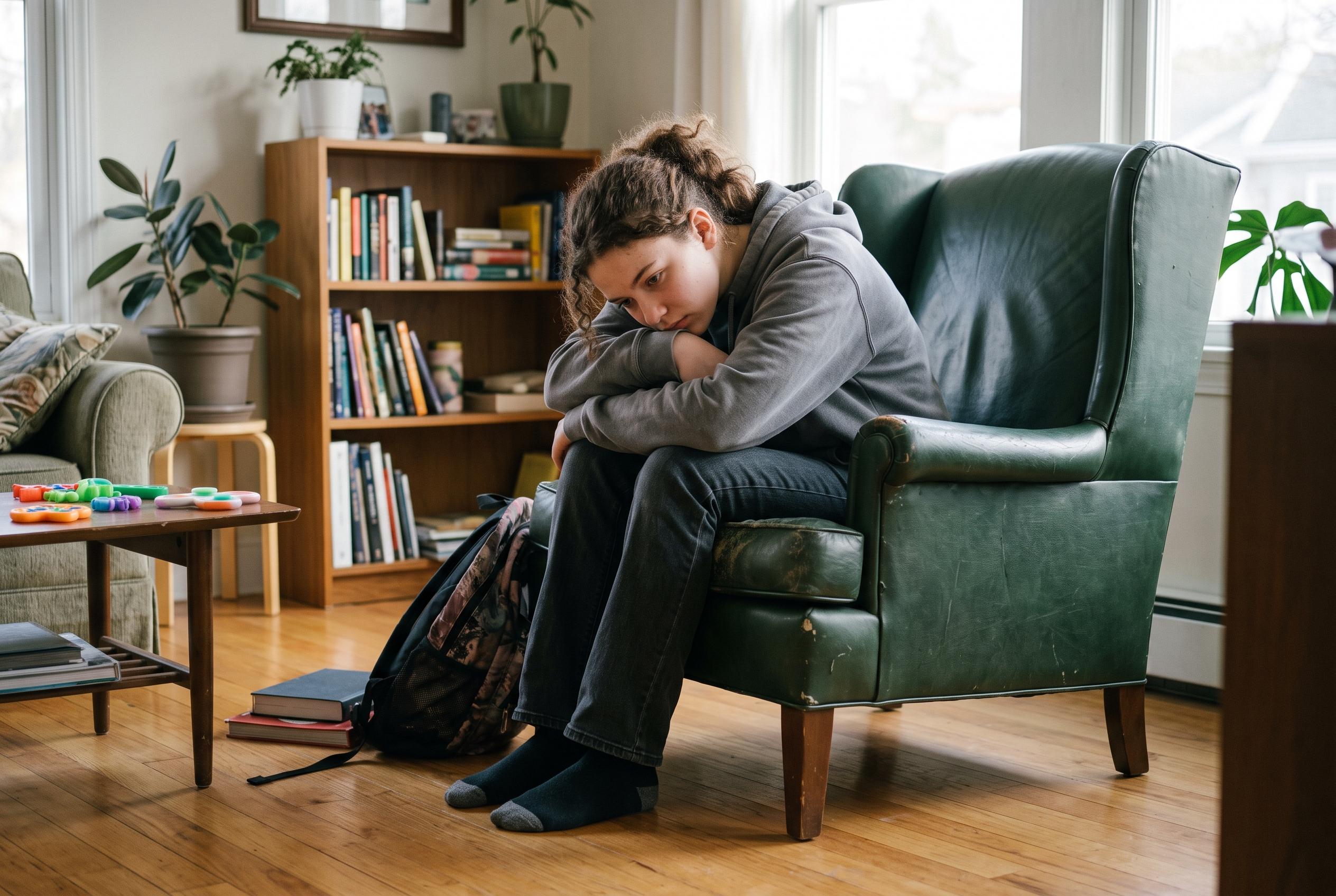

Many autistic children and teenagers mask their traits to fit in, but this coping strategy can lead to exhaustion and identity issues, raising calls for more supportive and understanding environments.
Parents often take comfort when an autistic child seems to be doing well: making friends, getting through the school day and adapting to new routines. Yet appearances can be misleading. According to Occupational Therapy Health Care, some children and teenagers learn to mask by hiding or changing autistic traits to avoid judgement, blend in or keep themselves safe. That can make distress much harder to spot.
Masking can take many forms. A child may copy classmates, rehearse answers, force eye contact, hide stimming or push through noise and overwhelm without showing it. Medical News Today, Healthline and NHS autism guidance all describe it as a coping strategy that can work in the short term but carry real costs, including exhaustion, anxiety, burnout and a strained sense of identity.
The problem often becomes clearer in adolescence, when social rules grow more complicated and school life becomes less predictable. Occupational Therapy Health Care says transitions such as moving to secondary school, changing classrooms or joining a new peer group can make masking more intense. The child may seem fine in public, then come home depleted, irritable or upset. Simply Psychology notes that some autistic people do not recognise they are masking until they reach burnout or experience a breakdown in private.
For parents, the key is to look beyond performance and ask what it takes for a child to cope. Medical News Today, GoodRx and the NHS all emphasise the value of safer, more supportive environments that reduce the pressure to hide. Occupational therapy can help by identifying sensory triggers, building regulation strategies, improving interoception , the ability to notice internal signals such as hunger or fatigue , and supporting self-advocacy and everyday independence. The goal is not to make autistic children seem less autistic, but to help them understand their needs and live with less strain.
Disclaimer: This content is for informational purposes only and is not intended to be a substitute for professional medical judgment, advice, diagnosis, or treatment.