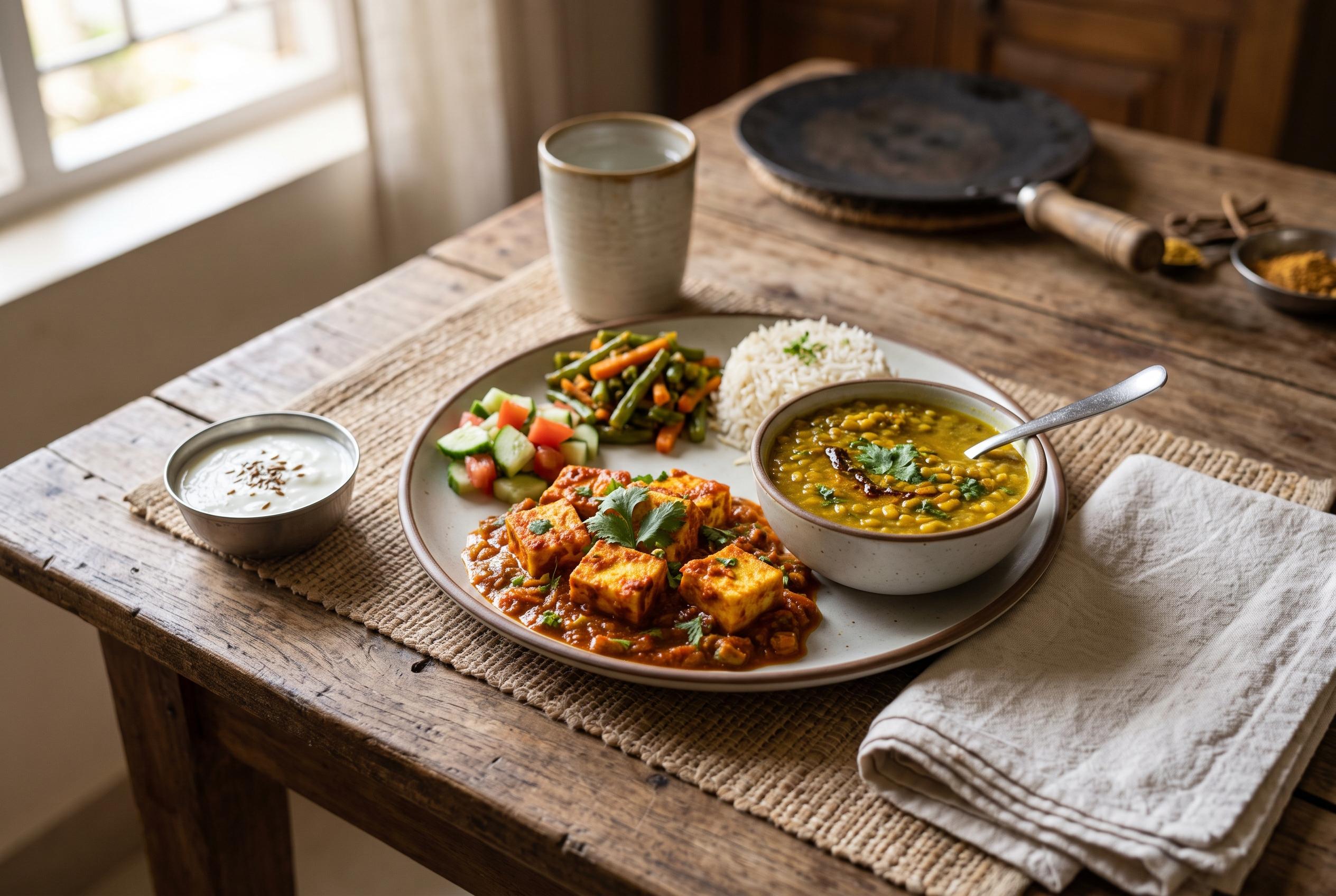

A fitness consultant’s critique of traditional Indian home-cooked meals highlights the need for balanced portions of protein, fats, and carbohydrates to improve overall health.
Home-cooked food is often seen as the safest and healthiest option in Indian homes, but a fitness consultant’s warning has pushed the conversation towards balance rather than sentiment. Sanya, writing on X, argued that the problem is not ghar ka khaana itself, but the way many everyday meals are built: too much carbohydrate, too little protein and very little attention to portion sizes.
In her example of a typical lunch or dinner plate, Sanya pointed to four rotis, aloo sabzi, thin dal and white rice. She said the meal comes out at roughly 800 calories, with about 24g of protein and 141g of carbohydrates. If eaten twice a day, she argued, the total protein intake would still fall short for many adults. Her broader point was that food prepared at home is not automatically nutritionally complete.
That argument echoes a wider concern raised by other health specialists. A fitness coach, Saachi, recently flagged common problems in Indian diets, including carb-heavy breakfasts, oversized rice and roti portions, and meals that leave out healthy fats. Separately, oncologist Akshay Kewlani told the Times of India that many Indian diets remain dominated by carbohydrates while protein and healthy fats stay low. He cited ICMR data suggesting carbohydrates account for about 62% of daily calories in the average diet.
The issue, nutrition experts say, is not that staples such as rice, roti or potatoes are inherently bad. Rather, they become a problem when they crowd out protein, fibre and fats. Guidance published on balanced Indian eating patterns generally recommends a diet built around complex carbohydrates, protein sources such as legumes, dairy, eggs or lean meat, and healthy fats from nuts, seeds and oils. In that framework, a plate can still feel traditional without being nutritionally lopsided.
Sanya suggested practical changes rather than a complete overhaul: make dal thicker and serve more of it, swap aloo for paneer, eggs, chicken or chana several days a week, add yoghurt, and cut rotis from four to two. Her calculations suggest those adjustments could lift a meal’s protein content to around 45g to 50g. The message, she said, is simple: home-made food deserves the same scrutiny as any other meal if it is meant to support health.
Disclaimer: This content is for informational purposes only and is not intended to be a substitute for professional medical judgment, advice, diagnosis, or treatment.