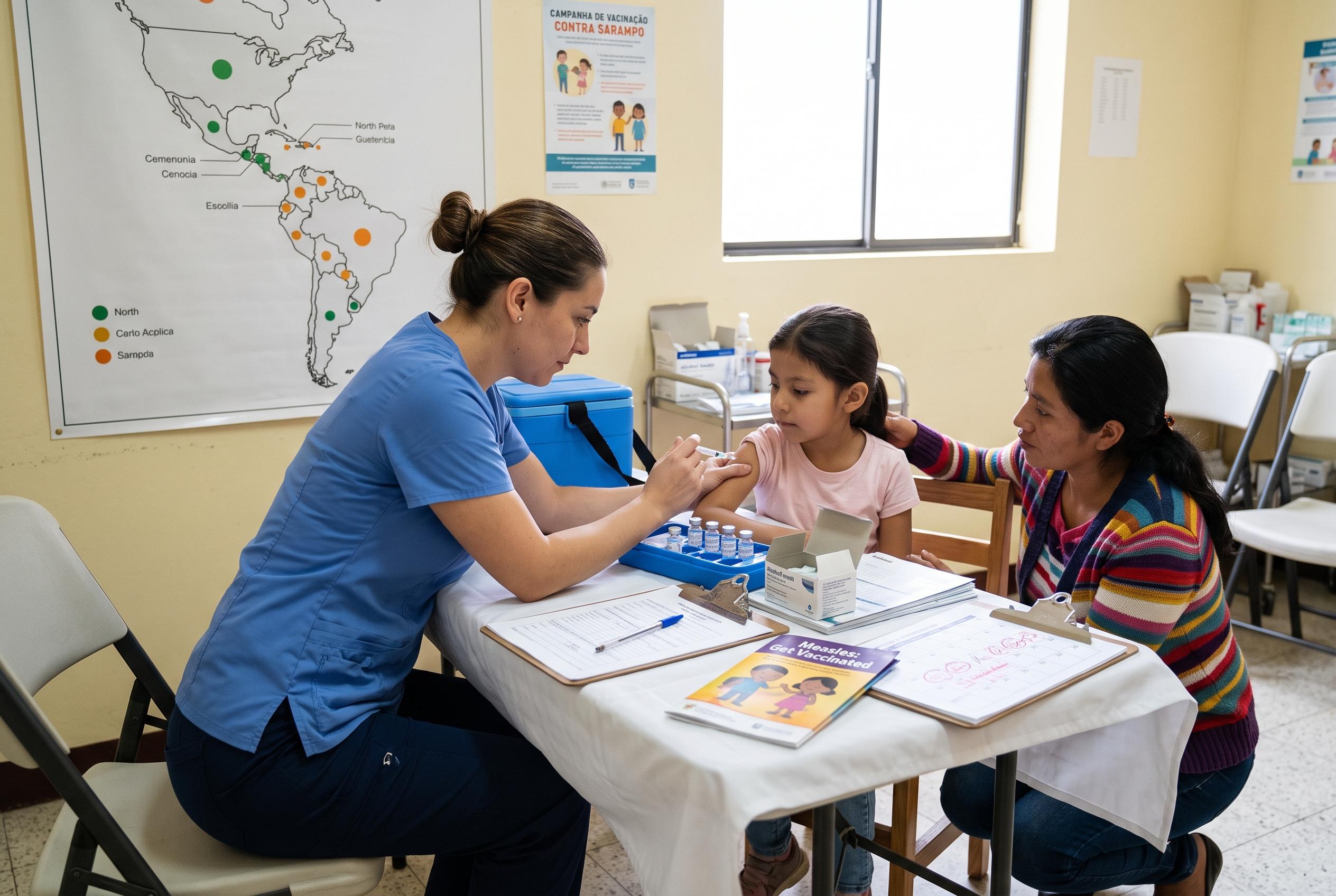

The Pan American Health Organization warns of a dramatic increase in measles cases across the Americas, urging countries to strengthen vaccination efforts amid ongoing outbreaks and rising global cases.
The Pan American Health Organization is urging countries in the Americas to tighten measles vaccination, surveillance and outbreak response as the region faces its worst confirmed caseload in more than two decades.
According to PAHO, 47,459 cases had been confirmed across the Americas by epidemiological week 28 of 2026, which ended on 18 July, alongside 44 deaths in three countries. That is more than three times the total reported in all of 2025, when 15,011 cases and 32 deaths were recorded. Guatemala, Mexico, the United States and Peru account for 95% of this year’s confirmed infections.
The organisation said the public health risk remains very high because outbreaks are still active in several countries, vaccination coverage is uneven and population movement is helping the virus cross borders. PAHO’s latest assessment also points to new areas reporting cases, as well as a heavier toll among Indigenous communities and other groups that face barriers to healthcare.
Daniel Salas, executive manager of PAHO’s Special Programme for Comprehensive Immunisation, said measles can be stopped only through high vaccination coverage, early detection and rapid response. He said outbreaks reveal gaps in immunity, especially among children, under-vaccinated communities and people with limited access to health services.
PAHO said Guatemala has reported 30,371 cases and 26 deaths this year, the highest total in the region, followed by Mexico with 12,255 cases and 17 deaths, the United States with 2,260 cases, Peru with 1,277 and Canada with 1,107. The organisation also said the 2026 tally is the highest in the Americas since 2004.
The warning follows a series of earlier PAHO appeals this year. In February, the agency called for stronger measles surveillance and faster outbreak response. In April, it pressed countries to close vaccination gaps during Vaccination Week in the Americas, noting that more than 1.4 million children had received no vaccine dose in 2024. PAHO later raised similar concerns ahead of the 2026 FIFA World Cup, when it warned that mass gatherings and heavy travel could speed the spread of the disease.
PAHO said measles remains one of the world’s most contagious infections and can cause pneumonia, encephalitis, blindness and death. The organisation said maintaining at least 95% coverage with two doses of measles-containing vaccine is essential to interrupt transmission and protect people most at risk, including young children who are not yet eligible for full vaccination, migrants, displaced people and those with low immunisation coverage.
World Health Organization data cited by PAHO shows the global resurgence is not limited to the region. By July 2026, 186,168 measles cases had been reported worldwide, up 12% from the same period in 2025.
Disclaimer: This content is for informational purposes only and is not intended to be a substitute for professional medical judgment, advice, diagnosis, or treatment.