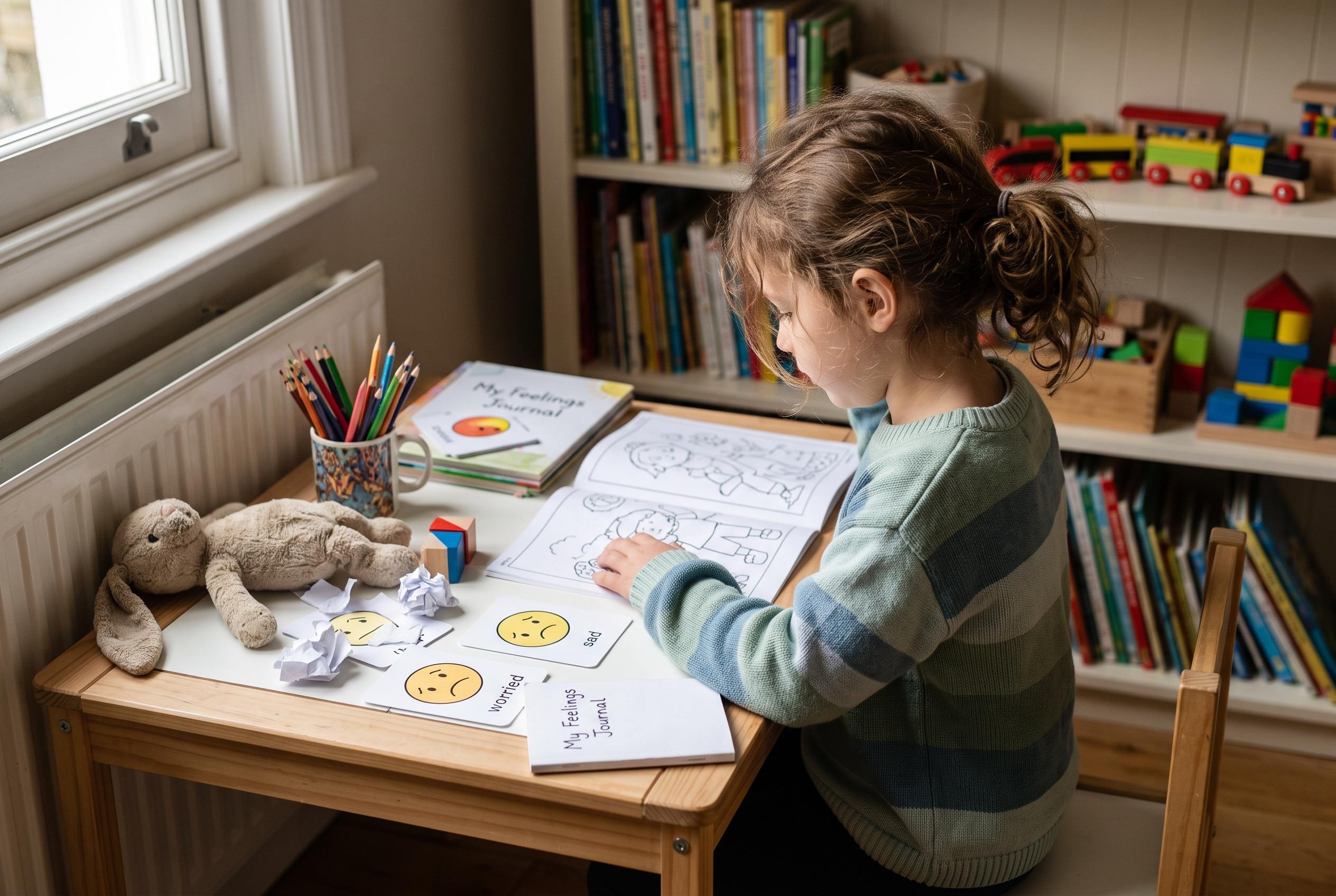

Florida International University psychologists identify how children’s attention during emotional states offers new insights into early detection of anxiety and depression, challenging assumptions about age-related self-regulation improvements.
Children’s attention may tell clinicians more about mental health when emotions are running high than when a child is simply calm, according to Florida International University psychologists.
In a study published in the Journal of Psychopathology and Behavioral Assessment, Krystyna Keller and colleagues tested whether a survey originally developed for adults could work for children and teenagers. The researchers asked 241 people aged six to 17 to complete the measure and found it was best understood as two separate abilities: emotional focusing, or staying with a task despite upsetting feelings, and emotional shifting, or moving attention away from an emotional trigger.
The results suggest that difficulty staying focused during distress, or getting stuck on negative feelings, is linked with a higher likelihood of anxiety or depression. But the study also found that everyday, non-emotional attention still matters: children who struggle to concentrate on ordinary tasks such as schoolwork were also more likely to show signs of anxiety and depression. Earlier research has likewise supported the use of child self-report tools for attentional control in anxious young people, while other studies have found that attentional-control weaknesses are tied to anxiety and emotional interference in children and adolescents.
Keller said older children and teenagers had more trouble with emotional focusing than younger children, which runs against the usual assumption that self-regulation improves with age. She pointed to the pressure of adolescence, including social media and earlier puberty, as possible reasons emotional situations may become harder to manage at that stage. Separate research has also found that adolescents are especially vulnerable to distraction from emotional material, and that high anxiety in teenagers is associated with poorer attentional control.
Keller also warned that high-achieving pupils can hide distress because they may not disrupt class. She argued that schools need better systems for early support, including regular check-ins, anonymous worry boxes and quicker access to psychologists or social workers. Parents, she said, can help by modelling calm regulation, talking about feelings openly and showing children how to ask for help. The wider implication of the work is that clinicians may need to assess attention in emotional settings, not just in neutral ones, if they want a clearer picture of youth anxiety and depression.
Disclaimer: This content is for informational purposes only and is not intended to be a substitute for professional medical judgment, advice, diagnosis, or treatment.