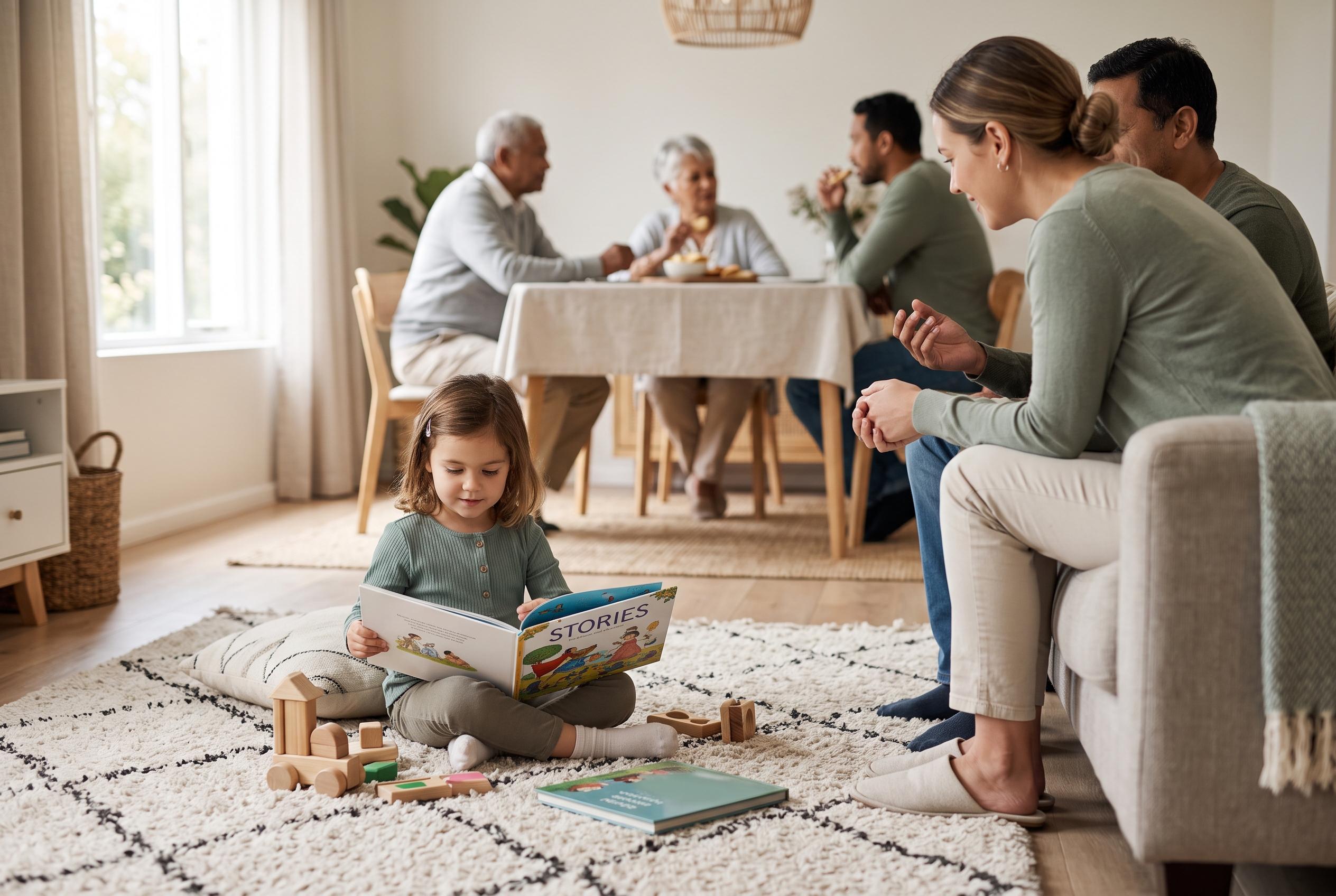

Experts highlight the importance of mindful behaviour around children in social settings to foster trust, confidence and emotional wellbeing by avoiding negative labelling, public comparisons, and intrusive questions.
In crowded homes and busy family gatherings, children can easily feel overwhelmed. That is why parents are often advised to be careful not just about what they say, but also about how they behave around relatives and guests. The underlying point is simple: a child’s emotional security matters as much as social manners.
One of the clearest warnings from parenting writers is against labelling children in public. Calling a child “shy”, “naughty” or “overly emotional” may sound harmless, but repeated remarks can stick and shape how a child sees themselves. Parents are also urged not to allow teasing about a child’s appearance, schoolwork or personality, because ridicule in front of others can dent confidence and create lasting embarrassment.
Another concern is pressure around physical contact and performance. Children should not be pushed to hug, kiss or greet someone if they are uncomfortable, because bodily boundaries matter even when a child cannot easily explain them. In the same way, asking a child to recite a poem, sing or dance for guests may feel like a family tradition, but it can turn the child into a performance act rather than a person whose choice is respected.
Experts and parenting guides also caution against public comparisons. Telling one child that a sibling scores higher marks, draws better pictures or behaves more neatly can fuel resentment and insecurity. Reuters-style reporting on child development regularly notes that comparisons and public criticism can encourage unhealthy competition rather than growth, especially when children are still learning how to manage emotions and social situations.
The broader lesson, echoed across parenting advice from outlets including the Times of India, Momtastic and Parent Herald, is that children absorb far more than adults realise. Mindful conversation, restraint in front of guests and respect for a child’s feelings all help build trust. At family events, the kindest approach is often the quietest: protect the child’s dignity, avoid turning them into a joke or a showpiece, and let them join in at their own pace.
Disclaimer: This content is for informational purposes only and is not intended to be a substitute for professional medical judgment, advice, diagnosis, or treatment.