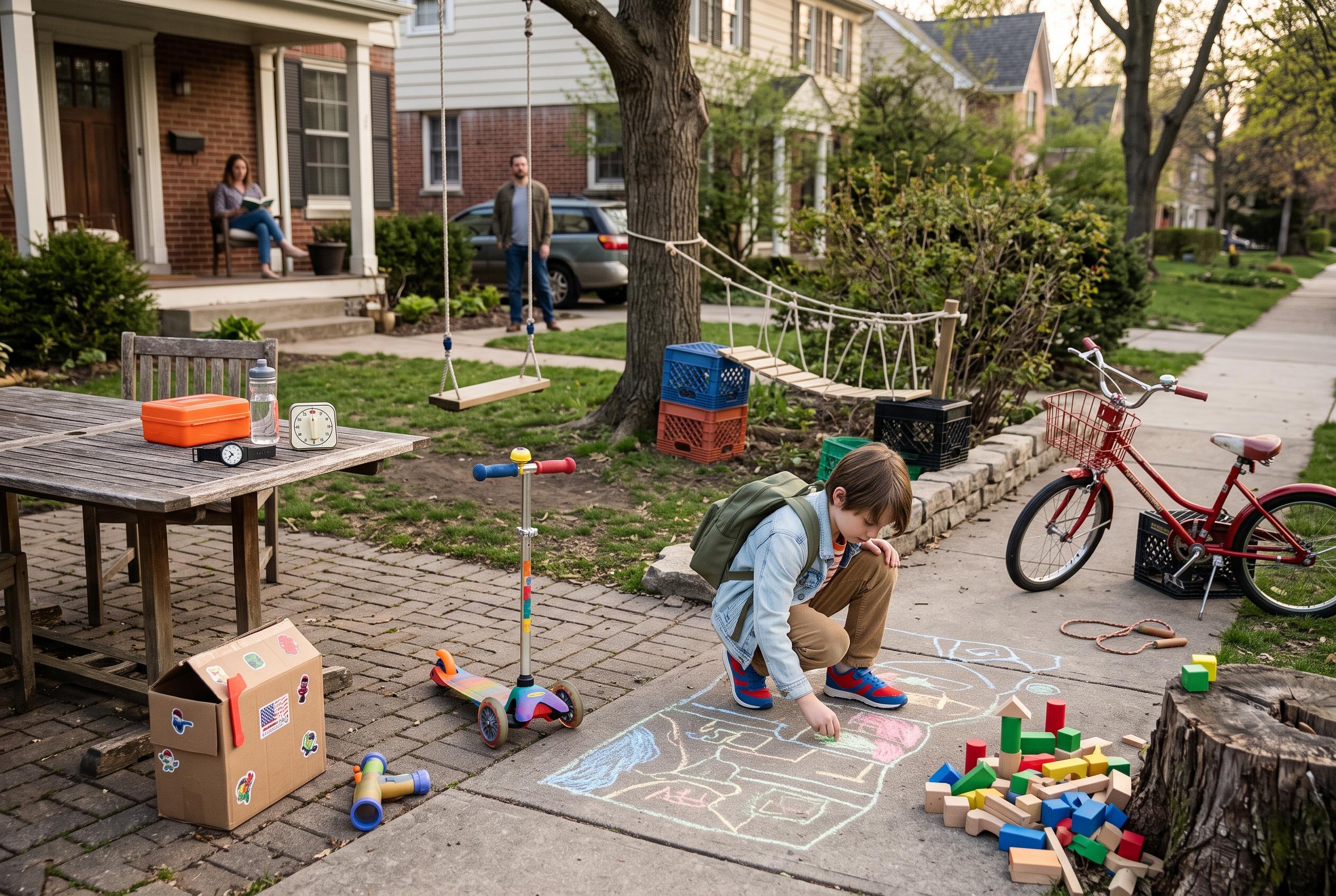

A contemporary shift towards fostering childhood independence in the United States echoes the 1980s, supported by research, policy, and children’s preferences for unsupervised play, amid ongoing debates about overprotection and safety.
A generation of children once roamed neighbourhoods after breakfast and returned only when it was time for supper. In the 1980s, that kind of freedom was ordinary in the United States: children walked to parks, played unsupervised and stayed home alone for stretches, while parents assumed that a certain amount of trust was part of growing up. That approach receded for years, but it is now resurfacing in a more cautious, modern form.
The revival is being driven by more than nostalgia. Child development experts have increasingly argued that unstructured play helps children practise the skills adults say they want most: self-control, emotional regulation, planning and problem-solving. Recent discussion around boredom has also gained traction, with parenting coverage in the UK and US alike noting that children are often more resourceful when they are not constantly entertained or managed.
That argument now has backing from policy as well as research. In May 2026, Jennifer McClellan introduced bipartisan legislation in Congress aimed at encouraging childhood independence and protecting parents who allow age-appropriate freedom. According to McClellan’s office, the bill is designed to reduce the risk that ordinary childhood activities, such as playing outside or walking to a local shop, are treated as neglect. Utah and Virginia have already passed similar measures at the state level, signalling that the shift is no longer just cultural.
The change has been shaped in part by anxiety about the costs of overprotection. Parenting commentary in recent years has described a move away from the freer, more lightly supervised childhoods of the 1980s towards a world of packed schedules, constant oversight and endless warnings about strangers and safety. Critics of that model argue that it can leave children with fewer chances to manage boredom, negotiate conflict and learn basic household responsibility for themselves.
Technology has complicated the picture. On one hand, parents are trying to keep children away from phones and social media for longer; on the other, they are using trackers and other devices to allow more freedom without losing contact altogether. That compromise reflects the wider moment: many families do want to loosen the reins, but they want a safety net when they do it.
The children themselves may be telling adults something useful. A recent Harris Poll of more than 500 children aged eight to 12 found that 45% would rather spend time with friends in activities not organised by adults. That finding echoes the broader case made by writers and researchers such as Peter Gray and Lenore Skenazy, who have long argued that children are not necessarily craving more structure so much as more space to be with each other.
Not everyone is convinced that the pendulum should swing back too far. The central dispute is still what counts as reasonable independence and where caution becomes overreach. Even so, the direction of travel is clear: many parents are looking for a version of the old neighbourhood freedom that fits modern life, with gradual steps, local boundaries and more trust than the last two decades allowed.
Disclaimer: This content is for informational purposes only and is not intended to be a substitute for professional medical judgment, advice, diagnosis, or treatment.