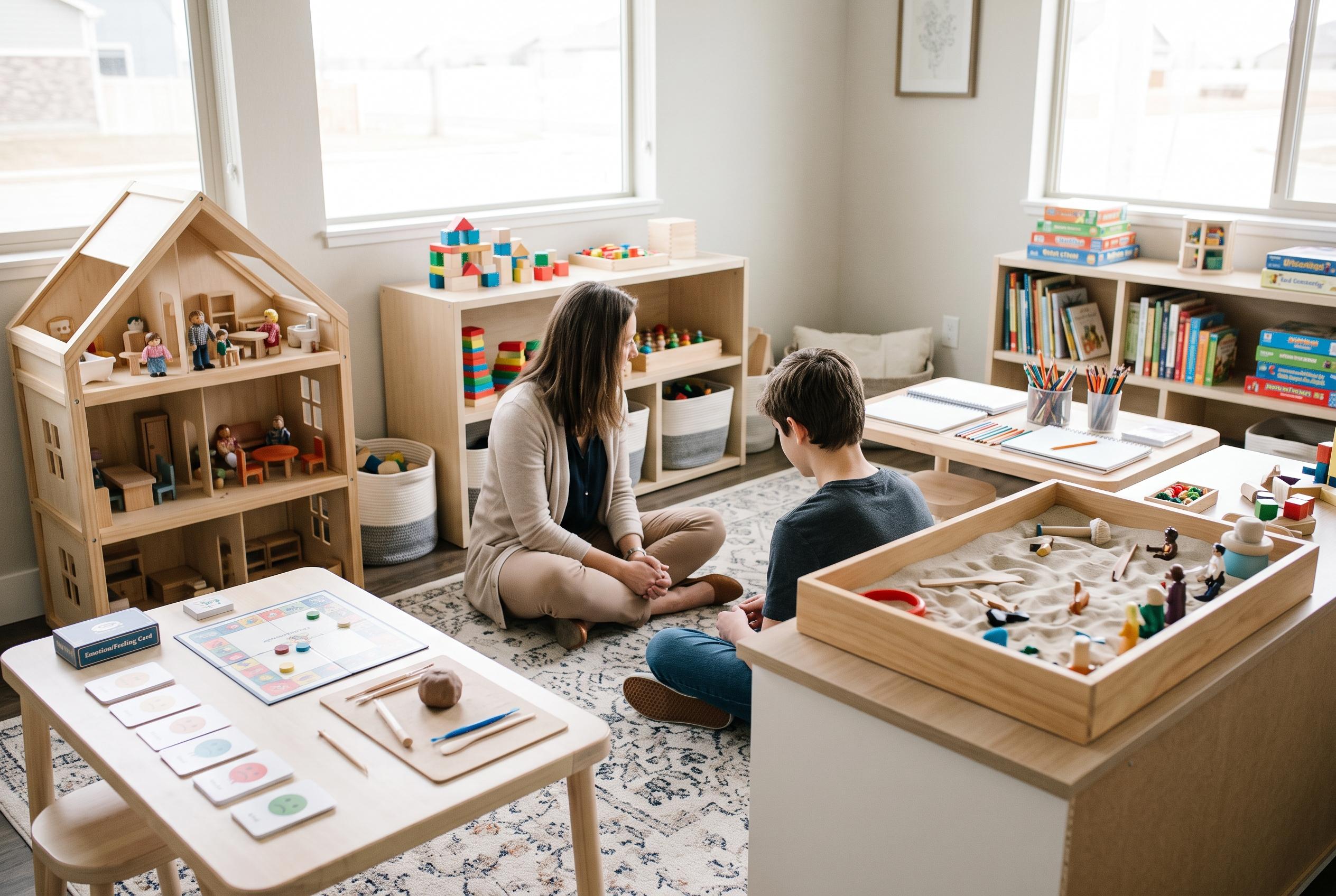

New insights highlight how play therapy remains a vital and adaptable approach for teenagers, with methods evolving to meet their emotional and developmental needs.
Parents often assume play therapy is only for very young children, but specialists say the approach can stay useful well into the teen years. As children develop, the work in the therapy room usually changes too: there is often more conversation, more reflection and more direct skills-building, yet games, drawing, sand tray work, movement and other hands-on methods can still help children show what they cannot yet explain in words.
That matters because children do not always describe feelings in the same way adults do. WebMD notes that play therapy is designed to help children express emotions and work through psychological difficulties, and that it can also support older children with cognitive impairments. Medical News Today and Healthline both say the method is used mainly with children, but can also be adapted for adolescents. In practice, that means a child who can only say “I don’t know” when asked how the week has gone may reveal far more through a game, a drawing or figures arranged in a sand tray.
For younger children, the play itself is often the main language of therapy. Toys, puppets, art materials, sensory activities and storytelling can help a therapist understand how a child handles frustration, connection, limits and problem-solving. Children’s Health says play is essential to development because it supports confidence, resilience and social-emotional growth, which helps explain why therapeutic play can be such a natural fit for early childhood.
As children reach primary school age, therapy often becomes a mix of play and conversation. A therapist might use a board game while discussing friendships, use cards to talk about anxiety or ask a child to draw what happens in the body during stress. The activity can take pressure off the exchange, making it easier for a child to speak freely without feeling interviewed.
Tweens often need a different balance again. They are usually capable of more insight than younger children, but they may also be self-conscious, guarded or reluctant to talk directly about emotions. In that stage, a therapist may use journalling, creative exercises, movement, values-based activities or simple games to keep the conversation going. The aim is not to make therapy feel childish, but to make it feel safe enough for honest reflection to emerge.
Teen therapy often looks closer to traditional talk therapy, yet that does not mean play-based methods disappear. Some teenagers open up more while drawing, writing, playing a game or working with sand tray materials. Psychology Today says play therapy can help with emotional regulation, confidence, relationships and difficult issues such as anxiety, trauma and social problems. The key is matching the method to the young person, not forcing every child into the same format.
Child therapy works best when it is developmentally informed. A six-year-old, a 12-year-old and a 16-year-old will not benefit from the same approach in the same way, and a good therapist knows when to lean on play, when to lean on dialogue and when to blend both. As Complete Health Wellness Group puts it, the purpose is to help children process difficult feelings and build coping skills, but the route there should fit the child’s age, temperament and needs. Often, the most useful conversations begin only after the child stops feeling pushed to have them.
Disclaimer: This content is for informational purposes only and is not intended to be a substitute for professional medical judgment, advice, diagnosis, or treatment.