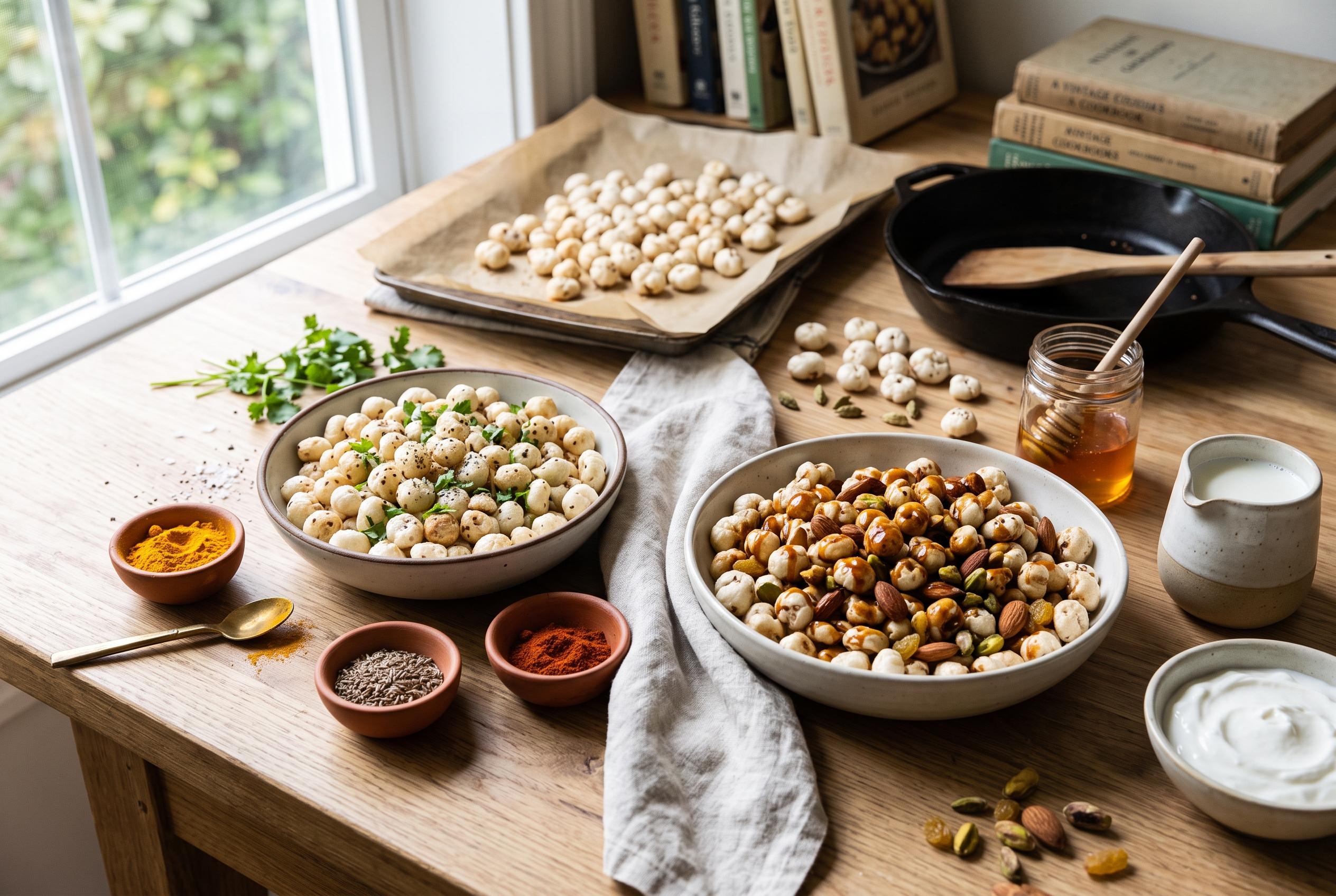

Once primarily a fasting staple, makhana is gaining recognition as a nutrient-rich, adaptable ingredient for a variety of savoury and sweet dishes, supported by its high mineral content and versatility in cooking.
Makhana is emerging as more than a fasting staple. Health writers and nutrition guides describe the puffed lotus seed, also known as fox nut, as a source of calcium, protein, fibre, magnesium, phosphorus and potassium, nutrients that support bone health, digestion and general metabolic function. Because it is light and easy to roast, it can work well as a simple snack or as the base for sweeter and savoury dishes.
One of the easiest ways to use it is in chaat. Roasted makhana can be mixed with chopped tomato, onion, cucumber and coriander, then finished with lemon juice, cumin and salt. Some cooks also add curd, chutney or pomegranate for extra flavour, turning a basic ingredient into a more filling snack.
For a richer dish, makhana can be cooked with milk to make a kheer. The seeds are lightly roasted, crushed and simmered until the mixture thickens, then flavoured with cardamom and sweetened with jaggery or sugar. That combination pairs makhana with dairy, which adds more calcium and protein. Food websites also highlight similar variations, including tikki, namkeen mixes and even smoothies, showing how widely the ingredient can be adapted.
A savoury option is a vegetable tikki. Roasted makhana is ground into a coarse powder and blended with boiled potato, carrot, peas, herbs and spices before being shallow-fried on a tawa with little oil. Another easy bowl-style dish combines crushed makhana with thick curd, fruit and nuts, making it a quick snack that brings together crunch, protein and fibre.
The main advice from recipe guides is to choose clean, dry makhana without dampness, odour or mould, and to roast it gently so it stays crisp without burning. Sweet versions are best kept modest in sugar, while airtight storage helps prevent moisture from spoiling the seeds. Anyone with an allergy to makhana or to ingredients used in a recipe should avoid eating it.
Disclaimer: This content is for informational purposes only and is not intended to be a substitute for professional medical judgment, advice, diagnosis, or treatment.