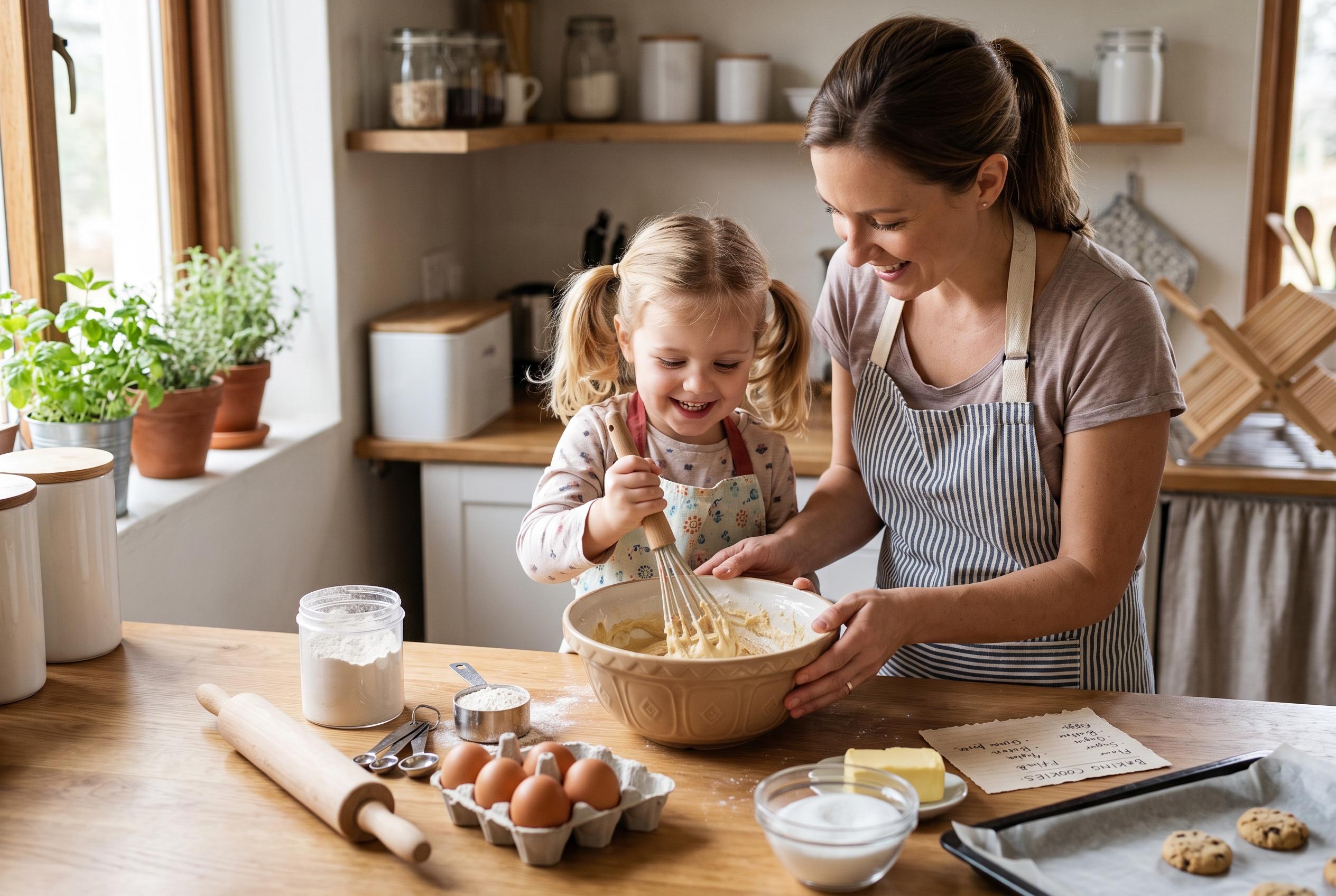

Baking with children is more than a fun activity; it fosters motor skills, numeracy, independence and family bonding, emphasising safety and preparation as essential ingredients for a rewarding experience.
Baking with children can be far more than a rainy-day distraction. Done well, it brings together fine motor practice, basic numeracy, sensory learning and family connection in a single activity. The German source article argues that even toddlers can take part in simple kitchen tasks, and Montessori-style guidance from several parenting and school resources supports the same idea: practical, hands-on activities help children build concentration, independence and confidence.
The developmental value is hard to miss. A child who pours flour, stirs batter or presses biscuit cutters into dough is strengthening hand coordination while also learning about quantity, sequence and cause and effect. Montessori resources describe food preparation as part of practical life work, alongside pouring and washing, because these everyday tasks support order, self-reliance and the ability to focus on a real-world goal.
Age matters, but not in a rigid way. The article recommends very simple tasks from around age two, such as tipping ingredients into a bowl or kneading soft dough, with more responsibility added gradually through the preschool years. By school age, children can begin following a recipe more independently, provided an adult remains nearby. That approach matches Montessori thinking, which favours carefully prepared activities that give children a genuine sense of competence without overwhelming them.
Safety, however, must come first. The German piece stresses that hot ovens, sharp knives and electrical appliances should never be left to children alone, and that an adult should handle the oven throughout. It also recommends simple protections such as stable stools, child-sized tools and clear rules before baking begins. Parenting guidance from Cayman Parent likewise underlines the need for supervision so that the activity remains both safe and beneficial.
Preparation makes the difference between a pleasant activity and a stressful one. Setting out ingredients in advance, choosing a simple recipe and allowing extra time helps keep frustration down. The article also notes that children do not need flawless results to gain value from baking: uneven biscuits or collapsed muffins can still be useful learning moments, especially when adults respond with patience rather than disappointment. Montessori resources similarly frame practical life work as confidence-building through repetition, not perfection.
The strongest recipes are often the simplest ones. Biscuits, muffins and basic bread offer clear steps, sensory rewards and enough flexibility for children to make choices. Seasonal baking can add ritual, from Christmas biscuits to birthday cakes, while shared clean-up teaches responsibility as part of the same routine. In that sense, baking with children is not just about the finished tray of food; it is about building skills, habits and memories that last well beyond the kitchen.
Disclaimer: This content is for informational purposes only and is not intended to be a substitute for professional medical judgment, advice, diagnosis, or treatment.