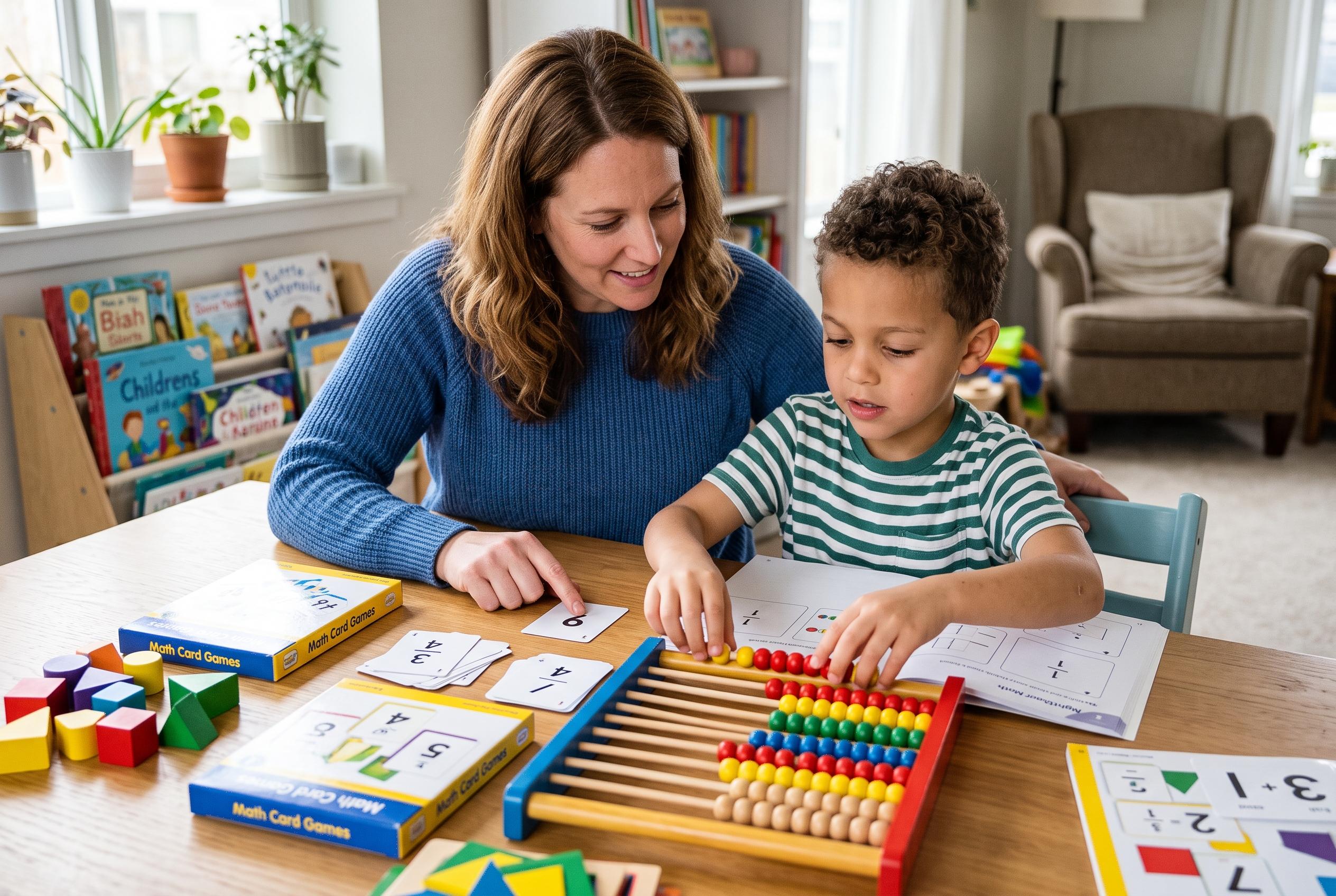

RightStart Mathematics offers a visual, game-based curriculum designed to strengthen children’s number sense, prompting parents to learn alongside their children despite a steep initial adjustment.
Many parents approach RightStart Mathematics with a simple worry: can they actually teach it? The curriculum is built around a visual, hands-on method that can look unfamiliar at first, especially to families used to traditional drill-based maths. Yet the programme’s supporters say that the very features that seem unusual, including the Cotter Abacus, card games and scripted lessons, are what make it manageable for non-specialist parents. According to the company’s own materials, the aim is to help children understand number rather than simply repeat facts.
That approach sets RightStart apart from many conventional programmes. Reviews from HomeschoolPicks, The Curriculum Compass and Boldly Educated all describe a curriculum that favours visual reasoning, mental maths and conceptual understanding over rote memorisation. Those reviews also note that the method can be especially helpful for children who learn best through touch and sight, or for families where maths has been a source of anxiety.
For parents, the biggest reassurance may be the structure. RightStart says its teacher materials guide lessons step by step, including what to say, which questions to ask and when to introduce each activity. That level of scripting can reduce the pressure on adults who do not feel confident in maths themselves. A parent review on Librarian in the House described the programme as unexpectedly enjoyable to teach, even for someone with limited maths background, and said it improved the adult’s own understanding as well.
There is, however, a real learning curve. Multiple reviews point out that the abacus, the terminology and the game-based practice can feel odd in the first few weeks. The company argues that this is part of the design: games are not extra activities but the main form of review and practice. Reviewers say that once families settle into the rhythm, the games often become a favourite part of the day, because they give children repeated exposure without turning lessons into worksheet-heavy drudgery.
The programme is also not built for children to work through alone. Reviewers consistently note that it demands a high level of parent involvement, particularly in the early levels. RightStart says families now have additional support through online communities, overview videos and customer service, and it has also announced a partnership with Nicole the Math Lady, with video lessons due for Levels C through F in fall 2026. That addition suggests the company is trying to make the curriculum easier to use for time-pressed households while keeping its hands-on teaching model intact.
For many homeschooling parents, the conclusion is less that RightStart is hard than that it asks them to learn alongside their children. The payoff, according to the programme and the families who praise it, is stronger number sense, more confident mental maths and lessons that feel more engaging than repetitive. For parents willing to stay involved, that trade-off appears to be the point.
Disclaimer: This content is for informational purposes only and is not intended to be a substitute for professional medical judgment, advice, diagnosis, or treatment.