
Spramani Elaun’s new book, ‘The Way Children Make Art’, advocates for viewing children’s art as a developmental process rooted in sensory experience and stage-specific milestones, challenging traditional talent-based judgments.
Spramani Elaun is arguing that children’s art should be understood less as a matter of talent and more as a developmental skill that grows over time. In a new book, “The Way Children Make Art”, she says drawing and painting emerge from the combined development of the eye, brain and hand, rather than from innate ability alone. The book is presented as the theoretical base for her Science Art Method, a framework Elaun says she has built through more than 30 years of teaching children in classrooms and studios.
The approach fits closely with Montessori thinking about artistic growth. The Montessori Association International says art should not be treated as a stand-alone subject, but as part of the child’s wider development, while Montessori Public Works describes the method as one grounded in observation, choice and child development. In that same spirit, Elaun’s book argues that adults should stop judging children’s work by how closely it resembles finished adult art and instead look for the stages of visual, cognitive and motor development taking place beneath the surface.
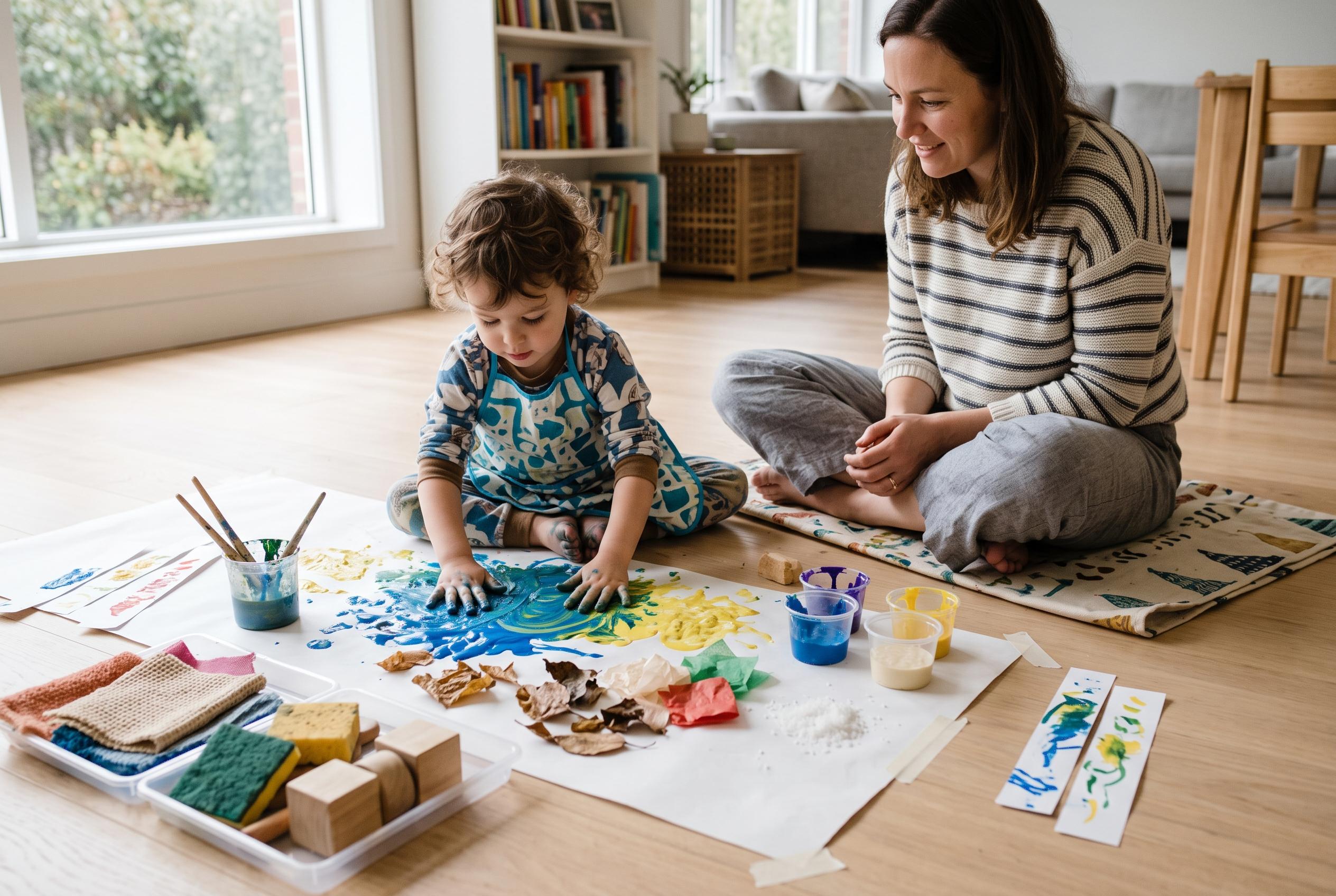
Elaun’s framework places special weight on sensory experience. According to her material, clay, paint and dry media help children develop through touch and movement, not just through looking. She also distinguishes between early childhood, generally from ages three to six, and the elementary years from six to 12, saying artistic milestones change across those stages. Urban Montessori Charter School takes a similarly integrated view, weaving visual arts, music, movement and theatre into daily learning so that children can build technique while also using creative work to show understanding in other subjects.
The book is aimed at Montessori guides, classroom and studio teachers, and parents who want a more structured way to support creativity without relying on personal art training. Elaun says it is meant as a foundation rather than a full lesson plan, and points readers towards her early childhood and elementary art guides for practical classroom use. For families and educators, the wider message is that art can be taught as a developmental language: one that depends on materials, sequencing and careful observation as much as on imagination.
Disclaimer: This content is for informational purposes only and is not intended to be a substitute for professional medical judgment, advice, diagnosis, or treatment.