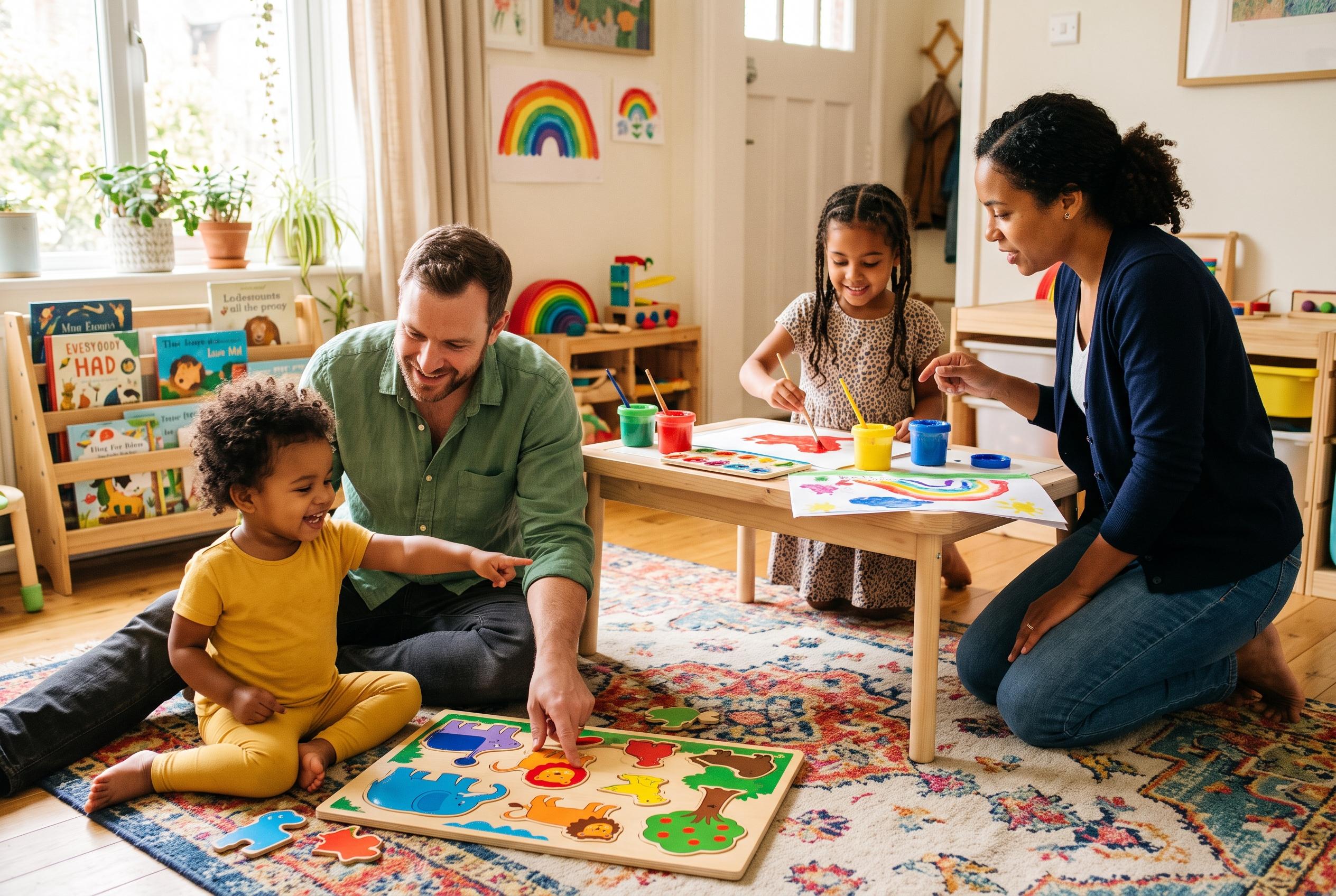

Research shows that children learn colours best through active, repeated experiences embedded in daily routines, using play, art, and conversation rather than drills, with engaging activities making colour awareness a natural part of their development.
Helping young children learn colours works best when the experience is active, repeated and rooted in everyday life. Rather than drilling labels, parents and educators can build colour awareness through play, conversation, art and simple observation. That approach is reflected in activity guides from PreKinders, Kindergarten Start and Education.com, all of which stress hands-on learning over worksheets.
A good place to begin is with familiar, everyday objects. Children can search a room, garden or classroom for one colour at a time, then name what they find and compare shades. Colour matching with blocks, pom-poms, buttons or toy figures helps strengthen vocabulary while keeping the task concrete. PreKinders, Kindergarten Start and Education.com all recommend these simple hunts and matching games as an easy way to connect colour words with real objects.
Sorting activities add another layer of learning. When children group mixed objects by colour, they practise classification as well as recognition. Rainbows, in particular, make this easy because they naturally introduce several colours at once and can be used with counters, craft items or other small manipulatives. Preschool Play and Learn, Lovely Learning Art and Play to Learn Preschool all highlight sorting, rainbow play and visual organisation as useful ways to extend colour work.
Games can keep the repetition from feeling repetitive. Colour-themed versions of “I Spy”, memory matching and spinner-based games give children chances to notice, compare and name colours in a low-pressure setting. Some programmes also pair colour learning with simple books, worksheets or playdough mats for children who are ready to connect spoken words with print. Education.com, PreKinders and Preschool Play and Learn each offer variations on these ideas.
Art is especially effective because it lets children explore colour while making something at the same time. Painting, collage work and process art encourage them to notice what happens when colours sit side by side or blend together. Introducing primary colours first makes simple mixing easier to understand: red and yellow make orange, yellow and blue make green, and red and blue make purple. Lovely Learning Art and Play to Learn Preschool both emphasise this kind of open-ended experimentation, while the other guides note that repeated exposure matters more than getting every answer right.
For parents and caregivers, the key is to keep colour learning short, playful and woven into ordinary routines. Use toys, food, clothes and classroom materials to reinforce colour words naturally, then revisit the same ideas through different activities across the week. Children do not need to master every colour at once; they learn most effectively when they can see, touch, sort, paint and talk about colours many times in different settings.
Disclaimer: This content is for informational purposes only and is not intended to be a substitute for professional medical judgment, advice, diagnosis, or treatment.