

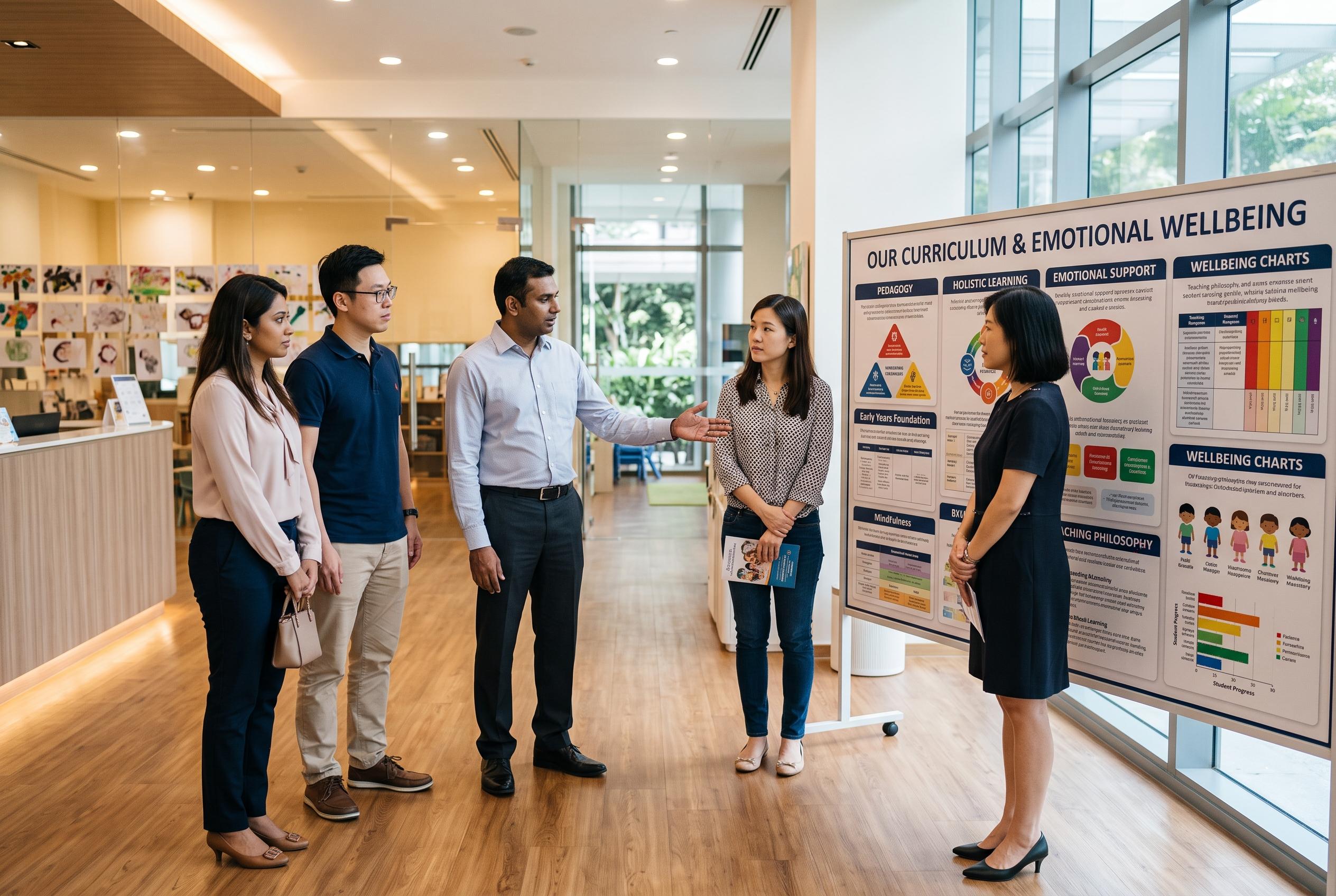

With a broader network of government-supported options and rising expectations, Singaporean parents are increasingly scrutinising teaching quality and emotional wellbeing when selecting pre-schools, shifting focus from proximity to pedagogy and environment.
Parents in Singapore are now weighing much more than price and proximity when choosing pre-school, as a wider network of government-supported places and more affordable options has changed what families expect. The Singapore Straits Times reports that childcare centres are increasingly judged on teaching quality, class size, emotional support and whether they can prepare children for Primary 1, rather than simply providing a place for working parents to leave their children. That reflects a broader shift in a sector that has expanded steadily over the past decade, with more types of providers and more programme choices available to families.
For many parents, the decision now starts with pedagogy. The Straits Times noted that families are asking about teacher-to-child ratios, teacher turnover, the learning approach and how well a centre supports a child’s social and emotional development. Other Singapore guidance on selecting pre-schools has stressed the same point: parents should look beyond convenience and consider whether a centre’s values, curriculum and daily interactions match their child’s needs. In practice, that means visiting centres, observing how staff engage children and checking whether the environment feels safe, responsive and developmentally appropriate.
Several parents interviewed by The Straits Times said they were prepared to travel further if a centre offered the right mix of care and learning. One homemaker said she prioritised a nurturing atmosphere, committed teachers and bilingual immersion over location. Another parent chose an E-Bridge centre even though there were more convenient options, saying the Reggio Emilia-inspired approach, which treats the environment as part of the learning process, made the trip worthwhile. That thinking echoes advice from education experts who say cost should be only one factor, not the deciding one.
The shift in expectations has also pushed providers to broaden the support they offer. NTUC First Campus, one of the bigger operators, has developed a child support model that brings together learning support, therapy, financial help and social assistance for children with developmental needs. The operator also uses digital tools, including artificial intelligence, to help educators plan lessons and track progress. For parents, that means pre-schools are increasingly expected to support the whole child, not just provide supervision or early academics.
Smaller and independent centres have responded by leaning into distinctive identities. Some limit enrolment and keep teacher-child ratios low to preserve a close community, while others emphasise nature-based learning, bilingual or trilingual immersion, or faith-linked character formation. Industry observers say that as anchor and partner operators, together with Ministry of Education kindergartens, now make up a large share of the landscape, private centres can no longer rely on being more expensive to seem better. Instead, they must offer a clear educational philosophy and a strong fit for families with different priorities.
Disclaimer: This content is for informational purposes only and is not intended to be a substitute for professional medical judgment, advice, diagnosis, or treatment.



