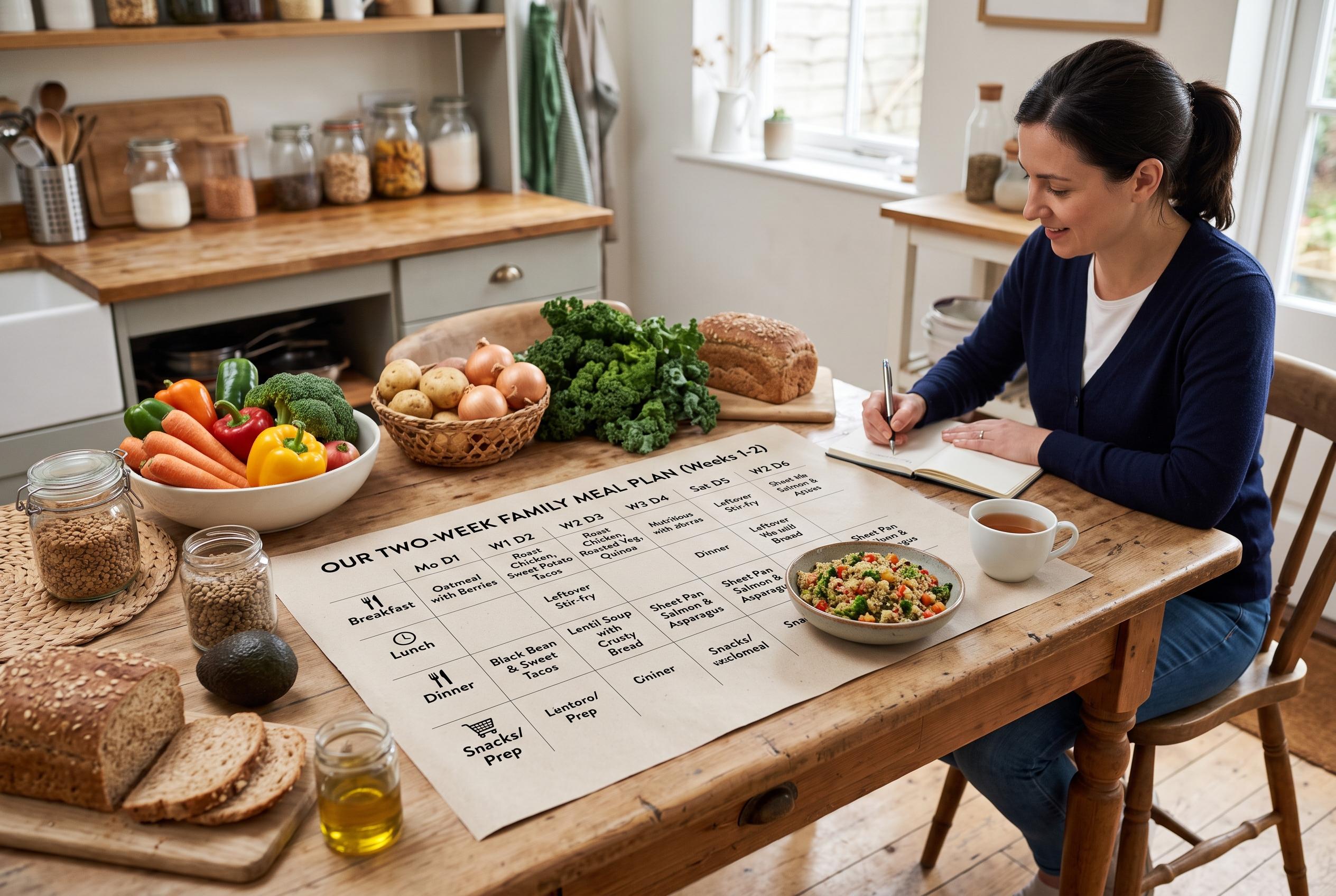

A simple, flexible two-week meal plan helps families cut costs, reduce waste, and streamline household routines amid escalating grocery prices, demonstrating that nutritious eating on a budget is achievable with strategic planning.
Meal planning can take some of the sting out of a strained household budget, especially when grocery prices keep climbing and takeaways start to look like an easy escape. The central idea behind the two-week plan outlined by Mom Money Map is simple: decide in advance what the family will eat, build those meals around low-cost staples, and use the same ingredients across several dishes to stretch every shop further.
That approach is echoed by other budgeting and meal-planning guides, which argue that planning ahead helps households cut impulse buys, reduce food waste and avoid extra runs to the shops. Budget-minded meal plans also tend to work best when they rely on simple recipes, repeat ingredients and flexible leftovers, rather than expensive speciality items or complicated cooking. According to MealFlow and Cook Smarts, the aim is not just to cook at home, but to make the whole process easier to follow and cheaper to maintain.
The two-week menu itself is built around familiar, family-friendly dinners: tacos, pork chops with mushroom soup, tuna casserole, spaghetti, stir-fry, chicken noodle soup, chilli, fried rice, homemade pizza, goulash, baked drumsticks, shepherd’s pie, grilled cheese with vegetable soup and sloppy joes. The plan also includes a leftover night, which is one of the simplest ways to keep costs down while reducing waste. Large-family budgeting guides say that using meals which stretch across several days can make it easier to stay on budget without leaving anyone hungry.
What gives the plan its financial edge is the shopping list. It leans on low-cost produce such as onions, carrots, potatoes, cabbage-style staples and bananas; proteins including eggs, tuna, chicken and ground beef; and pantry basics like rice, pasta, canned tomatoes, beans and broth. That mix is designed to let families reuse ingredients across the week, buy in bulk where sensible and rely on frozen or canned items when fresh produce is too expensive or spoils too quickly. Health and nutrition guides note that this kind of structure can also make it easier to stick with meal prep, because the ingredients are versatile enough to support breakfasts, lunches and snacks as well as dinner.
The article also makes a useful point for families trying to eat more healthfully on a budget: cheaper does not have to mean poorer quality. Simple changes, such as adding beans or lentils, choosing leaner cuts where possible, and increasing the amount of vegetables on the plate, can improve nutrition without significantly increasing the bill. That is in line with broader meal-planning advice from Beaumont Health and Fit and Well, which says planning ahead often leads to better portion control, fewer hasty food choices and less reliance on convenience foods.
There is also a practical case for the two-week format itself. A plan that covers a fortnight can feel less repetitive than a one-week cycle and less overwhelming than planning an entire month at once. For busy parents, that middle ground may be the real appeal: enough structure to cut decision fatigue, but enough flexibility to swap meals around when schedules change. In that sense, the value of the plan lies not only in the recipes, but in the calm it brings to the household routine.
Disclaimer: This content is for informational purposes only and is not intended to be a substitute for professional medical judgment, advice, diagnosis, or treatment.