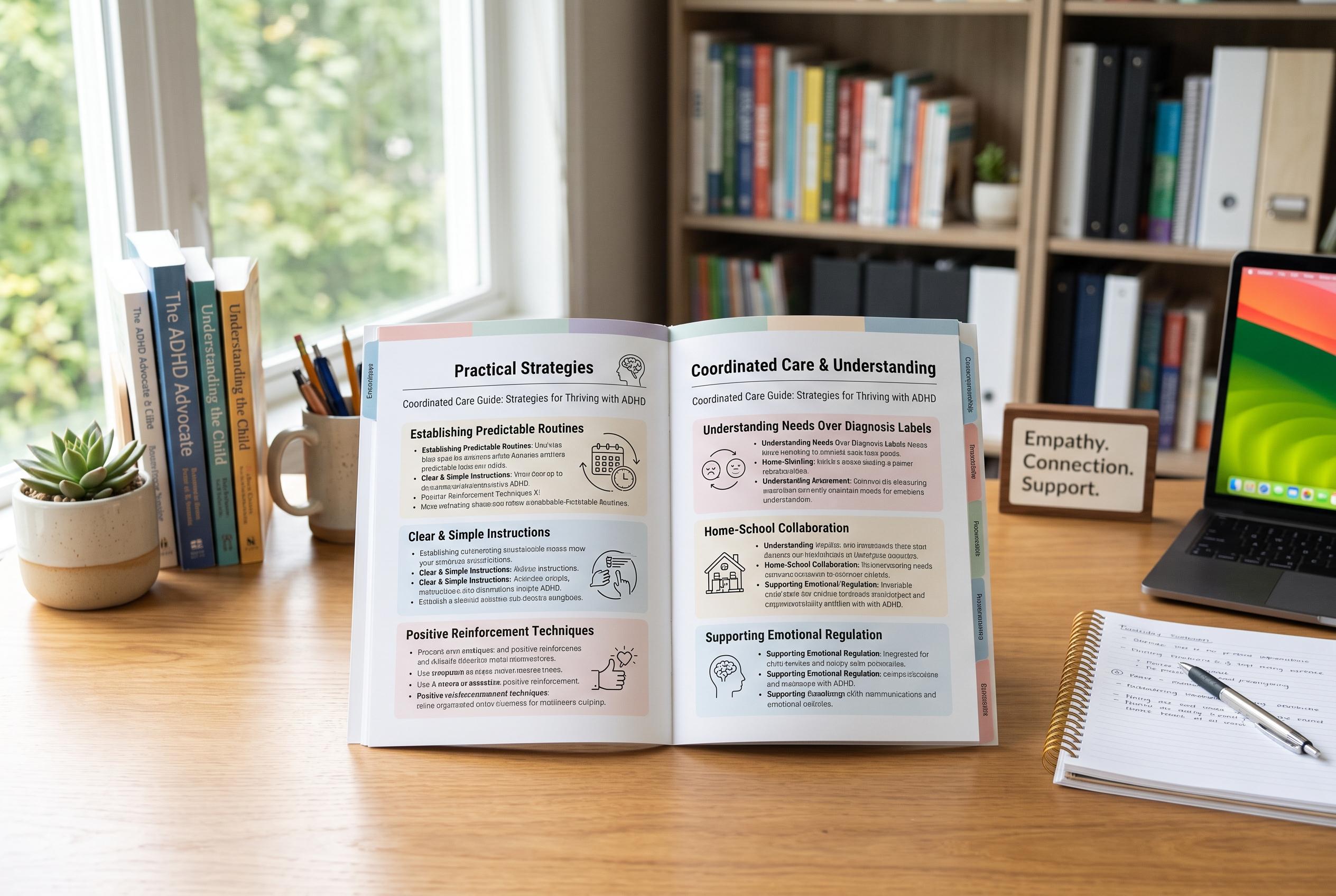

A newly developed printable guide offers parents, carers, and teachers practical strategies to recognise and support children with ADHD, emphasising understanding over diagnosis and fostering coordinated care.
A new printable aimed at helping adults support children with attention-deficit/hyperactivity disorder is designed as a practical guide rather than a diagnostic tool. It is written for parents, carers, teachers and other adults working with children aged roughly six to 12, though it may also be useful for younger children and teenagers who face similar difficulties.
The sheet uses everyday examples to help adults recognise patterns that may be familiar in home or school life. It suggests readers note which situations feel relevant, then try the accompanying ideas to make routines, schoolwork, transitions and emotional moments easier to manage.
The guidance stresses that a child does not need to show every example on the sheet. It is meant to build understanding and support, not to confirm whether a child has ADHD. If the behaviour is frequent, severe or affects school, family life or friendships, the advice is to speak with a doctor, therapist or school team.
That approach fits with wider advice from the CDC, which offers free communication resources on ADHD for families, teachers and healthcare professionals, and separately explains how school support can be put in place through an individualised education plan or a Section 504 plan. KidsHealth, meanwhile, says teachers can help by cutting distractions, teaching organisation and working closely with parents, while Children’s National says families and schools work best when they share information and coordinate support around the child’s learning and behaviour needs.
Disclaimer: This content is for informational purposes only and is not intended to be a substitute for professional medical judgment, advice, diagnosis, or treatment.