
Research underscores the importance of nurturing curiosity and creativity in children aged three to five, highlighting practical strategies for parents and educators to support lifelong learning and problem-solving skills through unstructured play, open-ended activities, and positive reinforcement.
In the early years of childhood, roughly between ages three and five, children begin to move beyond simple reaction and into purposeful exploration. They ask more questions, test ideas and try to understand how things work. That shift matters because curiosity and creativity help shape how children learn, solve problems and cope when something does not go to plan. As PBS has noted, creativity is not just about art; it also includes imagination, flexibility and problem-solving.
A growing body of research suggests that curiosity is central to school readiness and wider development. A study published on PubMed Central found that curiosity may matter more than discrete academic skills in helping young children prepare for learning, while also showing that adult interactions can encourage or dampen that instinct. The message for parents and carers is simple: children learn best when they are invited to explore uncertainty rather than rushed towards the answer.
That can start with everyday conversations. Instead of answering every question immediately, adults can turn some of them back to the child with prompts such as “What do you think?” or “How could we find out?” The goal is not to withhold information, but to give children room to reason, compare and test ideas for themselves. When a tower falls or a puzzle does not fit, that frustration can become an opportunity to think differently, adjust the plan and try again.
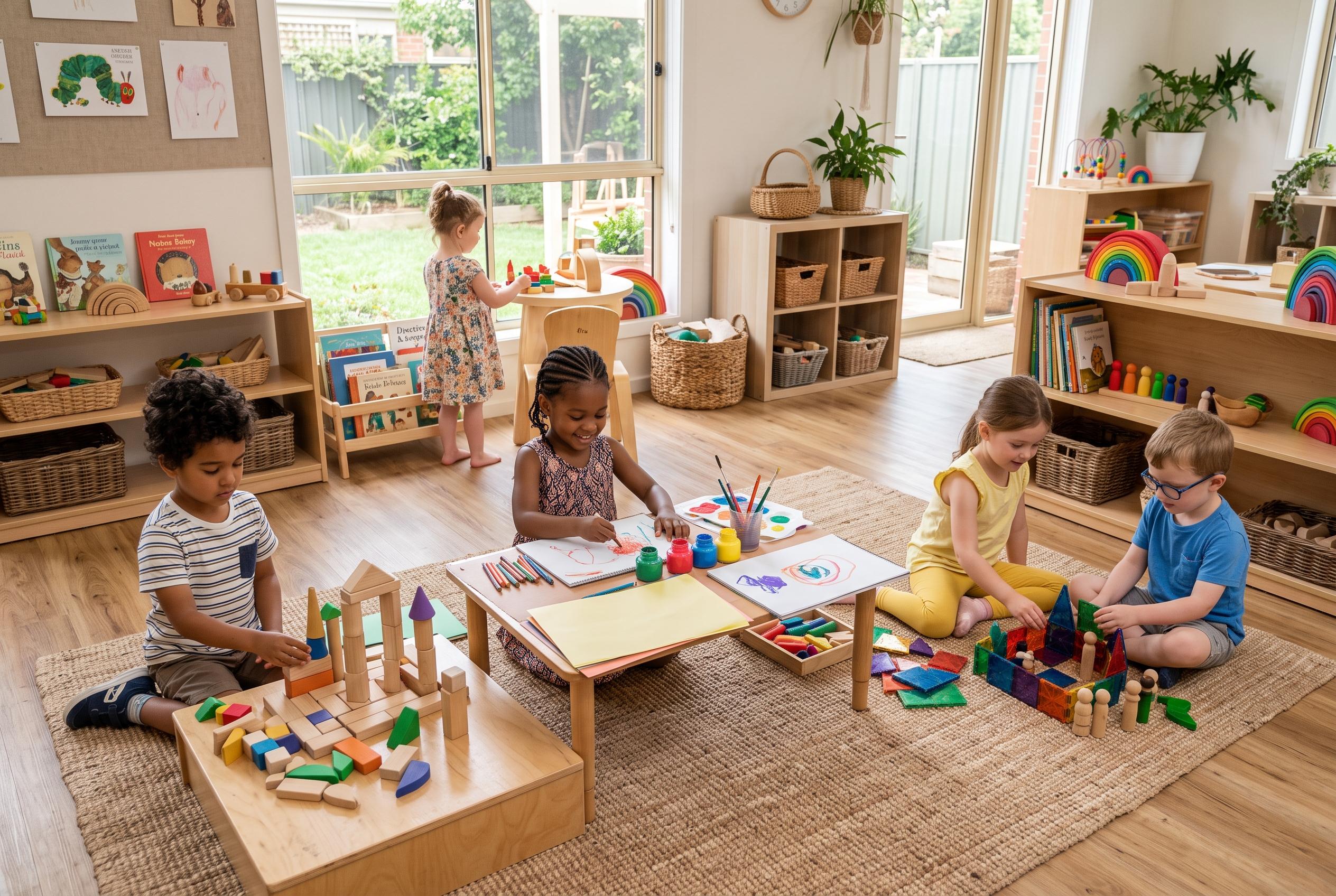
Creativity also grows through open-ended play. According to guidance from the National Association for the Education of Young Children and other early-years resources, children benefit from materials that can be used in many ways, such as blocks, paper, fabric, cardboard, stones and recycled household items. A box can become a spaceship, a blanket can become a den and a pile of sticks can become almost anything a child imagines. The value lies less in the finished result than in the process of experimenting and reworking an idea.
Parents can strengthen that process by following a child’s interests. If a preschooler is fascinated by insects, water, transport or dinosaurs, those interests can be turned into simple investigations through books, outdoor observation, drawing or play. Everyday activities help too. Cooking introduces counting, measuring and prediction, while gardening teaches children to notice change over time and think about what living things need to grow. The aim is to build on a child’s natural curiosity without turning every moment into a formal lesson.
The setting children spend time in matters as well. The report from HKSchool on early-years curiosity says educators should create environments where children can explore, ask questions and solve problems with support rather than constant direction. When choosing childcare or a preschool, parents may want to look at whether children can access materials independently, choose activities for themselves and spend time in unstructured play. Quality matters more than quantity when it comes to toys and resources.
Small, low-cost activities can also support creative thinking at home. Children can make pictures from leaves and sticks, invent stories for toys, mix paint colours, build with blocks, explore what sinks or floats, or create music from household objects. What matters most is giving them space to make decisions, test possibilities and even get bored for a while. As several early-childhood organisations have argued, boredom can be the starting point for original thought.
Praise helps when it focuses on effort rather than performance. Telling a child that they kept trying, changed their plan or found another way to use the same materials sends a stronger message than simply admiring the result. The broader lesson is that creativity and curiosity are not fringe skills. They are the habits that help children become confident learners, willing to explore, ask and persist long after the preschool years are over.
Disclaimer: This content is for informational purposes only and is not intended to be a substitute for professional medical judgment, advice, diagnosis, or treatment.