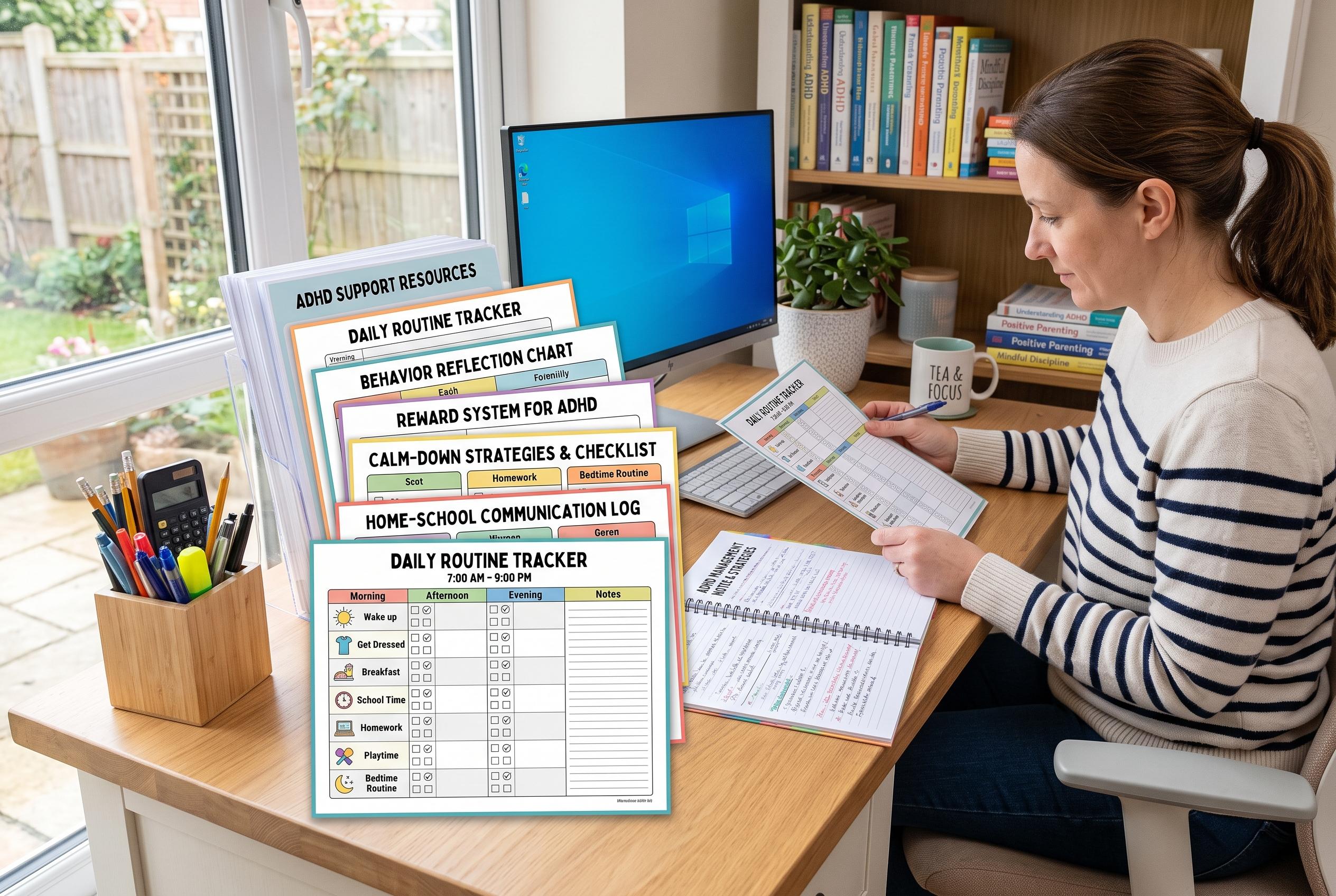

A new printable resource offers practical strategies for adults supporting children with ADHD, emphasising behavioural understanding and routine adjustments without replacing professional advice.
A new printable aimed at adults supporting children with ADHD is designed as a practical guide rather than a diagnostic tool. According to the resource, it is intended for parents, carers, teachers and other adults working with children, particularly those aged six to 12, though it may also help families of younger children or teenagers who face similar difficulties.
The sheet uses everyday examples to help adults notice patterns in behaviour that may feel familiar at home or in school. Its message is that a child does not need to match every example for the guide to be useful. Instead, readers are encouraged to identify the situations that resemble their own experience and consider the suggested responses as small adjustments that might make routines, transitions, homework and emotional moments easier to manage.
That emphasis on practical support fits with wider advice from the Centers for Disease Control and Prevention, which says children with ADHD may benefit from classroom adjustments, positive reinforcement and changes to the learning environment to reduce distractions. The CDC also notes that schools may use either an individual education plan or a Section 504 plan, depending on the child’s needs, and recommends close collaboration between families, teachers and health professionals.
Other child-focused resources take a similar approach. The Royal Children’s Hospital in Melbourne advises parents and carers to recognise strengths as well as challenges, reward positive behaviour and work with educators to put support in place early. Therapists and child-development platforms also offer routine charts, homework planners, calming cards and emotion tools, reflecting the wider view that visual structure and immediate feedback can help some children with ADHD stay organised and regulate their emotions.
The printable’s creators stress that the sheet is meant to support understanding, not to replace professional assessment. If a child’s behaviour is frequent, severe or is affecting school, home life or friendships, they advise speaking with a doctor, therapist or school team.
Disclaimer: This content is for informational purposes only and is not intended to be a substitute for professional medical judgment, advice, diagnosis, or treatment.