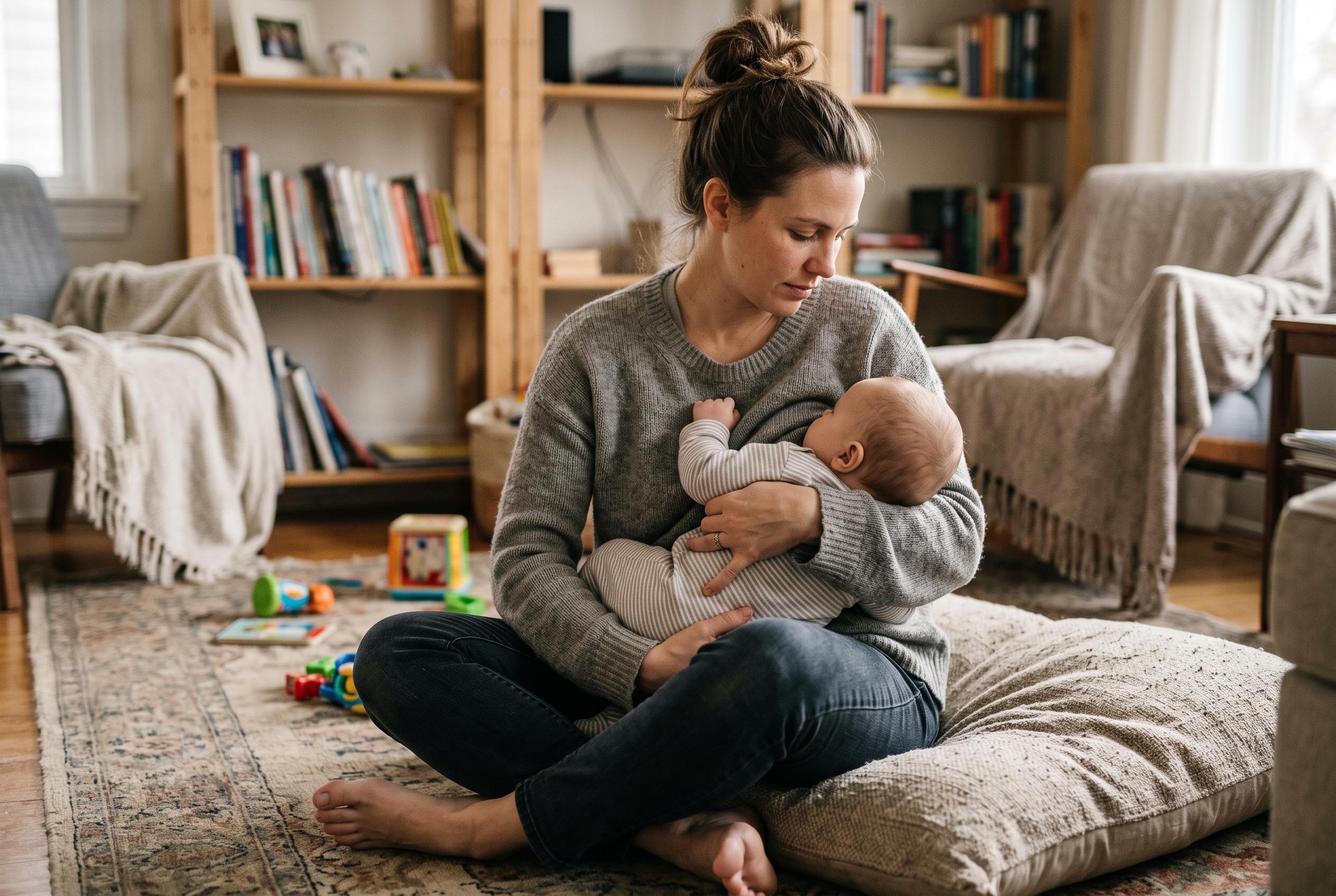

As parents grapple with exhaustion, a new approach emerges, blending empathy with clear limits, reshaping family life amid the decline of pure gentle parenting.
For years, gentle parenting sat near the centre of modern family culture, promising calm voices, emotional validation and fewer power struggles. Now, many parents are questioning whether that ideal is sustainable in everyday life. The backlash is less a rejection of kindness than a reaction to a style that, for some families, has drifted into exhaustion, blurred limits and endless negotiation.
A recent PLOS ONE study found that while parents who practise gentle parenting try hard to stay composed, many eventually hit their limit. That fits with broader research on tired caregivers: a qualitative study in Frontiers in Public Health found that exhausted parents often experience strained interactions with their children, while work in Behavioural Sciences linked shared parenting responsibilities to parental burnout. In other words, the pressure is not only about discipline; it is also about the load adults are carrying.
One response gaining attention is FAFO parenting, short for a blunt phrase that means letting children “find out” after a choice. The idea, highlighted in coverage from WeHaveKids, is to step back when consequences are safe and developmentally appropriate, rather than issuing repeated warnings or trying to manage every outcome. Supporters say it gives children clearer feedback and gives adults a break from constant explanation. Critics worry it can tip into harshness if it is used without judgement.
Another model attracting interest is a sturdier middle ground. Clinical psychologist Becky Kennedy has argued for a more boundary-focused approach that keeps connection in place while still holding firm limits. That appeals to parents who do not want either permissiveness or a rigid, punitive style. The shift suggests many families are not abandoning empathy so much as trying to pair it with more certainty about what happens next.
There is also a practical reshaping of the home itself. Some parents are experimenting with split shifts, dividing care so one adult is on duty while the other works, rests or handles chores. That lines up with research suggesting co-parenting arrangements can affect burnout, because constant overlap can leave both adults depleted at the same time. The aim is simple: make sure someone still has patience left for the hard moments.
The same rethink is showing up in how families handle screens and independence. Parents are leaning harder into phone limits, more unsupervised play and fewer over-scheduled afternoons, while schools and policymakers are reinforcing some of those limits from outside the home. The message is shifting from constant optimisation to practical competence: children need room to be bored, make mistakes and learn ordinary life skills.
For children with different sensory or executive-functioning needs, a one-size-fits-all discipline model is also losing appeal. More parents are moving towards neuro-affirming discipline, which adjusts the response to what is actually driving a child’s behaviour. That can mean changing the environment, simplifying instructions or reducing stimulation rather than simply demanding more compliance.
Taken together, the change is less a revolt against gentle parenting than a correction to it. Parents appear to be looking for something kinder to the whole household: fewer performance expectations, more realistic boundaries and a style that acknowledges both a child’s needs and an adult’s limits. That, more than any new label, may be the real story.
Disclaimer: This content is for informational purposes only and is not intended to be a substitute for professional medical judgment, advice, diagnosis, or treatment.