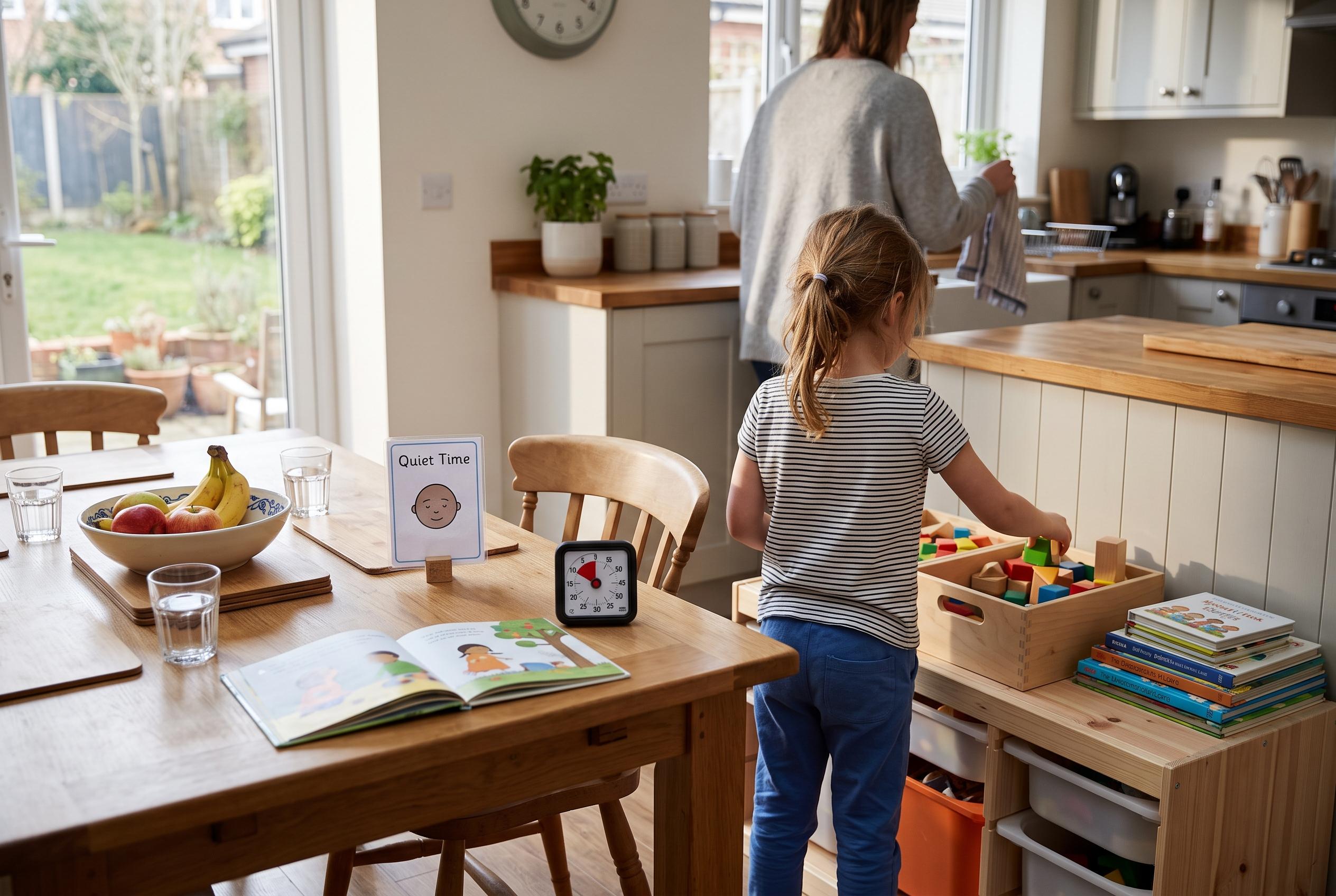

A reflection on how children observe and interpret everyday family interactions, emphasising the importance of modelling self-control and accountability for healthy development.
In the evening scene that opens this reflection, a father sits absorbed in his phone while his young son waits to show him a Lego creation. The message is simple and uncomfortable: children are always watching, even when adults think they are off duty. The lesson may not be the one the parent intended, but it is often the one the child receives.
Psychologists have long shown that this kind of learning is real. Albert Bandura’s famous Bobo doll experiment found that children who watched aggressive adult behaviour were more likely to copy it afterwards, helping establish the idea that people learn by observing others. Later work on social learning theory developed that insight further, arguing that attention, memory, imitation and motivation all play a part in how behaviour is acquired.
Bandura’s broader social cognitive theory adds another important point: people are not passive copycats. They learn within a three-way interaction between personal factors, behaviour and environment, and they can also regulate their own actions over time. In other words, children do not simply absorb what they see; they interpret it, repeat it selectively and make it part of their own developing habits.
That helps explain why everyday family routines matter so much. A parent’s tone during frustration, the way adults speak to a waiter, how they answer an elderly relative, or whether they apologise after losing their temper can all become part of a child’s understanding of how the world works. These are not formal lessons, but they are often more persuasive than any lecture because they are lived in front of the child.
The encouraging part is that children do not need flawless parents. They need adults who can recognise their mistakes, correct course and model repair. When children see a parent calm down, admit fault or try again after a bad moment, they learn that self-control and accountability are possible. That may be one of the most valuable forms of teaching in family life.
Disclaimer: This content is for informational purposes only and is not intended to be a substitute for professional medical judgment, advice, diagnosis, or treatment.