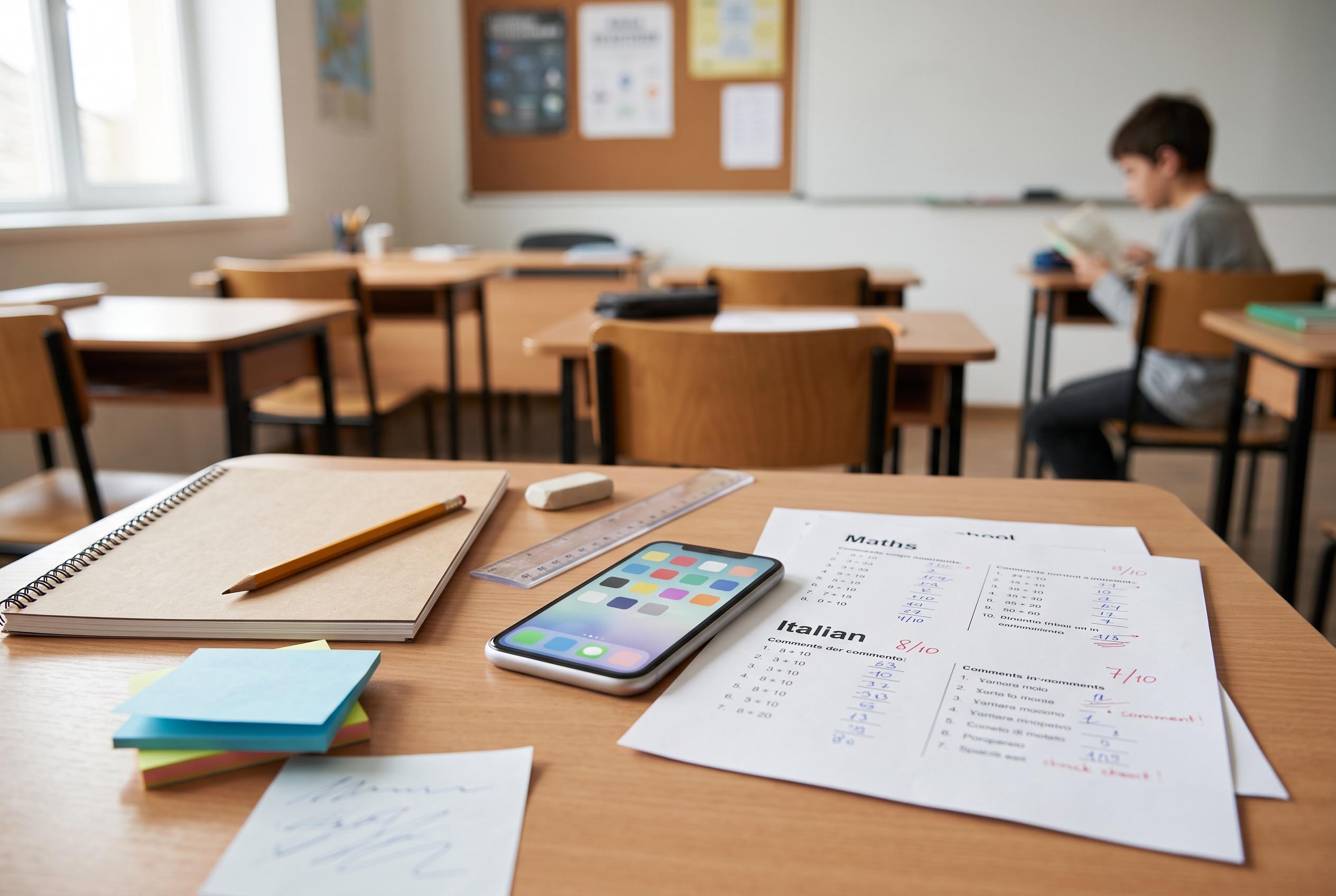

Research involving over 5,000 pupils in northern Italy indicates that creating a social media account in middle school could be linked to slightly poorer school results, especially in maths and Italian, highlighting the potential impact of early digital engagement on academic performance.
A study of 5,277 pupils in northern Italy suggests that creating a social media account in middle school may be linked to weaker school results later on, particularly in maths and Italian. Researchers at the University of Milano-Bicocca, writing in Nature Human Behaviour, compared children who opened an account at around 10 to 11 years old with those who waited until 13 to 14, and found that the earlier group tended to do worse once secondary school progress was under way.
The gap was modest but notable. According to the study, early users scored about 0.2 standard deviations lower in maths and Italian, a difference the researchers said was roughly comparable to six months of schooling. They were also more likely to repeat a year and less likely to finish middle school with top marks. English was the one subject where the pattern did not appear, which the authors said may reflect incidental exposure to English-language content on social platforms.
The findings fit a wider body of research suggesting that heavy or poorly managed media use can undermine learning. A review in JAMA Pediatrics found that more screen time was associated with lower academic performance, while older work in the British Journal of Developmental Psychology linked excessive media use, especially among boys, with weaker achievement. Other studies have found similar associations with television viewing in late childhood and with lower school connectedness, which can also affect performance.
Still, the Italian study does not prove that social media causes poorer grades. The researchers compared pupils with broadly similar backgrounds, taking into account factors such as parents’ education, family structure, neighbourhood, financial strain, nursery attendance and earlier school results. Even so, the work was observational rather than experimental, so it can show an association, not direct cause and effect.
The authors argued that the issue is less about technology in general than about social media in particular. They pointed to distraction, constant checking and the cognitive strain of switching attention, especially when phones are used during homework or before bed. The study also found that children who reported checking their phones more often were more likely to have started social media earlier and to have lower results in maths and Italian later on.
Their conclusion was cautious: waiting until 13 or 14 to create a personal account could help, but age limits alone are unlikely to be enough. Any policy, they said, should be paired with digital education for children and parents, plus school-based lessons on safer and more constructive use of social platforms.
Disclaimer: This content is for informational purposes only and is not intended to be a substitute for professional medical judgment, advice, diagnosis, or treatment.