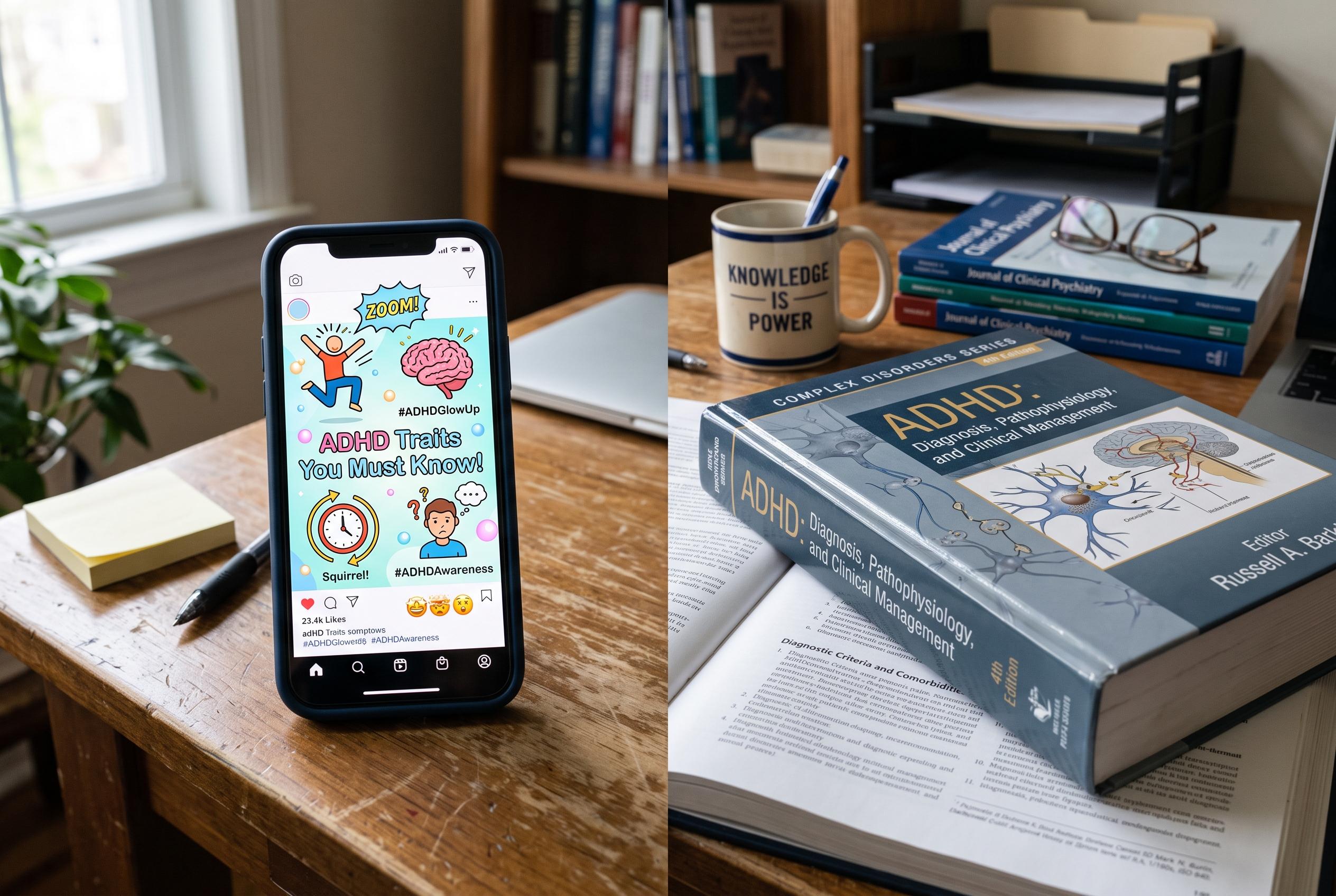

As social media platforms popularise simplified ADHD content, experts warn that complex diagnoses risk being distorted into trends, risking misdiagnosis and trivialisation amidst rising online communities and celebrity disclosures.
Over the past few years, health advice has drifted ever further from clinics and into feeds. Pew Research Center says 40% of US adults, and half of those under 50, now get health and wellbeing information from social media influencers or podcasts, even though only about 40% of the 6,828 accounts studied identified as healthcare professionals. That shift helps explain why ADHD has become such a prominent topic online, where personal testimony often carries more weight than clinical nuance.
In an excerpt from Deborah Cohen’s 2026 book Bad Influence: How the Internet Hijacked Our Health, published by Oneworld, the journalist examines how TikTok and similar platforms have turned ADHD into a source of relatable content, with creators listing “lesser known” traits and everyday frustrations as tell-tale signs. Cohen argues that the problem is not awareness itself, but the way short-form videos can flatten a complex diagnosis into a series of entertaining quirks, even though ADHD symptoms overlap with anxiety, depression and learning difficulties and require careful assessment by clinicians.
That concern is borne out by research from the University of British Columbia. A study led by Vasileia Karasavva found that when psychologists reviewed the 100 most popular ADHD TikTok videos on 10 January 2023, fewer than half of the claims accurately matched DSM-5 symptoms. Many of the inaccurate claims described experiences common to people without ADHD, while others confused the condition with different disorders entirely. The videos rarely offered caveats, and the researchers found that students watching them tended to reward relatability over accuracy.
Still, the appeal of this material is easy to understand. For people who have spent years feeling dismissed, social media can offer recognition and a sense of community. One woman quoted by Cohen said discovering others with similar experiences was “deeply reassuring”, while creators often frame the condition in light-hearted, highly shareable terms. Some have turned that into merchandise, with slogans that play on the language of struggle and self-acceptance. Even so, the line between validation and simplification is thin.
The debate has been sharpened by celebrities who have spoken publicly about their diagnoses. Simone Biles, Jessie J and the entrepreneur Steven Bartlett have all described ADHD in empowering terms, and Jessie J wrote on Instagram in July 2024 that social media had helped her connect and heal with others facing similar challenges. But Oxford psychologists Lucy Foulkes and Jack Andrews warn that such disclosures can make certain diagnoses look like status symbols. Susan Young, a clinical psychologist who helped shape early NHS adult ADHD services, is more blunt: she says the condition should not be treated as entertainment, especially when real-world outcomes can include imprisonment, self-harm, substance misuse and missed treatment. Research cited by Cohen suggests ADHD is far more common in prison populations than in the general public, while low-income children are more likely to meet diagnostic criteria and less likely to receive care. The result, she argues, is a culture that can make ADHD seem fashionable while obscuring the hardship it brings to many families.
Disclaimer: This content is for informational purposes only and is not intended to be a substitute for professional medical judgment, advice, diagnosis, or treatment.