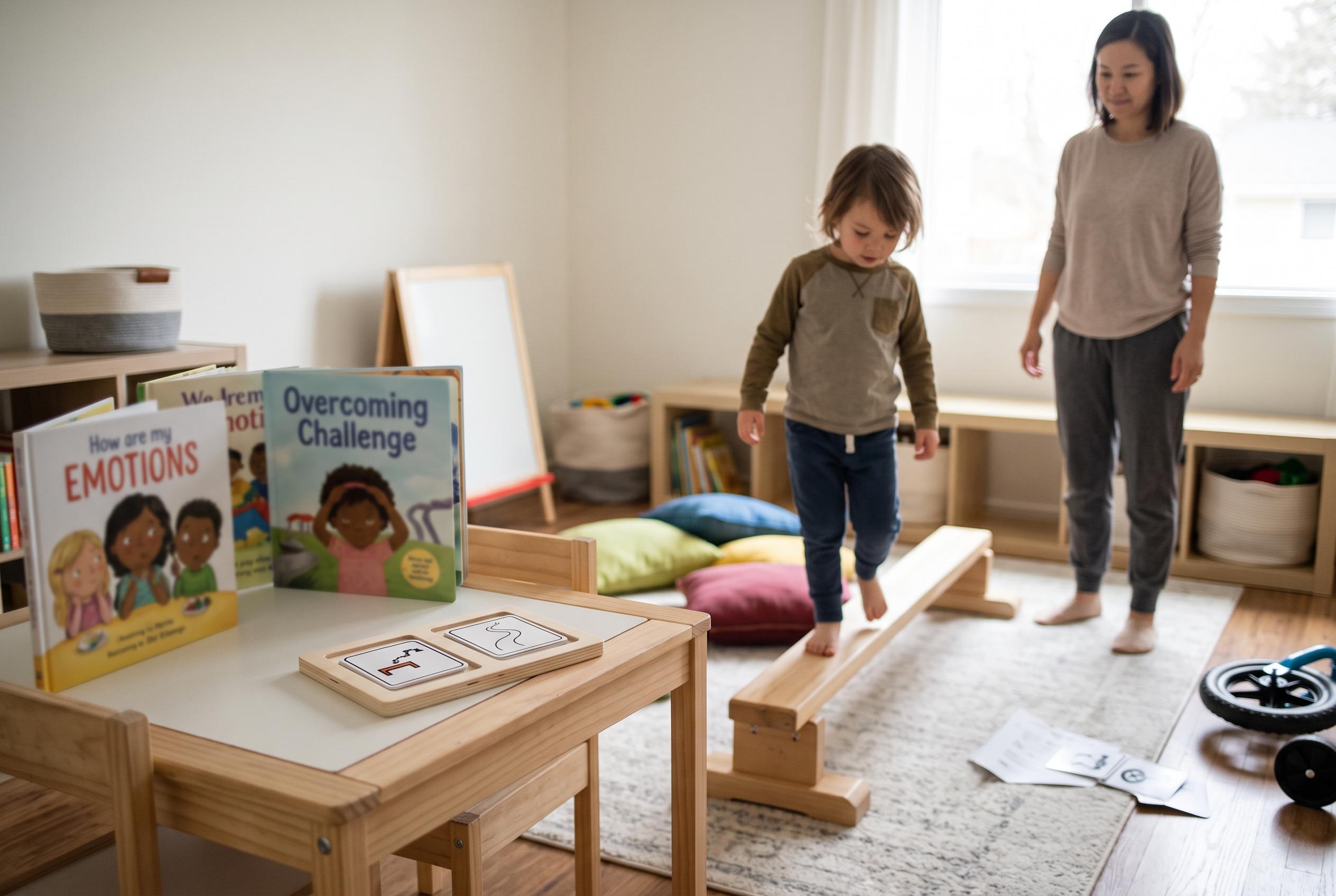

Research reveals how well-meaning parental behaviours such as overprotection, inconsistent discipline, and overpraising can undermine children’s self-confidence and coping skills, highlighting the need for more mindful parenting approaches.
After 12 years in classrooms, one lesson keeps repeating: many of the habits that make children struggle begin with loving intentions. Parents rarely set out to undermine confidence, independence or resilience. More often, they are trying to protect children from discomfort, disappointment or failure, only to end up reducing the chances that children learn how to cope on their own.
One of the clearest examples is stepping in too quickly. According to research on helicopter parenting, excessive involvement can weaken a child’s sense of autonomy and self-efficacy, while also making anxiety, depressive symptoms and social withdrawal more likely later on. In practical terms, children who are constantly rescued before they can solve a problem themselves may stop believing they are capable of handling difficulty.
Praise can also backfire when it focuses on the child rather than the effort. Studies cited in PubMed and elsewhere have found that inflated praise can make children with low self-esteem more likely to choose easier tasks, apparently to avoid the risk of failing to live up to grand expectations. Other research has linked that kind of praise to shame when children do fall short, which is why teachers often encourage parents to praise persistence, strategy and improvement instead of fixed traits.
Another damaging pattern is inconsistency. When rules change depending on a parent’s mood, energy or location, children quickly learn that boundaries are negotiable in ways they cannot predict. That uncertainty can feed conduct problems and make discipline feel arbitrary rather than instructive. A child who never knows what applies from one day to the next is far less likely to internalise the rule itself.
Screens create a different kind of problem when they are used to fill every pause. Recent findings from a large Canadian cohort, following more than 3,000 children in Ontario over many years, found that heavier screen exposure in early childhood was linked with weaker reading and maths performance. Experts also caution that not all screen use is equal, and that some shared, interactive use with adults can support language development. The issue is less the device itself than the loss of boredom, daydreaming and self-directed play.
Homework is another place where good intentions can become a trap. Parents who hover over every answer, or quietly do the work for a child, may keep the evening calm in the short term, but they also remove the very struggle that builds problem-solving skills. By the time schoolwork becomes more demanding, children who have never had to wrestle with confusion are often less prepared for it.
Comparison is especially corrosive. Telling a child that a sibling was easier, smarter or better behaved may be meant as motivation, but it usually lands as a judgement of worth. Children tend to hear a verdict on who they are, not a nudge to improve. Over time, that can produce either avoidance or anxious perfectionism, neither of which helps a child grow.
Parents can also make failure feel forbidden. Shielding children from disappointment may spare them in the moment, but it leaves them without practice in recovering from it. What helps more is a calm conversation after a poor mark, a missed goal or a social setback: what happened, what was learned and what might be done differently next time. That kind of response teaches children that failure is information, not identity.
The final problem is overscheduling. Between tuition, sport, music, clubs and enrichment activities, some children barely get a quiet hour to think, rest or simply be. Researchers have linked helicopter-style parenting and a broader culture of relentless achievement to perfectionism and anxiety, and many children live that reality as exhaustion. A packed timetable can look impressive from the outside while leaving a child with too little room to develop independence, curiosity and emotional balance.
Disclaimer: This content is for informational purposes only and is not intended to be a substitute for professional medical judgment, advice, diagnosis, or treatment.