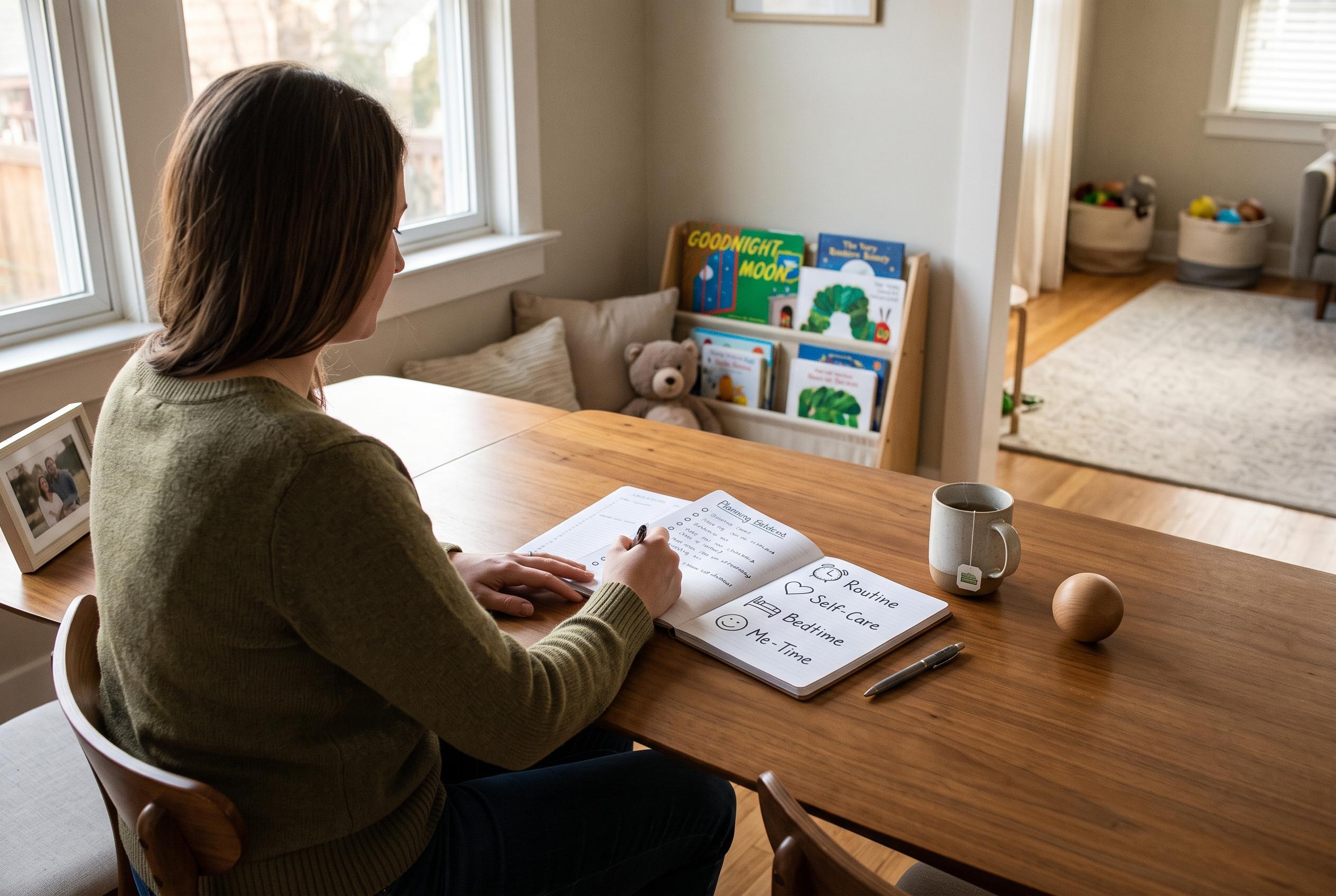

Research indicates that parental exhaustion is a resource issue rather than a moral failing, with strategic planning tools like implementation intentions offering practical ways to bridge the gap between knowing what to do and actually doing it amidst fatigue.
Parents are often told they already know what to do: put the phone down, keep the tone even, read the extra story, hold the line without snapping. The harder truth is that the problem is often not knowledge but depletion. By evening, after work, logistics and constant decision-making, the energy needed to act on good intentions may simply have gone. Research on parental burnout helps explain that gap, and so does a large body of work on a simple planning tool that can make follow-through easier. According to research published in Frontiers in Psychology, parental burnout is a measurable condition marked by deep exhaustion linked to the parenting role, emotional distance from children and a growing sense of ineffectiveness.
That matters because it changes the diagnosis. If a parent knows what would help but cannot summon the strength to do it, the answer is not usually more self-criticism. Burnout research suggests that exhaustion is not a moral failing. It is a resource problem, and resource problems rarely respond to exhortations to try harder. In practice, that means the first step is often to reduce the load: cut unnecessary decisions, lower standards where it makes sense, accept help and treat rest as a basic requirement rather than a luxury.
The second part of the solution is more tactical. The U.S. National Cancer Institute describes implementation intentions as if-then plans that tie a situation to a specific response, such as deciding in advance what to do when a predictable trigger appears. The idea is to move the choice out of the exhausted moment and into a calmer one. Instead of relying on fresh willpower at 7pm, a parent can pre-commit to a response such as: if the children start arguing before dinner, then the phone goes in the drawer and I step in.
That approach is not just neat in theory. A 2006 meta-analysis by Peter Gollwitzer and Paschal Sheeran found that implementation intentions had a medium-to-large effect on goal attainment, while later reviews found that specifying when, where and how a behaviour will happen can improve the chance that people actually do it. The benefit is especially useful when self-regulation is under strain, because the plan does some of the work before stress, fatigue or distraction can get in the way.
Taken together, the evidence points to a parenting strategy that is far less heroic than the culture often demands. Start by acknowledging that fatigue is real, and that even loving parents can run dry. Then conserve energy for the moments that matter most by making a small number of specific plans in advance. It will not solve every difficulty, especially where stress, isolation or a child’s needs are heavy enough to overwhelm any household system. But it can narrow the distance between what parents know and what they can actually manage, which is often the gap that hurts most.
Disclaimer: This content is for informational purposes only and is not intended to be a substitute for professional medical judgment, advice, diagnosis, or treatment.