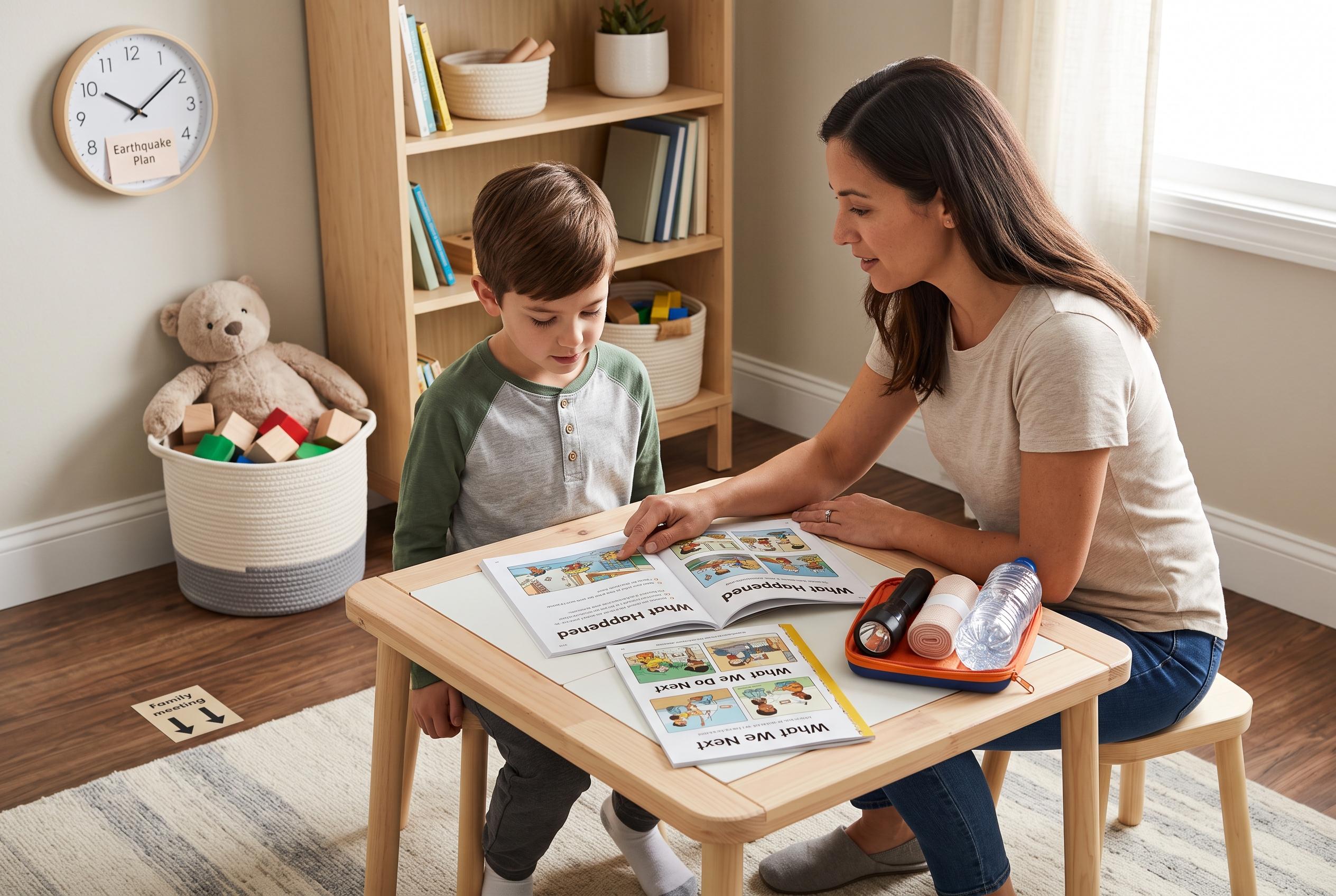

Expert guidance emphasizes the importance of honest, age-appropriate communication and routine restoration to help children cope emotionally after earthquakes, highlighting the role of preparation and avoiding media overload.
After an earthquake, parents often focus first on safety, housing and the practical shock of what comes next. But child-welfare guidance from the American Academy of Pediatrics says the conversation with children should not be delayed, because children hear adult discussions, see frightening images and may try to fill in the gaps themselves. Explaining what happened in simple, age-appropriate language can reduce fear and help restore a sense of security.
Experts also advise asking children what they think happened before offering too much detail. That gives adults a chance to correct mistaken ideas, such as believing a home is certain to collapse during an aftershock or that every tremour means a major quake is coming. HealthyChildren.org says parents should be honest without making promises they cannot keep, and should avoid saying that nothing bad will ever happen again. A better message is that the family has a plan and knows how to respond if the ground shakes again.
UNICEF says preparation can also help children feel safer after a disaster. Families can talk through emergency steps, identify meeting points and explain who children should go to for help. At the same time, parents are urged to watch media exposure closely, because repeated footage of collapsed buildings, injured people or desperate rescue scenes can intensify distress. The guidance is to give children room to express fear and sadness, while keeping adult worries from becoming another burden for them.
The emotional impact can be especially sharp if a child has lost a home, a room, a favourite toy or another object that helped define daily life. HealthyChildren.org notes that these losses should not be dismissed, even when adults are facing much larger financial pressures. Restoring familiar routines , meals, bedtime rituals, games and schoolwork where possible , can help children feel that life still has structure. In that sense, reassurance after a quake is not just about words; it is also about steady habits, clear limits and showing children that adults remain in charge.
Disclaimer: This content is for informational purposes only and is not intended to be a substitute for professional medical judgment, advice, diagnosis, or treatment.