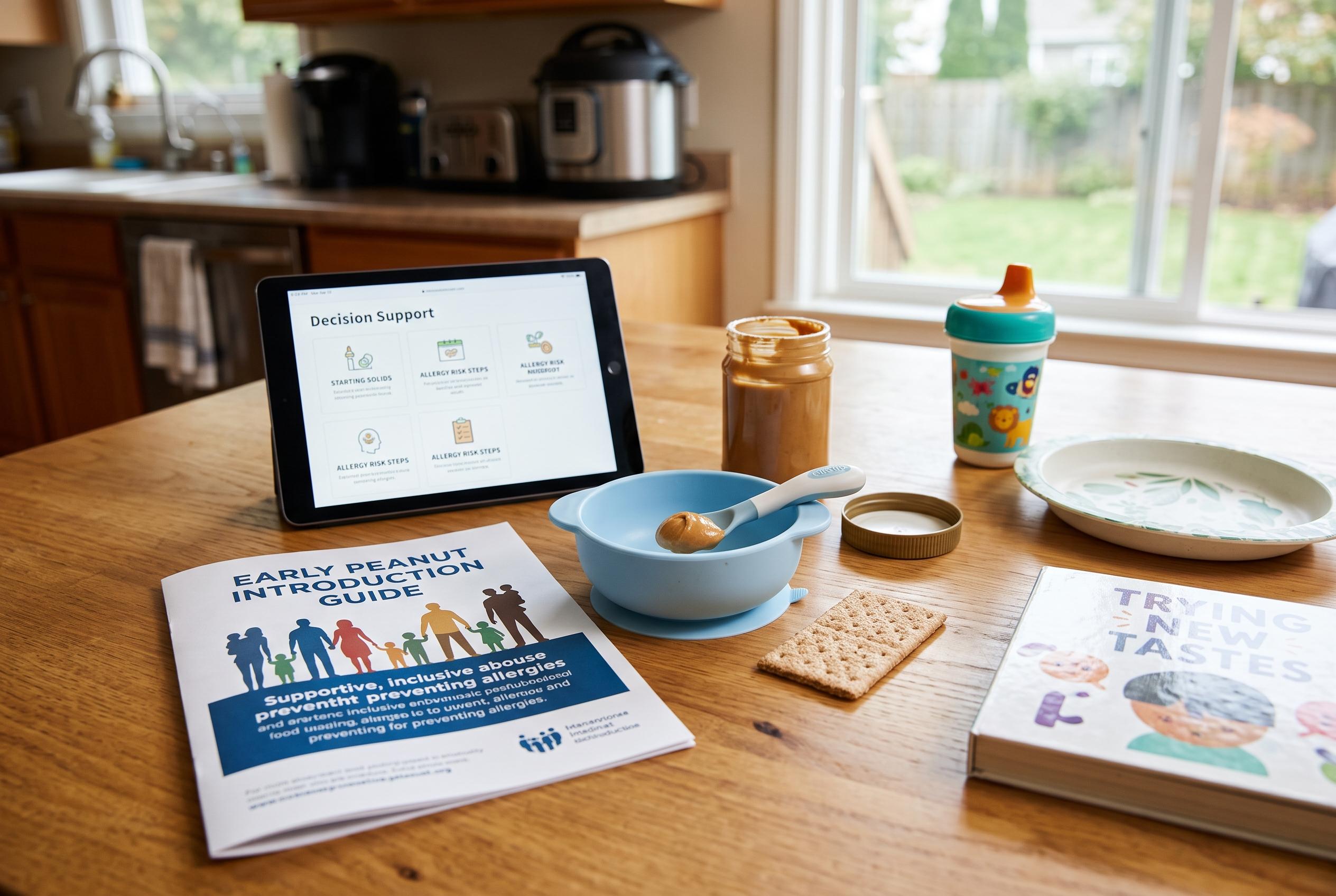

Research highlights the persistent gap between guidelines and practice in early peanut introduction, emphasising the need for culturally sensitive, trust-based communication and decision support tools to improve allergy prevention efforts worldwide.
A body of research reviewed in the Wiley article suggests that the biggest obstacle to early peanut introduction is not simply medical advice, but the gap between guidance and everyday practice. In interviews with mothers and carers in Bulgaria, Poland, Spain and the UK, many families said they kept peanuts away from young children until between two and five years old, mainly because of choking fears. Even so, the same research found that peanut exposure during pregnancy, breastfeeding and weaning varied widely, and many parents did not appear especially worried about allergy development.
Healthcare professionals were no less divided. A qualitative study of general paediatricians in Northern California found that low awareness of the guidelines, weak agreement with them, lack of practical resources and uncertainty about whether early introduction would make a difference all limited uptake. Other surveys of paediatricians, allergists, family doctors and primary care staff echoed those findings, showing that many clinicians knew the recommendations only partially and still wanted more education, decision support and help with supervised feeding.
The review also points to health literacy as a crucial factor. Studies from Germany found that parents often relied on digital information but trusted doctors and personal networks more, while struggling to judge whether advice was reliable. Midwives and paediatricians in those studies reported that they needed more training and clearer materials to give advice that families could use. In another German study, lower maternal health literacy was linked with more allergen-avoidant behaviour and less exclusive breastfeeding, suggesting that information alone is not enough unless it is made easy to understand and embedded in routine care.
Recent implementation studies suggest that support tools can make a difference. In the US, educational sessions, clinical decision support and caregiver materials improved clinician adherence to prevention advice and increased early peanut introduction discussions in primary care. In Australia, text-message reminders and an online information tool also improved peanut introduction rates. Taken together, the research suggests that better results are likely to come from culturally sensitive, plain-language guidance delivered repeatedly through trusted health professionals, rather than from written advice alone.
Disclaimer: This content is for informational purposes only and is not intended to be a substitute for professional medical judgment, advice, diagnosis, or treatment.