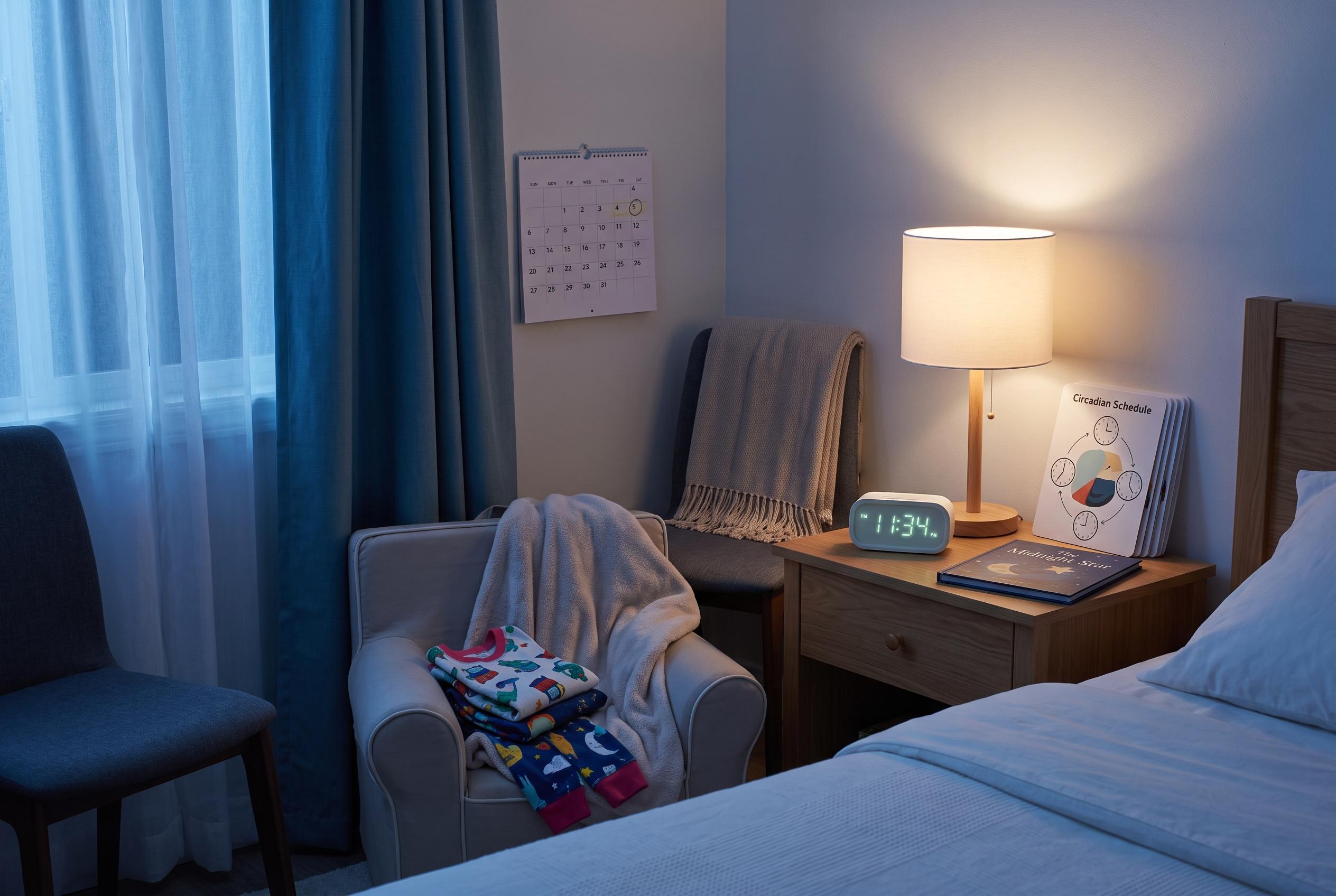

New research highlights the role of delayed circadian timing in sleep difficulties for individuals with ADHD, suggesting strategies to align sleep patterns and improve overall wellbeing.
For many families, bedtime turns into a strange contradiction: a child or teenager with ADHD may spend the evening saying they are exhausted, then suddenly seem wide awake once the lights go out. Parents often read that as reluctance or poor routine. But research suggests something deeper is going on for many people with ADHD, with the body’s internal timing system running later than expected.
That biological clock is known as the circadian rhythm, the system that helps regulate sleep and alertness across the day. Light exposure, body temperature and hormones all play a part. Melatonin, which rises as evening approaches, does not force sleep so much as signal that night has begun. In people with ADHD, that signal often arrives late.
Studies of adults with ADHD and chronic sleep-onset insomnia have found delayed melatonin onset, later sleep periods and a shift towards eveningness. Reviews of the literature have reported similar patterns in adults more broadly, including longer sleep latency, later waking times and disturbed sleep maintenance. A separate review on adolescent ADHD described delayed circadian phase as common in people whose symptoms began in childhood, with a tendency towards greater evening alertness and later sleep.
That difference matters because delayed sleep is not the same as insomnia. Someone with insomnia may want to sleep but cannot. Someone with a delayed body clock may sleep well, just much later than most school and work schedules allow. That mismatch can leave children, students and adults chronically short of sleep even when they are trying to follow the rules of ordinary life.
ADHD can also make bedtime harder in a more practical sense. Going to bed requires planning, task switching, time awareness and resistance to distraction, all of which can be difficult for people with ADHD. The pull of a phone, game, video or unfinished project can be especially strong at night, when the day finally feels quiet and personally owned. That is one reason some experts have linked ADHD with what is now widely called revenge bedtime procrastination.
The problem goes both ways. Poor sleep can worsen many of the same functions already affected by ADHD, including attention, working memory, impulse control and emotional regulation. In children, sleep loss can show up less as obvious tiredness and more as irritability, hyperactivity or emotional volatility. Sleep disorders can also mimic ADHD-like symptoms, which is why clinicians often need to ask about sleep when evaluating attention problems.
Morning light is one of the strongest ways to reset the body clock. Getting outside soon after waking helps tell the brain that the day has started, and consistent wake times can reinforce that signal. Researchers have also explored bright-light therapy and other forms of chronotherapy for people with ADHD and delayed sleep timing, with studies suggesting that circadian phase can be shifted and, in some cases, ADHD symptoms may improve when sleep timing is brought earlier.
Evening habits matter too. Bright light from screens and rooms can tell the brain to stay alert, while digital content adds a second layer of stimulation. A lower-key wind-down period, with dimmer lighting and a predictable routine, can reduce the burden on executive function. For children and teenagers, a repeated sequence each night may work better than a list of instructions that depends on memory and willpower.
Melatonin is often discussed as a possible aid, but it is better understood as a timing cue than a simple sleeping pill. Research suggests it can help some people with ADHD who have delayed sleep onset, especially when circadian timing is part of the problem. But dose and timing matter, and parents should discuss it with a clinician rather than treating it as a routine over-the-counter fix. The same caution applies to stimulant medication, which may worsen sleep for some people if taken too late, but may improve sleep in others by reducing daytime restlessness and disorganisation.
The practical message for parents and caregivers is that sleep should be treated as part of ADHD management, not as a separate issue. A good plan is one that supports the body clock and makes bedtime less dependent on effort: steady wake times, morning daylight, reduced evening stimulation, cooler and darker bedrooms, and medical review if there is persistent insomnia, loud snoring, breathing pauses, restless legs or severe daytime sleepiness. For many families, better sleep does not start with stricter discipline. It starts with understanding that the brain may simply be on a different schedule.
Disclaimer: This content is for informational purposes only and is not intended to be a substitute for professional medical judgment, advice, diagnosis, or treatment.